Planning a Pregnancy: What Tests Both Partners Should Take
Reviewed by the LabReadAI medical team
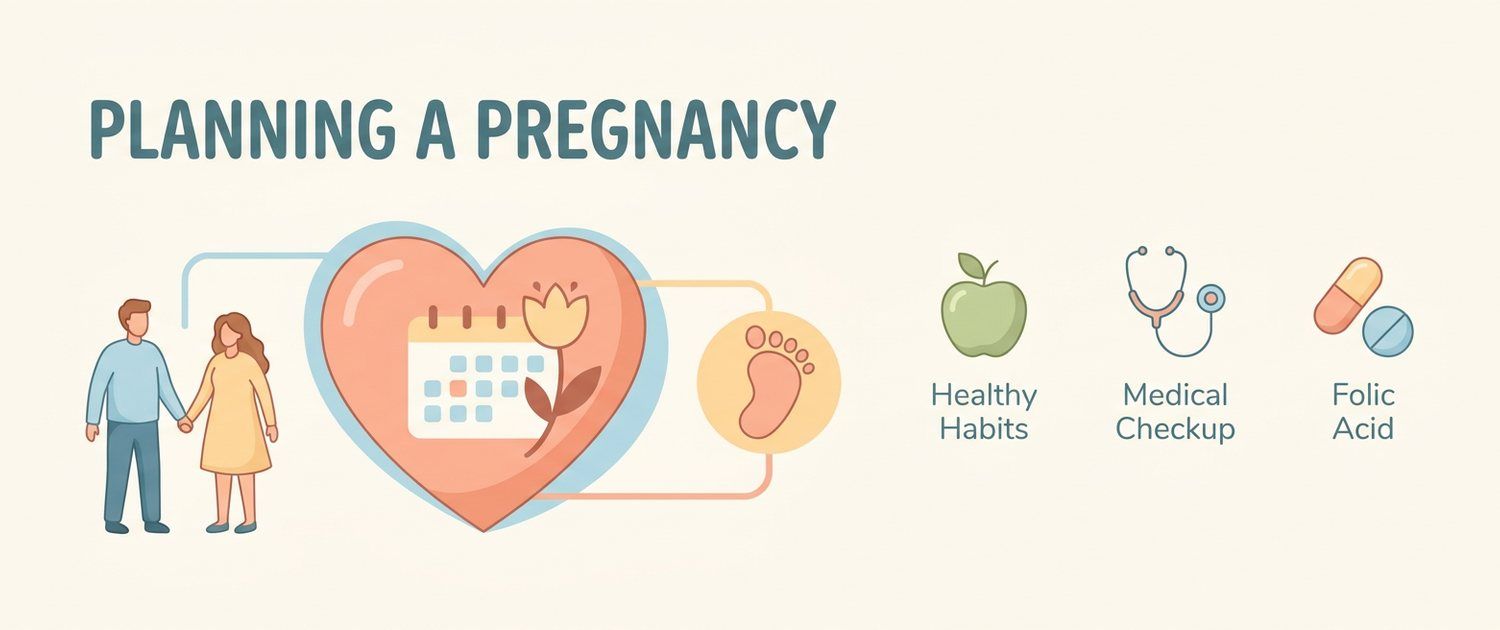
Preconception preparation improves the chances of a healthy pregnancy and helps find, in advance, what is better corrected beforehand — deficiencies, infections, hormonal issues. Let's break down what tests to take when planning a pregnancy — for both partners. Good planning before pregnancy means both partners prepare together, not the woman alone.
Why Prepare in Advance
Many issues (anaemia, vitamin D deficiency, untreated infections, thyroid problems) are easier to correct before pregnancy. Plus folate is started 2–3 months before conception — it reduces the risk of neural tube defects.
Tests for the Woman
An approximate baseline (the exact set is set by the doctor):
- complete blood count and biochemistry, glucose;
- ferritin (iron stores) and vitamin D — common deficiencies, see which vitamins you are missing;
- TSH (the thyroid affects conception and carrying);
- sex hormones on indication, ovulation assessment — ovulation;
- infections: HIV, hepatitis B and C, syphilis, TORCH, an STI swab;
- blood group and rhesus factor (and the partner's).
Tests for the Man
The main one is a semen analysis (fertility assessment); how to read it — semen analysis results. Plus infection/STI tests and blood group with rhesus. With abnormal semen analysis — see an andrologist.
Folate and Vitamins
Folate is recommended in advance (2–3 months), often with vitamin D and iodine on indication. Doses and the set are chosen from tests — not "by eye".
What Next
After conception, preparation turns into monitoring — the full list of investigations by trimester is in what tests are done in pregnancy. If pregnancy does not occur within a year (or 6 months after age 35), it is a reason to see a fertility specialist.
To understand your preconception tests in plain language, upload the form (PDF or photo) to the lab results interpretation service: the AI will explain the markers against the norms. This helps you understand the result but does not replace a doctor.
This article is informational. The preparation plan and test interpretation are the doctor's job.
For informational purposes only
This article is for informational purposes only and does not constitute medical advice, diagnosis, or treatment. Please consult a healthcare professional for medical guidance.