Tick-borne Encephalitis Vaccine: Schedule and When to Get It
Reviewed by the LabReadAI medical team
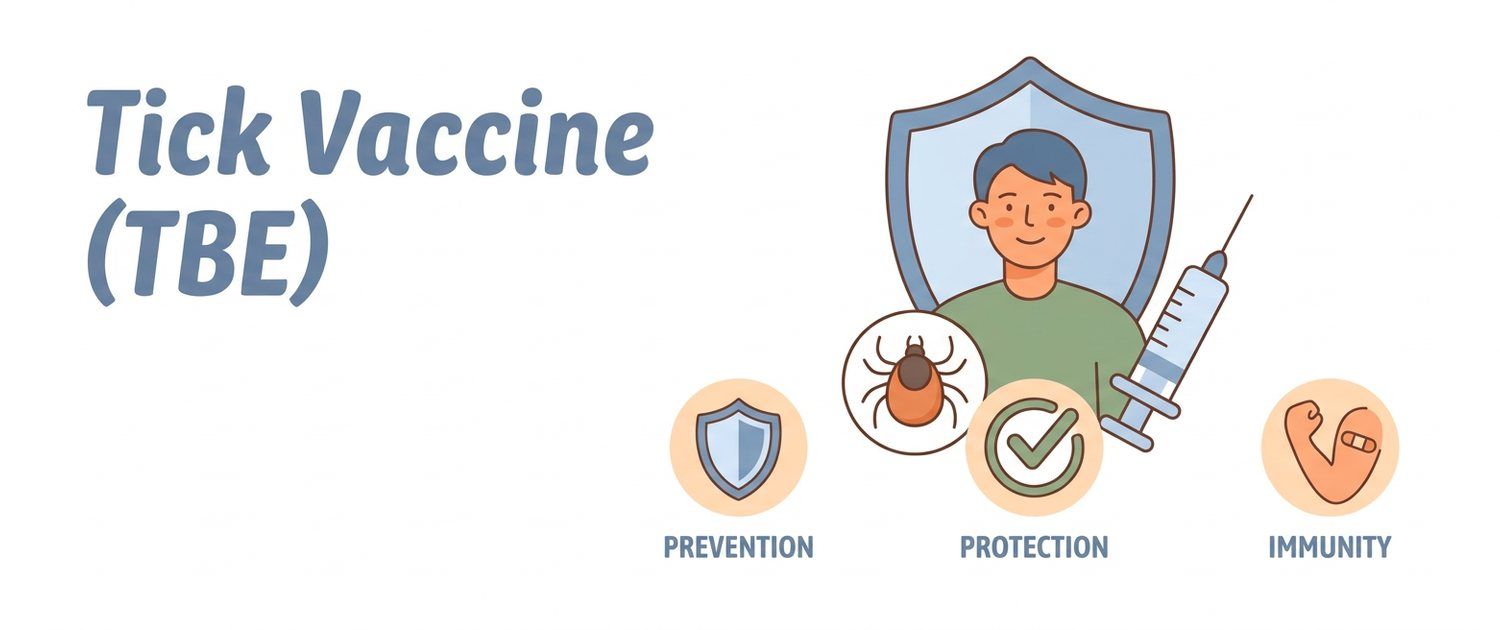
The tick-borne encephalitis vaccine is the most reliable way to stop fearing ticks in a dangerous region. But it has an important feature: it must be given in advance, before the season, not once a tick has already bitten. Here is who needs the vaccine, the schedule, how long it lasts and what to do if a tick bites and you are not vaccinated.
Why the Tick-borne Encephalitis Vaccine Is Needed
The vaccine protects against the tick-borne encephalitis virus — an infection that attacks the nervous system and for which there is no specific treatment. That is why the focus is on prevention: a vaccinated person either does not fall ill or has a much milder course. This matters especially for residents and visitors of endemic regions.
Who Needs It and When to Get It
The vaccine is recommended for those who live in regions endemic for tick-borne encephalitis or travel there, especially if they plan to be outdoors (countryside, forest, hikes). The course is started well in advance — usually in winter or early spring — so that immunity forms by the tick season.
Vaccination Schedule: How Many Doses and Intervals
The standard course consists of several doses at set intervals; after the main course protection forms for several years. There are also accelerated (emergency) schedules for those who did not manage to vaccinate in advance — a doctor selects them. The exact schedule and product are decided individually.
How Long It Lasts and Revaccination
After the main course protection lasts several years, then boosters on schedule are needed to maintain it. Those who keep visiting dangerous regions should not miss boosters — otherwise protection weakens. The timing of revaccination is set by a doctor.
Emergency Prophylaxis After a Bite
If an unvaccinated person is bitten by a tick in an endemic region, it is too late to "start vaccinating" — the vaccine does not work instantly. In this case a doctor considers other emergency measures. What to do right after a bite is described in detail in tick bite: what to do.
Contraindications
The vaccine is postponed for acute illnesses and flare-ups of chronic ones, and allergy to vaccine components and other conditions are taken into account. All contraindications are assessed by a doctor before vaccination. A deferral is a shift to a suitable time, not a refusal of protection.
The Vaccine Does Not Cover All Tick Infections
It is important to understand: the vaccine protects only against tick-borne encephalitis. There is no widely used vaccine against Lyme disease (borreliosis) and other infections carried by ticks. So even vaccinated people need to protect against bites and watch their condition after a bite.
When to See a Doctor
See a doctor to plan vaccination before the season, choose a schedule and revaccination timing, and after a tick bite to decide on emergency prophylaxis. If you are unsure whether you need the vaccine, you can describe the situation — but the final decision is made by a doctor.
This article is for informational purposes only and does not replace a doctor's consultation. The vaccination schedule and contraindications are determined by a specialist.
For informational purposes only
This article is for informational purposes only and does not constitute medical advice, diagnosis, or treatment. Please consult a healthcare professional for medical guidance.