Rotavirus and Norovirus: Symptoms, Contagiousness, Vaccine
Reviewed by the LabReadAI medical team
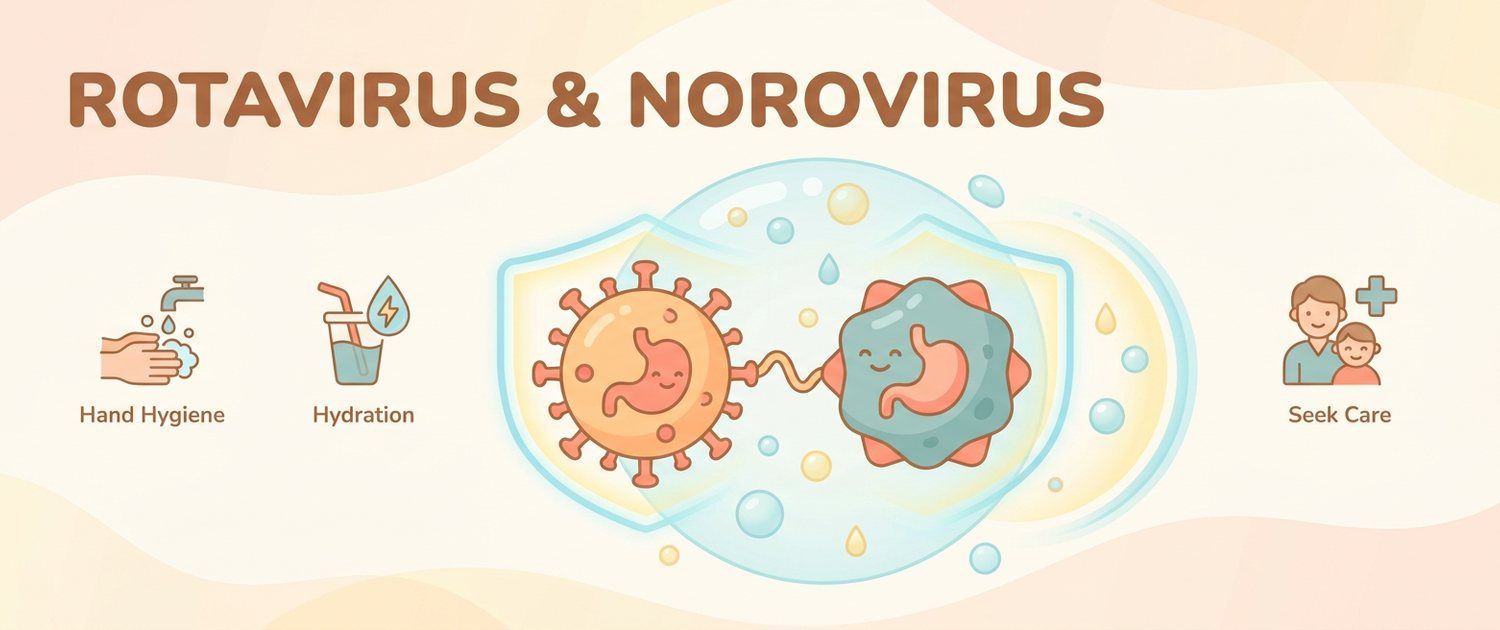
Rotavirus and norovirus are the two main viruses that cause what people call "stomach flu": sudden vomiting, diarrhea and fever. They are highly contagious and often cause outbreaks in daycares, families and resorts. Here are the symptoms of rotavirus and norovirus, how contagious they are and how to protect yourself, including with a vaccine.
What Rotavirus and Norovirus Are
These are viruses that attack the gastrointestinal tract. Rotavirus is the most common cause of severe diarrhea in young children; norovirus more often causes outbreaks in adults and teenagers (including the notorious "cruise ship outbreaks"). Both are viral intestinal infections (unlike bacterial ones such as salmonellosis) and spread by the fecal-oral route — through hands, food, water and objects.
Symptoms of Rotavirus and Norovirus
The onset is usually abrupt: nausea, repeated vomiting, watery diarrhea, abdominal cramps, and in children often high fever. Norovirus more often causes marked vomiting, rotavirus in children heavy diarrhea. Symptoms last a few days. Telling one virus from the other by symptoms is difficult and practically unnecessary — management is the same.
How Contagious They Are and How They Spread
Both viruses are extremely contagious: a tiny number of viral particles is enough. A person is contagious from the onset of symptoms and for several days after recovery (the virus is shed in the stool). The incubation period is short — usually 1–2 days. That is why handwashing, isolating the patient and cleaning surfaces matter so much.
Why They Are Dangerous: Dehydration
As with any intestinal infection, the main danger is loss of fluids and salts, especially in young children and older people. Signs of dehydration (intense thirst, infrequent urination, lethargy) call for active fluid replacement and a doctor's attention. The virus itself passes without consequences in most people.
Treatment and Care
There is no specific antiviral treatment — the basis of care is the same as for an intestinal infection: rehydration (salt solutions), rest, light food as things improve. Antibiotics do not work on viruses. Severe dehydration needs hospital care with replacement of electrolytes, sometimes via a drip.
The Rotavirus Vaccine
There is a rotavirus vaccine for infants in their first year — it substantially lowers the risk of severe disease and hospitalizations. It is given in early infancy on a set schedule. There is no approved norovirus vaccine yet, so only hygiene and isolating the sick work against it.
Rotavirus in Children and Adults
In young children rotavirus is more severe, with a risk of rapid dehydration — fluid replacement and monitoring are especially important. Adults get it too, but usually more mildly; norovirus, conversely, often hits adults during outbreaks. At any age the approach is the same: fluids, rest and watching for warning signs.
When to See a Doctor
See a doctor for severe dehydration, unstoppable vomiting, blood in the stool, high fever, and if a young child, an older person or a pregnant woman is ill. General first-aid rules are in the article on intestinal infection. If unsure, you can describe your symptoms — the service suggests how urgent it is.
What to do about loose stool in a child and how to feed them is covered in diarrhoea in children.
This article is for informational purposes only and does not replace a doctor's consultation. Seek help for warning symptoms and in children.
For informational purposes only
This article is for informational purposes only and does not constitute medical advice, diagnosis, or treatment. Please consult a healthcare professional for medical guidance.