Intestinal Infection: Symptoms, What to Do and Treatment
Reviewed by the LabReadAI medical team
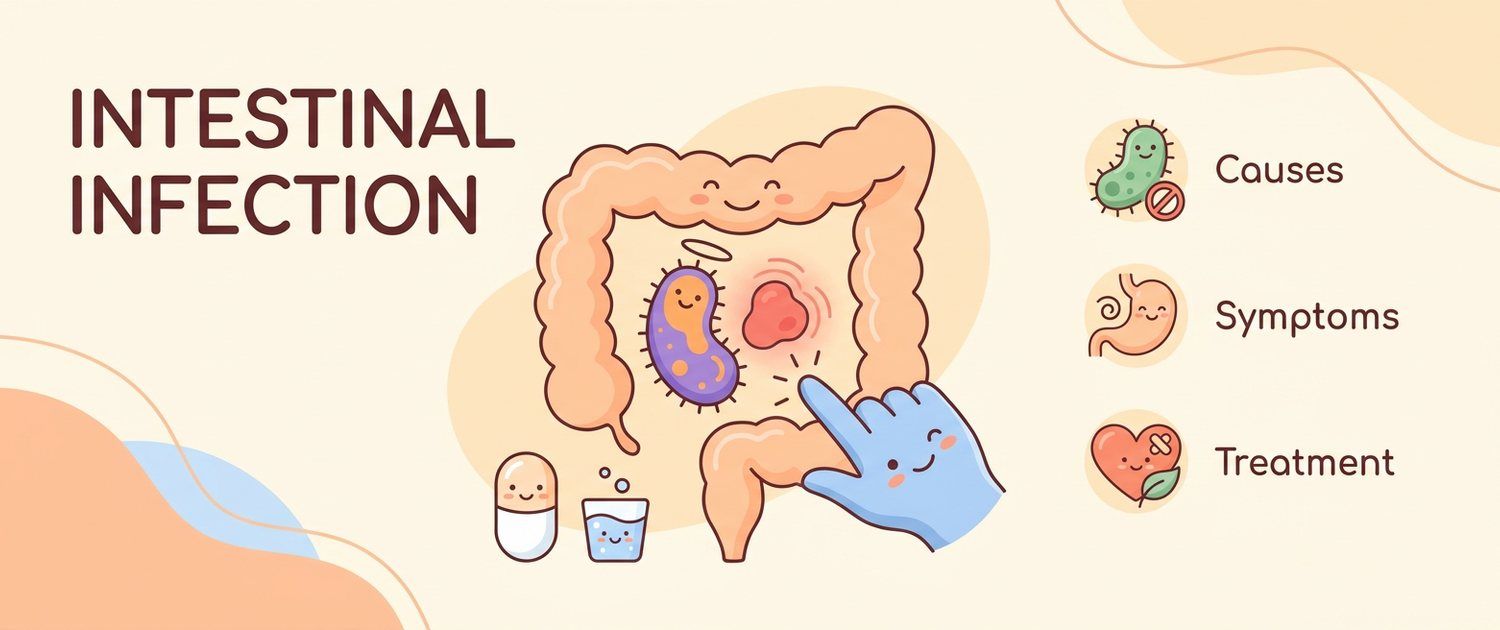
An intestinal infection is one of the most common causes of sudden vomiting and diarrhea. In most cases it clears on its own within a few days, but the main danger is dehydration, which can develop quickly, especially in children and older people. Here are the symptoms of an intestinal infection, what to do first and when a doctor is essential.
What an Intestinal Infection Is and What Causes It
An intestinal infection is damage to the gastrointestinal tract by viruses, bacteria or their toxins. Most often the cause is viral — rotavirus and norovirus; some are bacterial — salmonellosis, dysentery. Infection spreads through dirty hands, water and food, and viral forms are also highly contagious in the home.
Symptoms of an Intestinal Infection
Typical signs: nausea and vomiting, loose stools (diarrhea), abdominal pain and cramps, often fever and weakness. Symptoms appear fairly quickly after infection. It is important to distinguish an ordinary intestinal infection from situations that need urgent care: blood in the stool, unstoppable vomiting, signs of dehydration.
Viral or Bacterial, Poisoning or Infection
It is hard to tell viral from bacterial by eye, but the first-aid approach is similar. "Food poisoning" is essentially an intestinal infection or the action of toxins from poor-quality food. What matters in practice is different: whether there is dehydration and warning signs — this determines management, not the exact name of the microbe.
The Main Danger — Dehydration
The main risk with vomiting and diarrhea is loss of fluids and salts. Signs of dehydration: intense thirst, dry mouth, infrequent urination and dark urine, weakness; in children — lethargy, crying without tears, a sunken fontanelle. Dehydration develops faster in young children and older people, so they need especially close watching.
What to Do: First Aid and Rehydration
The main thing is to replace fluids: drink often in small amounts — rehydration solutions (pharmacy salts) or water. With vomiting — a teaspoon every few minutes. Do not "treat" diarrhea with prolonged fasting; food is reintroduced as things improve, starting with light meals. Anti-diarrheal drugs without a doctor's advice, especially in children and with blood in the stool, should be avoided.
Treatment and When Tests Are Needed
For a mild intestinal infection tests are usually unnecessary — rehydration and time help. Antibiotics are useless for a viral infection, and for a bacterial one they are prescribed only by a doctor. In severe cases electrolytes are checked (risk of low potassium) and a complete blood count; for prolonged diarrhea, a stool test. A confusing report can be uploaded for decoding.
Intestinal Infection in Children
In children intestinal infections are more frequent and more dangerous due to rapid dehydration. The key is to prevent fluid loss: give a rehydration solution and continue feeding where possible. Warning signs are lethargy, refusing to drink, no urine for several hours, blood in the stool, high fever — with these, see a doctor without delay.
When to See a Doctor Urgently
Urgently — for signs of severe dehydration, blood or mucus in the stool, unstoppable vomiting, high fever, severe abdominal pain, and if it is a child, an older person or a pregnant woman. Otherwise an intestinal infection usually resolves on its own within a few days. If unsure, you can describe your symptoms.
How to rehydrate a child who is vomiting and which dehydration signs to count is covered in vomiting in children.
This article is for informational purposes only and does not replace a doctor's consultation. Seek help for warning symptoms and in children.
For informational purposes only
This article is for informational purposes only and does not constitute medical advice, diagnosis, or treatment. Please consult a healthcare professional for medical guidance.