Formula · 6.2
Brand · 7.0
Garnier · shea butter, aloe and sodium hyaluronate · France
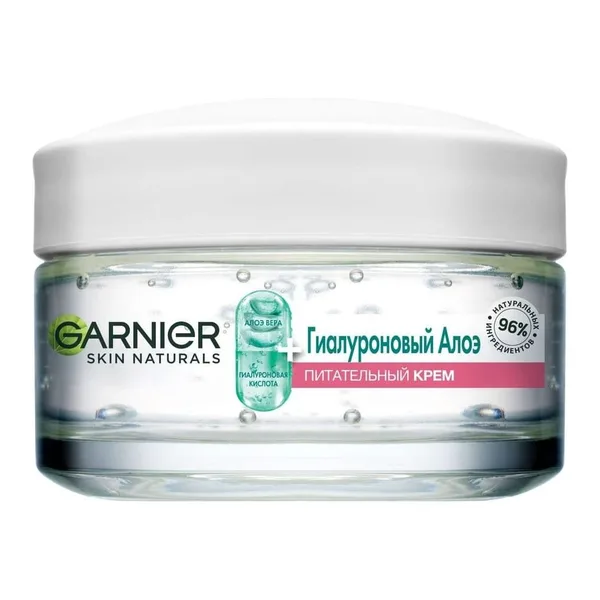
Garnier Hyaluronic Aloe face cream
LabReadAI label score
How the score is calculated- Actives and evidence0.6Actives with strong evidence: 0 of 4
- Active concentration0.5After the 1 % line: salicylic acid (bha) — the concentration is likely token
- Completeness for the purpose0.7For “hydration” — 68 %; below threshold: dryness and a damaged barrier; a formula with one main purpose
- Tolerance0.6Debatable ingredient groups: denatured alcohol, fragrance and its allergens (skin test positive in 13 of 100 tested); comedogenic ingredients at a notable share (may clog pores): glyceryl stearate SE, soybean oil
- adults
- children
- babies
- oily skin
- pregnancysalicylates — ask a doctor
- sensitive skinstart at 0.5 %
- dry skinmay dry
- atopic skinfragrance is a common trigger
- acne-pronemay clog pores
Ingredients — 25 components, 4 of them active
The rest is the formula base: it holds texture, shelf life and application, and is not meant to act.
What works: 4 of 25 ingredients: shea butter, aloe vera, hyaluronic acid and 1 more. Hydrating products draw water into the upper skin layer (glycerin, hyaluronate, panthenol, ectoin) — one humectant is enough. Without barrier ingredients (niacinamide, ceramides, oils) the effect does not last.
What lowers the score: actives and evidence: actives with strong evidence: 0 of 4; active concentration: after the 1 % line: salicylic acid — the concentration is likely token; completeness for the purpose: for “hydration” — 68 %; tolerance: debatable ingredient groups: denatured alcohol, fragrance and its allergens
Questions: denatured alcohol — evaporates fast and degreases; frequent contact can dry the skin — a tolerance question, not a regulatory one; does not clog pores; fragrance and its allergens: fragrance — the fragrance and its aromatic components; the EU requires 26 of them to be listed separately — matters to people allergic to fragrance, does not affect how the product works
- Aqua / Water base: coating, fillers · water — the solvent and base; listed first because there is more of it than anything else; in supplements — part of the capsule shell
- Butyrospermum Parkii Butter / Shea Butter works · the active ingredient — what the product is for; form: butter
- Glycerin base: coating, fillers · a humectant: coats the tablet, holds moisture in creams and shampoos; does not clog pores
- Caprylic/Capric Triglyceride base: coating, fillers · a coconut-oil fraction, a light emollient and carrier of actives; does not clog pores
- Dicaprylyl Ether base: coating, fillers · fills the gaps between skin flakes, so the surface feels smooth
- Alcohol Denat questions · evaporates fast and degreases; frequent contact can dry the skin — a tolerance question, not a regulatory one; does not clog pores
- Glyceryl Stearate SE base: coating, fillers · self-emulsifying glyceryl stearate with added sodium or potassium stearate — the additive is what makes it more comedogenic than the neutral form; may clog pores in leave-on face products
- Polyglyceryl-3 Methylglucose Distearate base: coating, fillers · keeps the water and oil parts from separating
- Zea Mays Starch / Corn Starch base: coating, fillers · filler and binder
- Stearyl Alcohol base: coating, fillers · a fatty alcohol (C18), an emulsifier and thickener, does not dry the skin; rarely clogs pores in leave-on face products
- Glycine Soja Oil / Soybean Oil base: coating, fillers · emollient/base; may clog pores in leave-on face products
- Aloe Barbadensis Leaf Juice Powder works · the active ingredient — what the product is for; form: aloe gel
- Vitis Vinifera Fruit Water / Grape Fruit Water base: coating, fillers · water — the solvent and base; listed first because there is more of it than anything else; in supplements — part of the capsule shell
- Stearic Acid base: coating, fillers · in tablets — a pressing lubricant, in creams — a thickener and soap component; rarely clogs pores in leave-on face products
- Carbomer base: coating, fillers · hold the texture: gels, creams and foam do not separate
- Sodium Hyaluronate works · the active ingredient — what the product is for; form: sodium hyaluronate
- Sodium Hydroxide base: coating, fillers · tune the acidity and texture; salt is a common shampoo thickener
- Sodium Phytate base: coating, fillers · bind hard-water metals so the formula stays stable and the foam works
- Myristic Acid base: coating, fillers · a fatty acid (C14), gives dense foam in cleansers; may clog pores in leave-on face products
- Palmitic Acid base: coating, fillers · a fatty acid (C16), a thickener and soap component; rarely clogs pores in leave-on face products
- Caprylyl Glycol base: coating, fillers · a humectant that also holds bacteria back, which is why it often replaces part of the preservative.
- Citric Acid base: coating, fillers · acidity regulator
- Xanthan Gum base: coating, fillers · hold the texture: gels, creams and foam do not separate
- Tocopherol base: coating, fillers · vitamin E at hundredths of a percent: keeps the oils of the formula (a cream or a capsule fill) from going rancid; at that share it protects the product, it is not vitamin E as an active
- Salicylic Acid works · the active ingredient — what the product is for; form: salicylic acid
- Parfum / Fragrance questions · the fragrance and its aromatic components; the EU requires 26 of them to be listed separately — matters to people allergic to fragrance, does not affect how the product works
Garnier Hyaluronic Aloe face cream is a product whose active ingredient is shea butter + aloe vera + hyaluronic acid + salicylic acid (bha). The concentration is not declared, but the active sits above the 1 % line in the list — a working share is likely. There is little evidence of effect: shea butter, aloe vera. The effect is moderately supported: hyaluronic acid, salicylic acid (bha). The formula has 25 ingredients, 4 of which do the work; the rest is the formula base. Worth noting: Alcohol Denat (evaporates fast and degreases; frequent contact can dry the skin — a tolerance question, not a regulatory one; does not clog pores); Parfum / Fragrance (the fragrance and its aromatic components; the EU requires 26 of them to be listed separately — matters to people allergic to fragrance, does not affect how the product works). Hydrating products draw water into the upper skin layer (glycerin, hyaluronate, panthenol, ectoin) — one humectant is enough. Without barrier ingredients (niacinamide, ceramides, oils) the effect does not last. By the list, no sulfates (SLS/SLES), formaldehyde releasers, isothiazolinones (MIT/MCI), parabens, mineral oils and petrolatum, soap, silicones, gelatin in the coating, toning dyes, tar. Suitable for: adults, children, babies, oily skin. pregnancy, sensitive skin, dry skin, atopic skin, acne-prone — ask a doctor. fragrance allergy — not without a doctor. Use: after a shower on damp skin, 1–2 times a day. When to expect an effect: dryness — immediately; barrier — 2–4 weeks. Label score — 6.2 out of 10 (actives with strong evidence: 0 of 4; after the 1 % line: salicylic acid (bha) — the concentration is likely token; for “hydration” — 68 %; below threshold: dryness and a damaged barrier; a formula with one main purpose; debatable ingredient groups: denatured alcohol, fragrance and its allergens (skin test positive in 13 of 100 tested); comedogenic ingredients at a notable share (may clog pores): glyceryl stearate se, soybean oil). Alcohol sits sixth on the list — dry or irritated skin may feel that share. Fragrance is present.
Who it does not suit
- fragrance allergyrisk of reaction
When to stop: tightness in dry air — apply under a cream; burning, persistent redness — stop
Per the maker's leaflet: Alcohol sits sixth on the list — dry or irritated skin may feel that share. Fragrance is present.
Is this product right for your skin?
The score describes the formula, not your skin: the same product dries one person and saves another. Describe your skin type, reactions and goals, attach a photo of the ingredient list or the product — we will go through every ingredient and say whether it suits you, what to pair it with and what to avoid.
Similar products
Same nutrient and the same purpose — closest by form and dose. Each has its own score by the same method, so you can see whether there is an option nearby that is more honest or simpler in composition.
 ARAVIA LaboratoriesARAVIA Laboratories Hyaluron Filler Hydrating Cream7.6
 La Roche-PosayLa Roche-Posay Lipikar Baume AP+M7.9
 La Roche-PosayLa Roche-Posay Lipikar Lait7.5
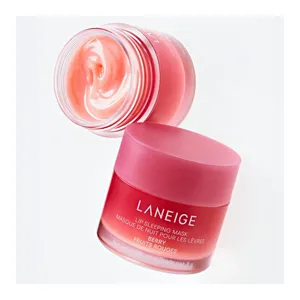 LANEIGELANEIGE Lip Sleeping Mask Berry5.6
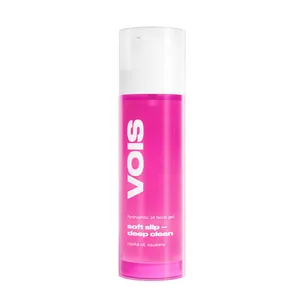 VOISVOIS Facial Foam with Hyaluronic Acid7.9
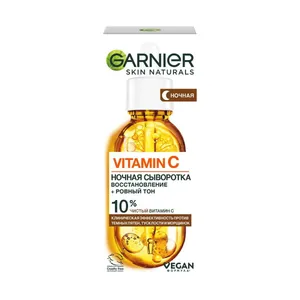 GarnierGarnier Vitamin C Night Serum7.7
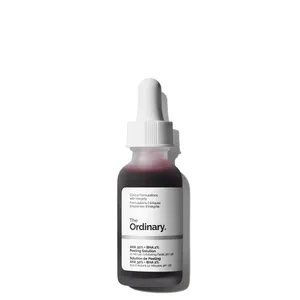 The OrdinaryThe Ordinary AHA 30% + BHA 2% Peeling Solution7.7
 VOISVOIS Face Cream Day7.7