Formula · 8.6
Brand · 5.6
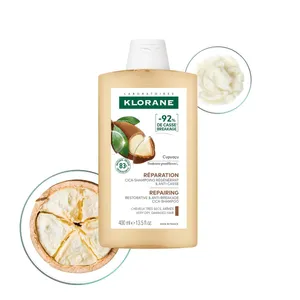
Klorane · coconut oil · France
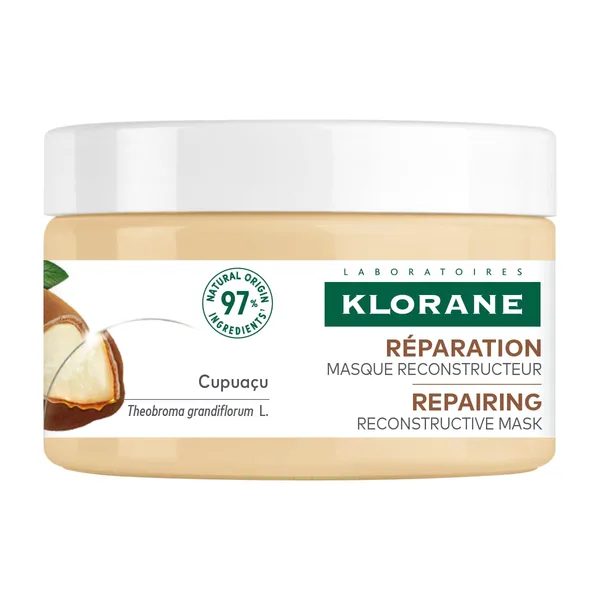
Klorane Rebuilding Hair Mask
LabReadAI label score
How the score is calculated- Actives and evidence0.8Effect moderately supported
- Completeness for the purpose1.0For “dry and damaged hair” — 100 %; panthenol (pro-vitamin b5); could be added without conflict: panthenol (pro-vitamin b5); a narrow formula for one purpose
- Tolerance0.9Rinse-off product; debatable groups: fragrance and its allergens (skin test positive in 14 of 100 tested)
- adults
- pregnancyallowed per the leaflet
- dry skin
- colour-treated hair
- sensitive skinirritation possible
- atopic skinfragrance is a common trigger
Ingredients — 29 components, 1 of them active
The rest is the formula base: it holds texture, shelf life and application, and is not meant to act.
What works: 1 of 29 ingredients: coconut oil. Damaged hair is helped on two fronts: oils that penetrate the shaft (only coconut oil is proven) and a film on the outside — silicones, panthenol, hydrolysed proteins. One from each front is enough; “collagen” and “biotin” in a shampoo work only on the label.
Strengths: completeness for the purpose, tolerance
What lowers the score: actives and evidence: effect moderately supported
Questions: fragrance and its allergens: acetyl cedrene, alpha-isomethyl ionone, citral, citronellol, coumarin, fragrance, geraniol, limonene — the fragrance and its aromatic components; the EU requires 26 of them to be listed separately — matters to people allergic to fragrance, does not affect how the product works
- WATER (AQUA)* base: coating, fillers · water — the solvent and base; listed first because there is more of it than anything else; in supplements — part of the capsule shell
- GLYCOL PALMITATE* base: coating, fillers · keeps the water and oil parts from separating
- BEHENYL ALCOHOL* base: coating, fillers · emulsifiers and thickeners; not “alcohol” in the everyday sense — they do not dry the skin; rarely clog pores
- CAPRYLIC/CAPRIC TRIGLYCERIDE* base: coating, fillers · a coconut-oil fraction, a light emollient and carrier of actives; does not clog pores
- COCOS NUCIFERA (COCONUT) OIL (COCOS NUCIFERA OIL)* works · the active ingredient — what the product is for; form: oil
- THEOBROMA GRANDIFLORUM SEED BUTTER* base: coating, fillers · softens the skin and helps it hold water — the most common role in creams
- BEHENAMIDOPROPYL DIMETHYLAMINE* base: coating, fillers · keeps the water and oil parts from separating
- DICAPRYLYL CARBONATE* base: coating, fillers · soften, condition and carry the actives; the backbone of the texture
- CETEARYL ALCOHOL* base: coating, fillers · a fatty-alcohol blend (C16–C18), an emulsifier and thickener, does not dry the skin; paired with ceteareth-20 — 4 of 5; rarely clogs pores in leave-on face products
- BETAINE* base: coating, fillers · draws water in and holds it in the upper layer of the skin
- GLYCERIN* base: coating, fillers · a humectant: coats the tablet, holds moisture in creams and shampoos; does not clog pores
- 1,2-HEXANEDIOL base: coating, fillers · a solvent and humectant with antimicrobial action: it helps the product keep without classic preservatives.
- ACETYL CEDRENE questions · the fragrance and its aromatic components; the EU requires 26 of them to be listed separately — matters to people allergic to fragrance, does not affect how the product works
- ALPHA-ISOMETHYL IONONE questions · the fragrance and its aromatic components; the EU requires 26 of them to be listed separately — matters to people allergic to fragrance, does not affect how the product works
- BENZOIC ACID base: coating, fillers · protect the product from bacteria and mould; used within the EU-permitted concentrations
- CARAMEL* base: coating, fillers · give the product its colour; do not affect how it works
- CETEARYL GLUCOSIDE* base: coating, fillers · soften, condition and carry the actives; the backbone of the texture
- CITRAL questions · the fragrance and its aromatic components; the EU requires 26 of them to be listed separately — matters to people allergic to fragrance, does not affect how the product works
- CITRIC ACID* base: coating, fillers · acidity regulator
- CITRONELLOL questions · the fragrance and its aromatic components; the EU requires 26 of them to be listed separately — matters to people allergic to fragrance, does not affect how the product works
- COUMARIN questions · the fragrance and its aromatic components; the EU requires 26 of them to be listed separately — matters to people allergic to fragrance, does not affect how the product works
- FRAGRANCE (PARFUM questions · the fragrance and its aromatic components; the EU requires 26 of them to be listed separately — matters to people allergic to fragrance, does not affect how the product works
- GERANIOL questions · the fragrance and its aromatic components; the EU requires 26 of them to be listed separately — matters to people allergic to fragrance, does not affect how the product works
- HELIANTHUS ANNUUS (SUNFLOWER) SEED OIL (HELIANTHUS ANNUUS SEED OIL)* base: coating, fillers · a light emollient oil rich in linoleic acid (in tablets — a coating component); does not clog pores
- HEXAMETHYLINDANOPYRAN base: coating, fillers · gives the product its scent
- LACTIC ACID* base: coating, fillers · tune the acidity and texture; salt is a common shampoo thickener
- CYMBOPOGON SCHOENANTHUS OIL (LEMONGRASS OIL base: coating, fillers · the plant base: emollient oils, waxes and care extracts
- LIMONENE questions · the fragrance and its aromatic components; the EU requires 26 of them to be listed separately — matters to people allergic to fragrance, does not affect how the product works
- TOCOPHEROL base: coating, fillers · vitamin E at hundredths of a percent: keeps the oils of the formula (a cream or a capsule fill) from going rancid; at that share it protects the product, it is not vitamin E as an active
- VANILLIN base: coating, fillers · covers the smell of the other ingredients
Klorane Rebuilding Hair Mask is a product whose active ingredient is coconut oil. The concentration is not declared, but the active sits above the 1 % line in the list — a working share is likely. The effect is moderately supported: for hair: reduces protein loss during washing and combing; for the face — clogs pores. The formula has 29 ingredients, 1 of which does the work; the rest is the formula base. Worth noting: ACETYL CEDRENE, ALPHA-ISOMETHYL IONONE, CITRAL, CITRONELLOL, COUMARIN, FRAGRANCE (PARFUM, GERANIOL, LIMONENE (the fragrance and its aromatic components; the EU requires 26 of them to be listed separately — matters to people allergic to fragrance, does not affect how the product works). Damaged hair is helped on two fronts: oils that penetrate the shaft (only coconut oil is proven) and a film on the outside — silicones, panthenol, hydrolysed proteins. One from each front is enough; “collagen” and “biotin” in a shampoo work only on the label. By the list, no alcohol (alcohol denat), sulfates (SLS/SLES), formaldehyde releasers, isothiazolinones (MIT/MCI), parabens, mineral oils and petrolatum, soap, silicones, gelatin in the coating, toning dyes, tar. Suitable for: adults, pregnancy, dry skin, colour-treated hair. sensitive skin, atopic skin — ask a doctor. acne-prone face, fragrance allergy — not without a doctor. Use: on lengths and ends, 20 minutes before washing or after. When to expect an effect: less breakage — after a few applications. Label score — 8.6 out of 10 (effect moderately supported; rinse-off product; debatable groups: fragrance and its allergens (skin test positive in 14 of 100 tested)). Per the pack: for external use, avoid contact with the eyes. A restatement of the label, not an assessment.
Who it does not suit
- acne-prone facecomedogenic
- fragrance allergyrisk of reaction
When to stop: breakouts on the face or scalp — stop
Per the maker's leaflet: Per the pack: for external use, avoid contact with the eyes. A restatement of the label, not an assessment.
Is this product right for your hair?
The score describes the formula, not your hair: a sulfate shampoo suits an oily scalp and fails a dry, sensitive one. Tell us about your hair, scalp and the problem — shedding, dandruff, oiliness, dryness — and we will build a routine and say whether this product suits you.
Similar products
Same nutrient and the same purpose — closest by form and dose. Each has its own score by the same method, so you can see whether there is an option nearby that is more honest or simpler in composition.