Formula · 8.8
Brand · 8.8
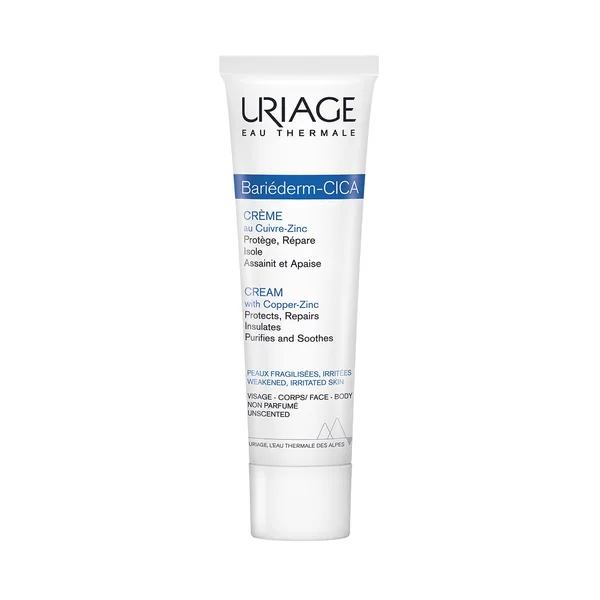
Uriage · repairing cream with zinc and copper · France
Uriage Bariéderm-CICA Crème
LabReadAI label score
How the score is calculated- Actives and evidence0.7Actives with strong evidence: 1 of 4
- Active concentration1.0Actives sit above the 1 % line — by list order a working concentration is 97 % likely
- Completeness for the purpose1.0For “sensitive skin and redness” — 100 %; a broad formula across 3 purposes
- Tolerance0.8Comedogenic ingredients at a notable share (may clog pores): polyglyceryl-3 diisostearate
- adults
- children
- babies
- pregnancyallowed per the leaflet
- sensitive skin
- atopic skin
- dry skin
- oily skin
- acne-pronemay clog pores in leave-on face products
Ingredients — 25 components, 4 of them active
The rest is the formula base: it holds texture, shelf life and application, and is not meant to act.
What works: 4 of 25 ingredients: zinc oxide, panthenol, hyaluronic acid and 1 more. Sensitive skin needs soothing ingredients (panthenol, allantoin, bisabolol, centella, oatmeal, ectoin) and barrier ones (zinc oxide, ceramides, niacinamide) — one from each group — and as few irritants as possible: fragrance, alcohol, acids.
Strengths: active concentration, completeness for the purpose
What lowers the score: actives and evidence: actives with strong evidence: 1 of 4; tolerance: comedogenic ingredients at a notable share: polyglyceryl-3 diisostearate
Questions: no debatable ingredients in the formula
- Hyaluronic acid + Panthenol (pro-vitamin B5) — reinforce each othertwo humectants with different action: moisture plus soothing
- Hyaluronic acid + petrolatum and mineral oils — reinforce each otherhyaluronate draws water in, petrolatum seals it — the classic humectant plus occlusive pair
- Aqua (Water base: coating, fillers · water — the solvent and base; listed first because there is more of it than anything else; in supplements — part of the capsule shell
- Paraffinum Liquidum (Mineral Oil base: coating, fillers · purified cosmetic-grade petroleum products: form a protective barrier film; safety is established, a preference question; 0–2 of 5 (depends on the raw-material source), cosmetic white oil per DiNardo (2005) is non-comedogenic
- Sodium Chloride base: coating, fillers · tune the acidity and texture; salt is a common shampoo thickener
- Zinc Oxide works · the active ingredient — what the product is for; form: zinc oxide
- Cetyl PEG/PPG-10/1 Dimethicone base: coating, fillers · form a smooth film and shine; inert and not absorbed — a preference question, not a safety one
- Propylheptyl Caprylate base: coating, fillers · soften, condition and carry the actives; the backbone of the texture
- Butylene Glycol base: coating, fillers · a humectant and solvent: it makes the texture lighter and helps actives spread. Better tolerated than propylene glycol.
- Hydrogenated Polydecene base: coating, fillers · soften, condition and carry the actives; the backbone of the texture
- Panthenol works · the active ingredient — what the product is for; form: panthenol
- Glycerin base: coating, fillers · a humectant: coats the tablet, holds moisture in creams and shampoos; does not clog pores
- Dimethicone base: coating, fillers · form a smooth film and shine; inert and not absorbed — a preference question, not a safety one
- Disteardimonium Hectorite base: coating, fillers · makes the product thicker or thinner
- Polyglyceryl-3 Diisostearate base: coating, fillers · a water-in-oil emulsifier; may clog pores in leave-on face products; a finished product with it is not always comedogenic
- Magnesium Sulfate base: coating, fillers · tune the acidity and texture; salt is a common shampoo thickener
- Methylpropanediol base: coating, fillers · dissolves the other ingredients and holds the formula together
- Tocopheryl Acetate works · the active ingredient — what the product is for; form: tocopheryl acetate (ester; in cosmetics)
- Triacontanyl PVP base: coating, fillers · a film former: it holds the styling and keeps pigment in place, and it washes off with water.
- Copper Gluconate base: coating, fillers · creates a protective layer between the skin and outside irritants
- Propanediol base: coating, fillers · a humectant and solvent from corn sugar: it holds water and helps actives dissolve. A gentler replacement for propylene glycol.
- Propylene Carbonate base: coating, fillers · dissolves the other ingredients and holds the formula together
- Citric Acid base: coating, fillers · acidity regulator
- Glutamylamidoethyl Indole base: coating, fillers · creates a protective layer between the skin and outside irritants
- Polyquaternium-61 base: coating, fillers · leaves a thin film on skin or hair
- Hyaluronic Acid works · the active ingredient — what the product is for; form: sodium hyaluronate
- Silanetriol base: coating, fillers · makes hair softer and easier to comb
- Borage Seed Oil Aminopropanediol Amides base: coating, fillers · softens the skin and helps it hold water — the most common role in creams
Uriage Bariéderm-CICA Crème is a product whose active ingredient is zinc oxide + panthenol (pro-vitamin b5) + hyaluronic acid + vitamin e. The concentration is not declared, but the active sits above the 1 % line in the list — a working share is likely. The effect is supported by studies: zinc oxide. The effect is moderately supported: panthenol (pro-vitamin b5), hyaluronic acid. There is little evidence of effect: vitamin e. The formula has 25 ingredients, 4 of which do the work; the rest is the formula base. Well-matched pairs in the formula: hyaluronic acid + panthenol (pro-vitamin b5); hyaluronic acid + petrolatum and mineral oils. Sensitive skin needs soothing ingredients (panthenol, allantoin, bisabolol, centella, oatmeal, ectoin) and barrier ones (zinc oxide, ceramides, niacinamide) — one from each group — and as few irritants as possible: fragrance, alcohol, acids. By the list, no alcohol (alcohol denat), sulfates (SLS/SLES), formaldehyde releasers, isothiazolinones (MIT/MCI), parabens, soap, fragrance, gelatin in the coating, toning dyes, tar. Suitable for: adults, children, babies, pregnancy, sensitive skin, atopic skin, dry skin, oily skin. acne-prone — ask a doctor. Use: on damaged areas 1–2 times a day. When to expect an effect: irritation, cracks — days. Label score — 8.8 out of 10 (actives with strong evidence: 1 of 4; actives sit above the 1 % line — by list order a working concentration is 97 % likely; comedogenic ingredients at a notable share (may clog pores): polyglyceryl-3 diisostearate).
Who it does not suit
When to stop: tightness in dry air — apply under a cream; rarely — contact allergy: rash, itching — stop
Is this product right for your skin?
The score describes the formula, not your skin: the same product dries one person and saves another. Describe your skin type, reactions and goals, attach a photo of the ingredient list or the product — we will go through every ingredient and say whether it suits you, what to pair it with and what to avoid.
Similar products
Same nutrient and the same purpose — closest by form and dose. Each has its own score by the same method, so you can see whether there is an option nearby that is more honest or simpler in composition.
 VOISVOIS Facial Foam with Hyaluronic Acid7.9
 ARAVIA LaboratoriesARAVIA Laboratories Hyaluron Filler Hydrating Cream7.6
 AvèneAvène Cicalfate+9.9
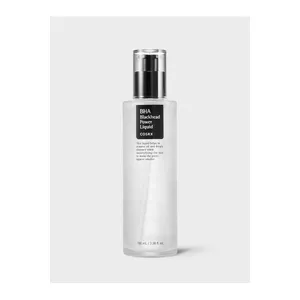 COSRXCOSRX BHA Blackhead Power Liquid8.9
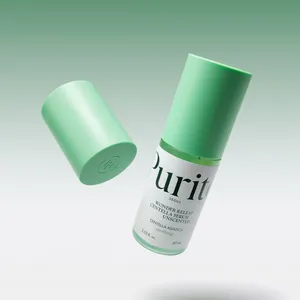 Purito SeoulPurito Seoul Wonder Releaf Centella Serum Unscented8.7
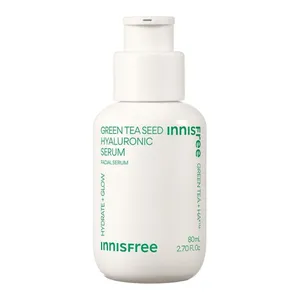 innisfreeinnisfree Green Tea Seed Hyaluronic Serum8.7
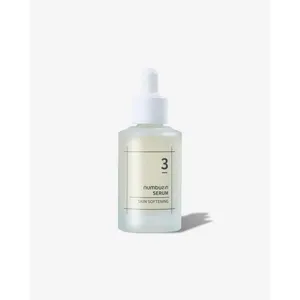 numbuzinnumbuzin No.3 Skin Softening Serum8.5
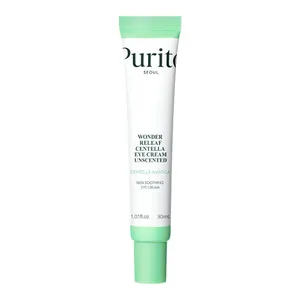 Purito SeoulPURITO Wonder Releaf Centella Eye Cream Unscented8.4