Zinc: What It Is For, Which Form Is Best and How to Take It
Reviewed by the LabReadAI medical team
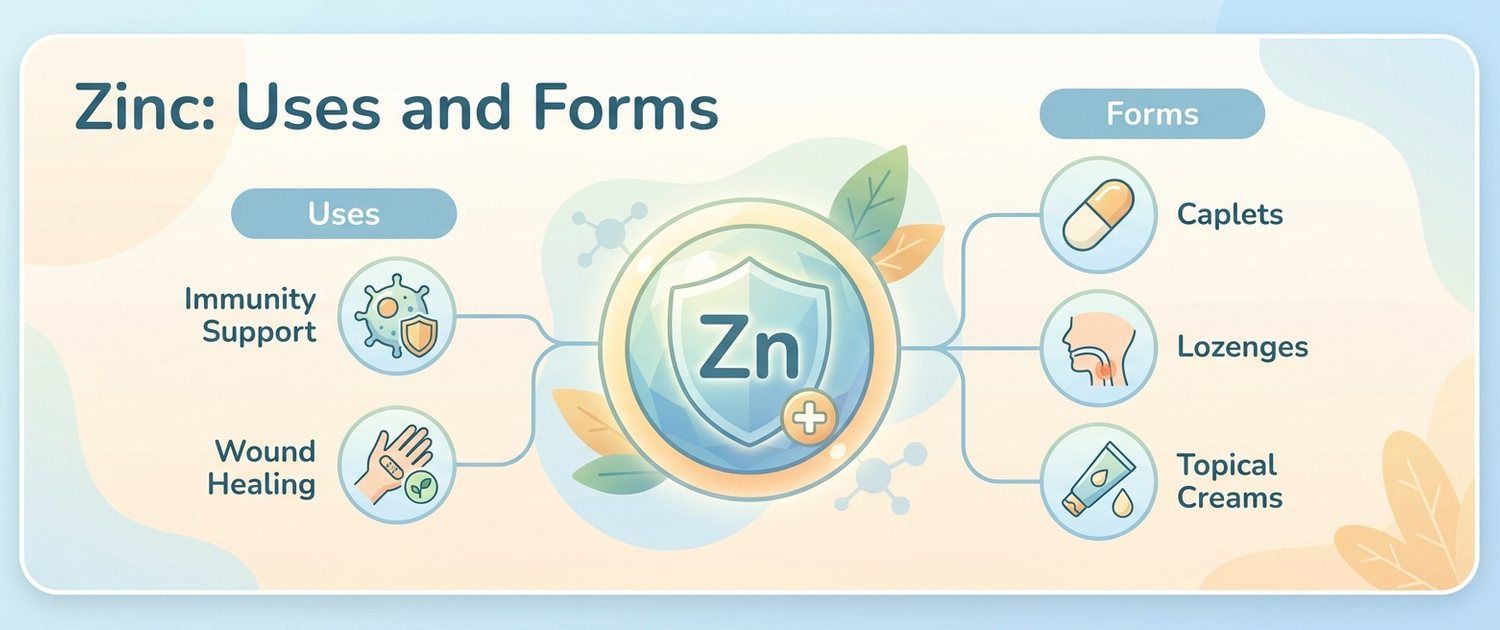
Zinc is an underrated mineral: its deficiency is common and presents nonspecifically — from frequent colds to acne and hair loss. The shelf has a dozen forms with different absorption. Let's break down what zinc is for, how to tell you are low, which form of zinc is best, and how to take it correctly.
What Zinc Is For
Zinc is a cofactor for over 300 enzymes. Key roles:
- Immunity — needed for immune cell function and healing
- Skin — regulates sebum and inflammation (hence its role in acne)
- Hair and nails — keratin synthesis, cell division
- Hormones — involved in testosterone metabolism
- Taste and smell, wound healing
So zinc deficiency hits many systems at once, and repletion often noticeably improves skin and immunity.
Symptoms of Zinc Deficiency
- Frequent colds, slow wound healing
- Acne, skin inflammation, dermatitis
- Hair loss, brittle nails (white spots)
- Reduced taste and smell
- Reduced appetite
Zinc deficiency often coexists with iron and vitamin D deficiency — they share causes (diet, absorption).
Which Form of Zinc Is Best
Bioavailability depends on the form — chelated and organic salts absorb better:
- Zinc picolinate — high absorption, a common choice
- Bisglycinate (chelate) — good absorption, gentle on the stomach
- Citrate — good absorption, neutral taste
- Gluconate — cheap, moderate absorption, common in lozenges
- Oxide and sulfate — cheap, absorb worse
Look at the amount of elemental zinc, not the salt weight. Matching the form to your goal is helped by supplement matching by your tests.
Zinc for Skin and Acne
Zinc reduces sebum production and inflammation, so it is used as support for acne (especially inflammatory). It is not a replacement for main treatments but a reasonable addition with a confirmed deficiency. On the acne mechanism and care, see acne: causes. Zinc is also in anti-dandruff shampoos (zinc pyrithione), but that is a topical, not systemic, action.
Zinc for Immunity
Zinc is needed by immune cells; with a deficiency the immune response is weaker. Zinc lozenges at the onset of a cold may slightly shorten its duration. But megadoses "for prevention" are harmful — see below on copper.
How to Take Zinc and Dosing
- Preventively — usually 8–15 mg of elemental zinc per day; therapeutic doses are higher and as a course.
- Do not exceed ~25–40 mg long-term without monitoring.
- Better with food (on an empty stomach it may nauseate), apart from iron and calcium (absorption competition) and from coffee/dairy.
Zinc and Copper — an Important Balance
Long-term high-dose zinc displaces copper and causes its deficiency (anemia, neurology). So courses of high-dose zinc are run in a limited way or with added copper, not "by the handful just in case". Status is objectively shown by the zinc test; as a baseline it is convenient to assess with other nutrients via a vitamin panel. Zinc deficiency is a common cause of hair problems — see vitamins for hair.
This information is for educational purposes and does not replace a specialist consultation.
For informational purposes only
This article is for informational purposes only and does not constitute medical advice, diagnosis, or treatment. Please consult a healthcare professional for medical guidance.