Acne and Pimples: Causes, Hormones and Which Tests to Take
Reviewed by the LabReadAI medical team
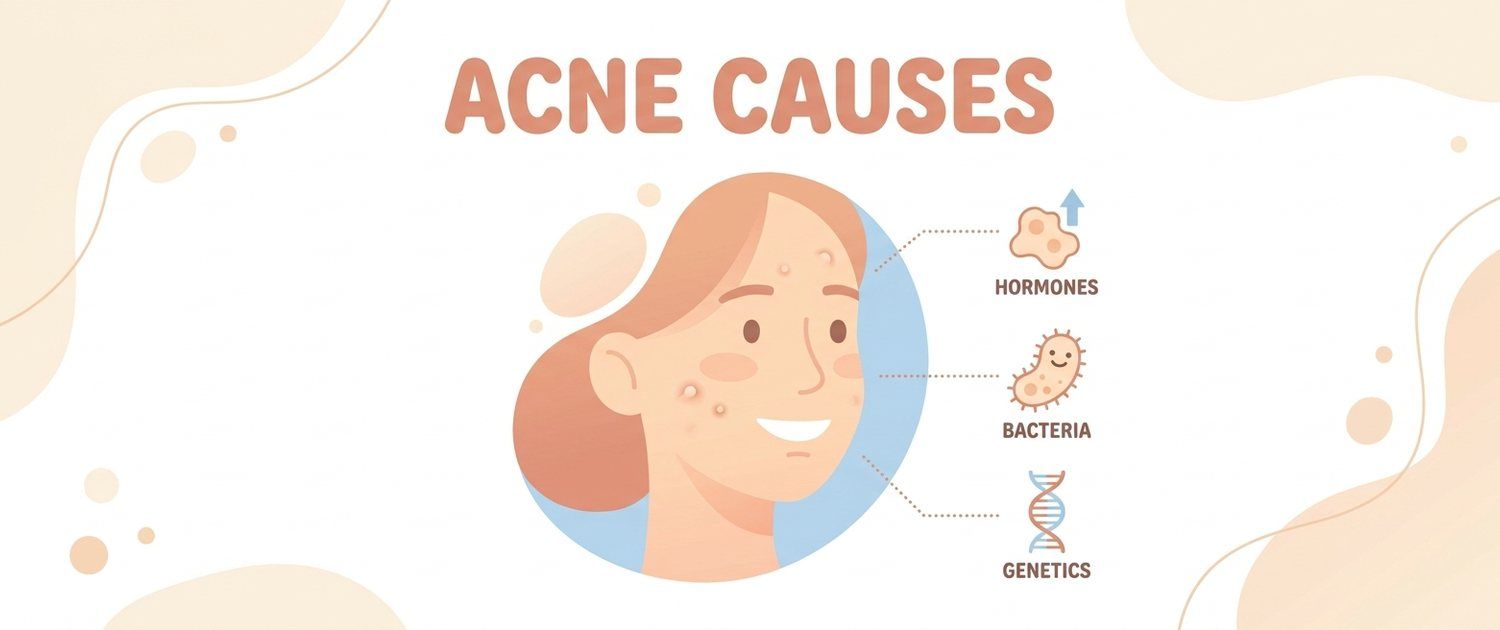
Acne is not only a "teenage problem" and far from always a matter of poor skincare. Acne arises from the work of the sebaceous glands, hormones and inflammation, and sometimes persistent breakouts in adults signal a hormonal imbalance. Let us go through it calmly and without myths: why acne appears, what its causes are, when it is hormonal, and which tests make sense in that case.
Why Pimples Appear (What Acne Is)
Acne is a disease of the sebaceous glands and hair follicles. At its core are four processes: increased sebum production, clogging of pores, multiplication of bacteria (C. acnes) and inflammation. Androgens (male sex hormones, which women have too) directly affect the sebaceous glands, which is why acne is so closely tied to hormones — especially in adolescence and in adult women.
The Main Causes of Acne
Most often the contributors are: hormonal changes (puberty, the cycle, PCOS), heredity, skin type and excess sebum, some cosmetic and medicinal products, stress and lack of sleep. Diet plays a more modest role than commonly thought (a link with dairy and high-glycaemic-index foods is discussed). Important: "dirt" and infrequent washing are NOT the main cause of acne, and aggressive cleansing even worsens inflammation.
When Pimples May Be Hormonal
A hormonal nature of acne should be suspected if: breakouts appeared or worsened in adulthood, are located in the lower third of the face (chin, jaw, neck), flare before periods and are combined with other signs of androgen excess — an irregular cycle, male-pattern hair loss, excessive facial and body hair. In these cases it is sensible to check hormones.
Which Tests Are Taken for Acne (and When)
Most people with ordinary acne do not need tests — a dermatologist makes the diagnosis from the picture. But with signs of androgen excess in women, testosterone (total and free) and DHEA-S are assessed, and if needed LH/FSH and 17-OH-progesterone. It is convenient to take a sex hormone panel. Important rules: test off hormonal contraception (a break is needed) and early in the cycle, not near ovulation.
Acne, PCOS and Androgen Excess
Persistent acne in an adult woman combined with an irregular cycle and facial hair growth is a common reason to suspect polycystic ovary syndrome or another cause of hyperandrogenism. This is not a verdict: with confirmed androgen excess there is effective treatment, and the diagnosis itself helps tailor therapy not only for the skin. So with such signs the work-up is extended with a gynaecologist or endocrinologist.
Treatment and When to See a Doctor
Mild acne is usually managed with topical products, moderate and severe — by a dermatologist (including systemic therapy when indicated); with proven hyperandrogenism in women, hormonal agents help too. See a doctor for persistent or severe acne, scarring, and for acne in an adult woman with signs of hormonal imbalance. Self-treatment by advice and squeezing often leaves scars — it is better to choose therapy with a doctor.
If the breakouts sit on the cheeks, the sides of the nose and the chin, itch and redden and do not respond to standard acne products, Demodex mites are worth ruling out: how to tell demodicosis (face mites) from acne and how a skin scraping confirms it is covered separately.
This article is for informational purposes only and does not replace a doctor's consultation.
For informational purposes only
This article is for informational purposes only and does not constitute medical advice, diagnosis, or treatment. Please consult a healthcare professional for medical guidance.