Irregular Cycle and Late Period: Causes and Which Hormones
Reviewed by the LabReadAI medical team
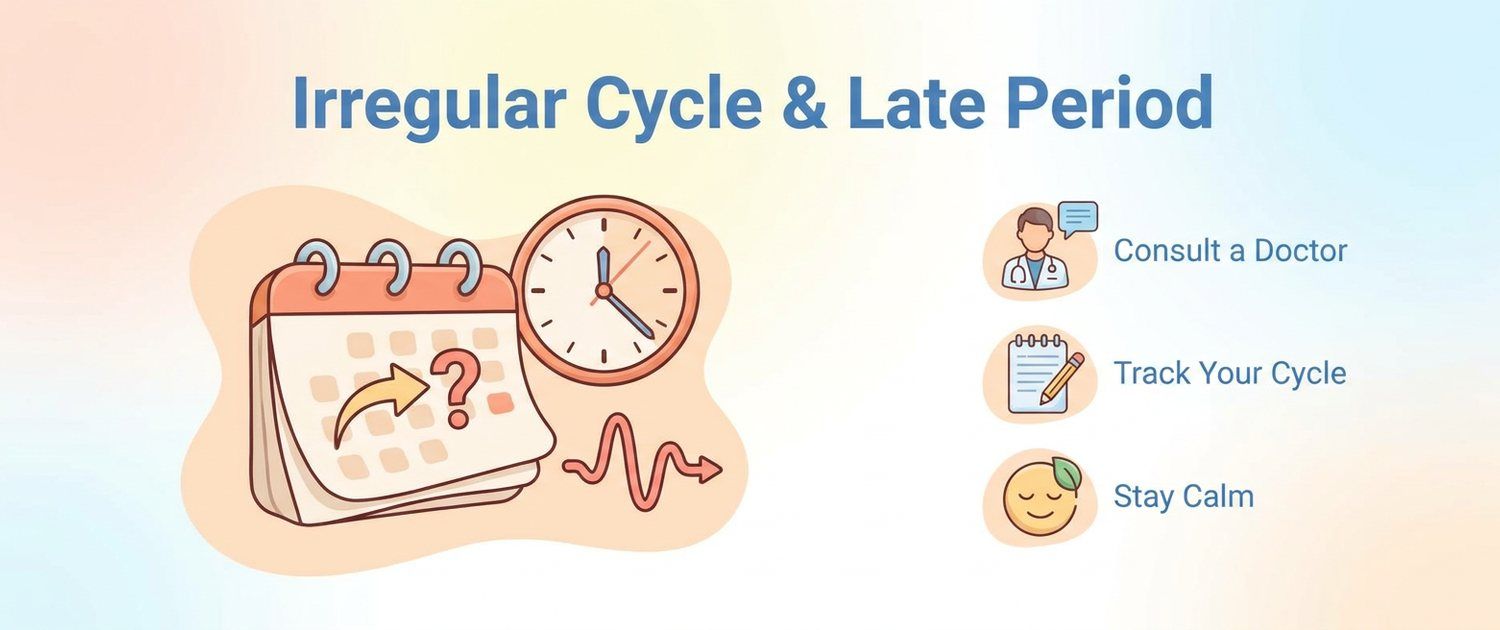
A late period or a cycle that has gone off track worries almost every woman. The first thought is usually pregnancy, but there are many more causes: from stress and weight change to hormonal disorders. The good news: in most cases the cause can be found with a few tests. Let us go through it calmly: what counts as an irregular cycle, what causes lie behind it, and which hormones to check.
What Counts as an Irregular Cycle
A normal menstrual cycle lasts about 24–38 days, and a late period usually means an absence longer than the usual interval. Infrequent periods (less often than every 35+ days) are called oligomenorrhoea, and the absence of periods for 3 or more months is amenorrhoea. A one-off disruption after stress or illness is not a diagnosis; what is concerning is persistent irregularity or a long absence of the cycle.
The First Thing to Rule Out — Pregnancy
In women of reproductive age, a late period first prompts ruling out pregnancy — it is the most common cause. The most reliable way is a blood hCG test (more informative than a home test and earlier). Only after confirming there is no pregnancy does it make sense to look for other causes and check hormones.
Common Causes of a Late or Irregular Cycle
Most often the cycle goes off track due to: severe stress and lack of sleep, sharp weight loss or gain, strict diets and intense exercise, thyroid disorders, raised prolactin, polycystic ovary syndrome (PCOS), starting or stopping hormonal contraception, and around age 45–50 — the approach of menopause. The cause determines the approach.
Which Hormones Are Checked (TSH, Prolactin, FSH, LH, Estradiol)
The basic set for an irregular cycle, by guidelines, includes: TSH (thyroid), prolactin, FSH and LH, and estradiol. It is convenient to take them as one sex hormone panel. An important detail is the cycle phase: some hormones are taken on certain days, which a doctor accounts for.
PCOS, the Thyroid and Prolactin
These three causes are especially common. Raised prolactin is one of the common causes of amenorrhoea. Subclinical hypothyroidism (an abnormal TSH) also disrupts the cycle and warrants treatment. In PCOS, LH is often raised relative to FSH and there are signs of androgen excess — then testosterone is checked too. So a single marker is not interpreted in isolation — the whole picture matters.
When to See a Doctor
See a gynaecologist for a late period without pregnancy lasting more than a few weeks, the absence of periods for 3 months or more, persistent irregularity, very painful or heavy periods, and accompanying symptoms (facial hair, acne, nipple discharge, sharp weight change). Do not choose hormones yourself: the set of tests and their interpretation are determined by a doctor, accounting for the cycle phase and symptoms.
This article is for informational purposes only and does not replace a doctor's consultation.
For informational purposes only
This article is for informational purposes only and does not constitute medical advice, diagnosis, or treatment. Please consult a healthcare professional for medical guidance.