PMS: Premenstrual Syndrome Symptoms and What to Do
Reviewed by the LabReadAI medical team
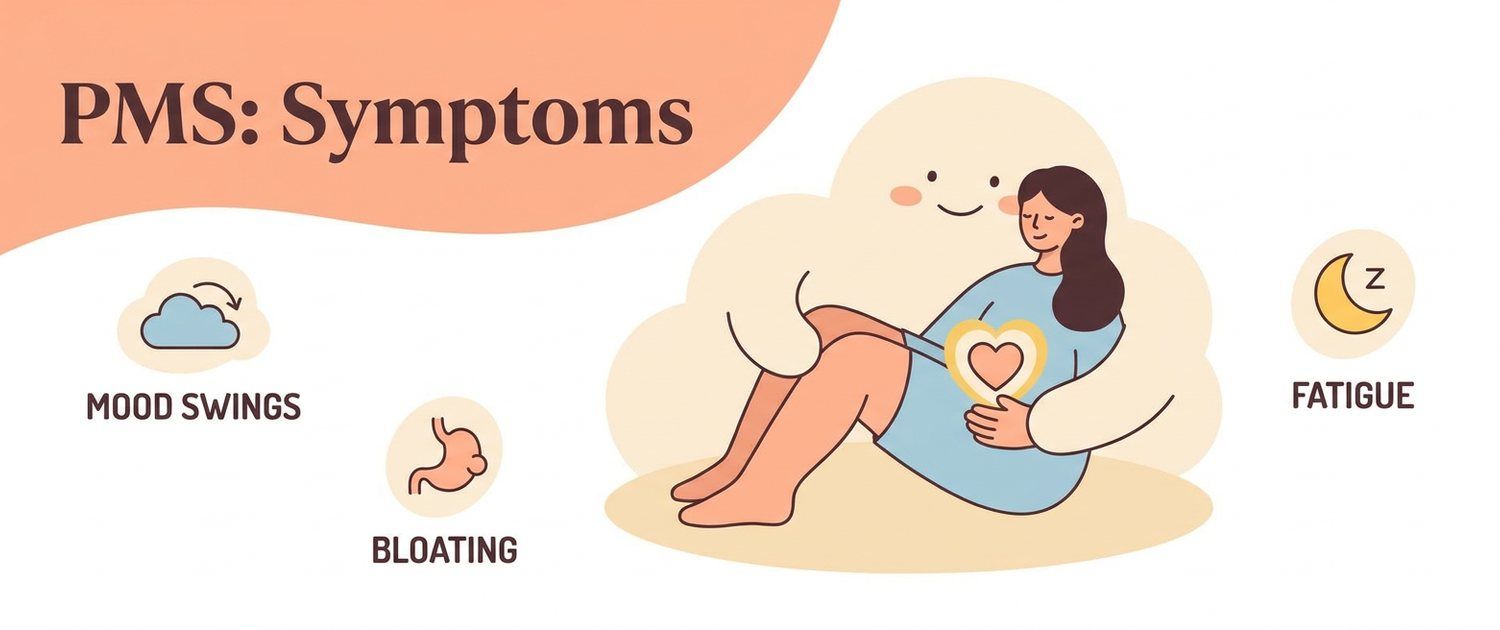
PMS — three letters that stand for a familiar monthly experience for many women: a few days before a period the mood dips, the belly aches, the breasts swell. Sometimes it is put down to character, sometimes it worries women that "something is wrong". In fact premenstrual syndrome is a common and explainable state. Let's sort out what symptoms PMS causes, how it differs from early pregnancy, what the severe form is and when to see a doctor.
What PMS and Premenstrual Syndrome Are
PMS is a set of physical and emotional symptoms that appear in the second, luteal phase of the cycle (after ovulation) and ease as menstruation begins. The key feature is cyclicity: symptoms are tied to this phase and repeat month to month. The cause is normal hormonal fluctuation and individual sensitivity to it, not a "malfunction". Mild symptoms occur in most women; pronounced PMS is less common.
PMS Symptoms: Physical and Emotional
Physical symptoms: bloating, breast tenderness and swelling, headache, dragging pain in the lower abdomen and lower back, puffiness, food cravings, fatigue. Emotional: irritability, tearfulness, anxiety, mood swings, poorer concentration, sleep problems. The set and strength are individual: for some it is mild discomfort, for others it clearly affects well-being and relationships.
How Many Days Before and Why PMS Appears
Symptoms usually start a few days before a period (on average 5–7, sometimes earlier) and pass in the first days of menstruation. This tie to the second phase of the cycle is the main identifying sign. If, instead, irregularity, missed periods or overly frequent bleeding bother you, that is not about PMS — see the article on cycle changes and missed periods.
PMS or Pregnancy: How to Tell Them Apart
Early signs of pregnancy and PMS are similar: breast swelling, fatigue, mood swings, nausea. Two things tell them apart. First, the dynamics: PMS symptoms leave as menstruation starts, while in pregnancy the period does not come. Second, the delay: if a period is late, it is wiser to take a pregnancy test than to guess. Persistent or atypical symptoms are best discussed with a doctor.
PMDD — The Severe Form of Premenstrual Syndrome
If emotional symptoms become severe — marked anxiety, low mood, outbursts of irritability that disrupt work and relationships — it is called premenstrual dysphoric disorder (PMDD). This is not "weak character" but a state that responds to help. A separate detail: in women with ADHD, inattention and emotional instability intensify in the second half of the cycle — see the piece on ADHD in women. With such symptoms it is especially important not to endure but to see a doctor. To sort out your symptoms and prepare for the visit, you can describe your symptoms for review.
How to Ease PMS and What to Do
Many are helped by simple steps: regular sleep, movement, less salt, caffeine and alcohol before a period, managing stress. It helps to keep a symptom diary — it shows the tie to the cycle and eases diagnosis. With pronounced PMS or PMDD a doctor may offer extra help. Sometimes other conditions hide behind "PMS" (for example polycystic ovary syndrome) — a broad view of women's hormonal health is in the article on women's hormones after 35.
Are Tests Needed for PMS
There is no special "PMS test": the diagnosis is clinical, from the characteristic cyclicity and a symptom diary, not from hormones. Tests are ordered not to confirm PMS but to exclude other causes (for example thyroid disease or PCOS) if the picture is atypical. What exactly to check, and whether it is needed, is decided by a doctor.
This article is for informational purposes only and does not replace a doctor's consultation. The diagnosis of PMS and PMDD and the choice of help are made by a specialist based on symptoms and their tie to the cycle.
For informational purposes only
This article is for informational purposes only and does not constitute medical advice, diagnosis, or treatment. Please consult a healthcare professional for medical guidance.