Folic Acid in Pregnancy: Doses and When to Take It
Reviewed by the LabReadAI medical team
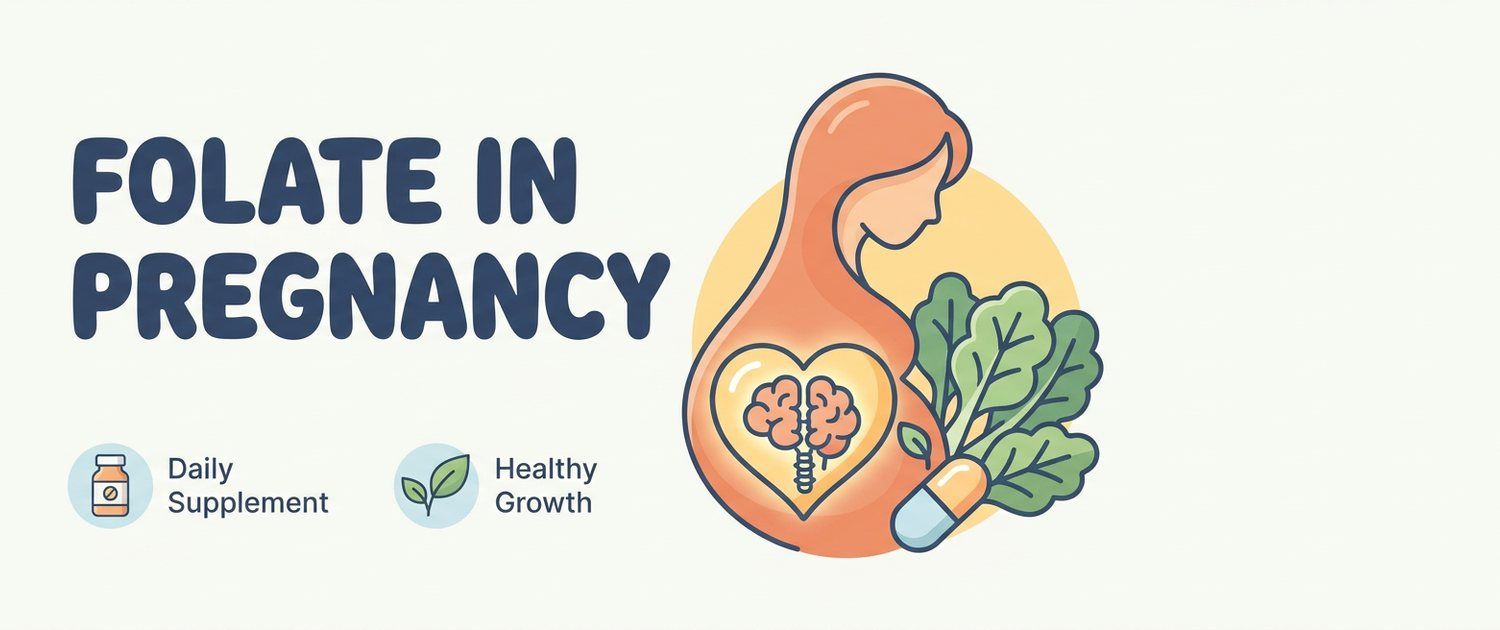
Folic acid is the only vitamin recommended for everyone when planning and in early pregnancy. Its role is proven: it reduces the risk of serious defects in the baby. Let's break down why folate is needed in pregnancy, the dosage and when to take it.
Why Folic Acid Is Needed
Folic acid (vitamin B9) is needed for cell division and the formation of the fetal neural tube — the start of the brain and spinal cord. An adequate level of folate reduces the risk of neural tube defects (e.g. spina bifida).
Dosage in Pregnancy
The standard preventive dose is usually around 400 µg per day. With risk factors (a past neural tube defect, certain conditions, some medications) the doctor may prescribe a substantially higher dose. The exact dosage is set by the doctor.
When to Start and How Long
The key point is to start before conception (1–3 months ahead) and continue at least the whole first trimester (to 12 weeks), when the neural tube forms. Folate is often continued further as part of a pregnancy complex — see vitamins in pregnancy.
What Deficiency Threatens
A folate deficiency before and in early pregnancy raises the risk of neural tube defects in the baby, and in the mother may contribute to anaemia. So folate is prescribed in advance, without waiting for tests — it is basic prevention.
Can You Overdose
At recommended doses folate is safe. There is no need to take very high doses on your own: it does not add benefit, and high doses are justified only on a doctor's prescription for specific indications. Which other nutrients matter — which vitamins you are missing.
To understand your tests and deficiencies in plain language, upload the form (PDF or photo) to the vitamin and supplement matching service. This helps you understand the result, but prescriptions in pregnancy are made by a doctor.
This article is informational. Prescribing folate and doses is the doctor's job.
For informational purposes only
This article is for informational purposes only and does not constitute medical advice, diagnosis, or treatment. Please consult a healthcare professional for medical guidance.