Vitamins in Pregnancy: Which You Need and by Trimester
Reviewed by the LabReadAI medical team
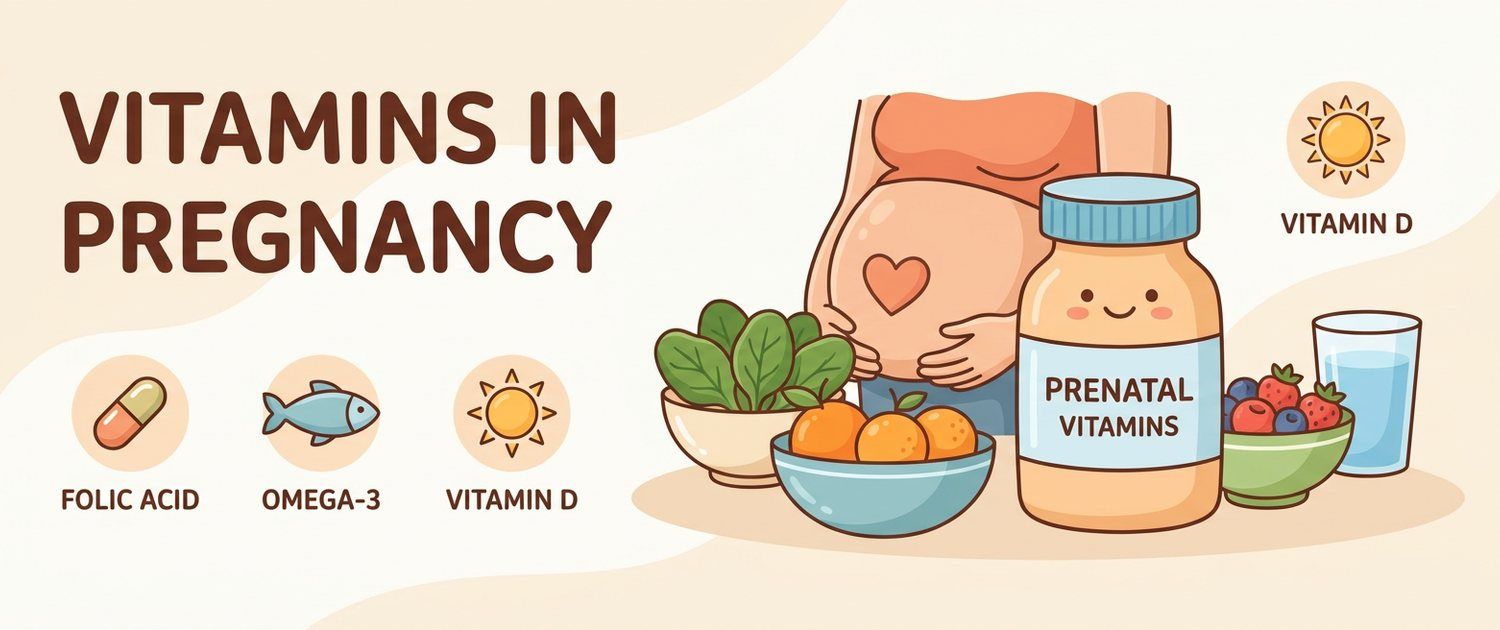
"Pregnancy vitamins" fill a huge pharmacy shelf, and it is easy to get lost. In fact only a few nutrients are proven to matter, and the rest is often marketing. Let's break down which vitamins in pregnancy are truly needed, what to take by trimester and why taking "everything" is unwise.
Which Vitamins Truly Matter: Folate, Iron, Iodine
- Folate — the key one, reduces the risk of neural tube defects; started before conception and in the 1st trimester. More — folate in pregnancy.
- Vitamin D — a common deficiency; important for bones and immunity.
- Iron — for deficiency/anaemia; more — iron in pregnancy.
- Iodine — for the mother's thyroid and the baby's brain development.
- Omega-3 (DHA) — for fetal brain and eye development.
Vitamins by Trimester
- Before conception and 1st trimester: folate (the main one), vitamin D, iodine on indication.
- 2nd trimester: the need for iron and calcium rises; monitor haemoglobin and ferritin.
- 3rd trimester: iron, omega-3, vitamin D; calcium as needed.
Why Test
Doses and the set are best chosen from tests, not "just in case": ferritin, vitamin D, others on indication — see which vitamins you are missing. That way you replace exactly what is lacking and do not overpay for extras.
Why Large Doses Are Dangerous
More is not always better. Vitamin A in large doses is teratogenic (dangerous to the fetus); an excess of other fat-soluble vitamins is also harmful. So doses in pregnancy are strictly on a doctor's recommendation, without DIY megadoses.
When to See a Doctor
Choosing vitamins is part of monitoring; they are prescribed by tests and dates. The overall plan is in what tests are done in pregnancy. With marked deficiencies (anaemia, low vitamin D), the doctor adjusts doses and monitors the trend.
To understand what you are missing from tests, upload the form (PDF or photo) to the vitamin and supplement matching service: the AI will explain the markers. This helps you understand the result, but prescriptions in pregnancy are made by a doctor.
This article is informational. Prescribing vitamins in pregnancy is the doctor's job.
For informational purposes only
This article is for informational purposes only and does not constitute medical advice, diagnosis, or treatment. Please consult a healthcare professional for medical guidance.