Niacinamide: What It Is For in Skincare and Who It Suits
Reviewed by the LabReadAI medical team
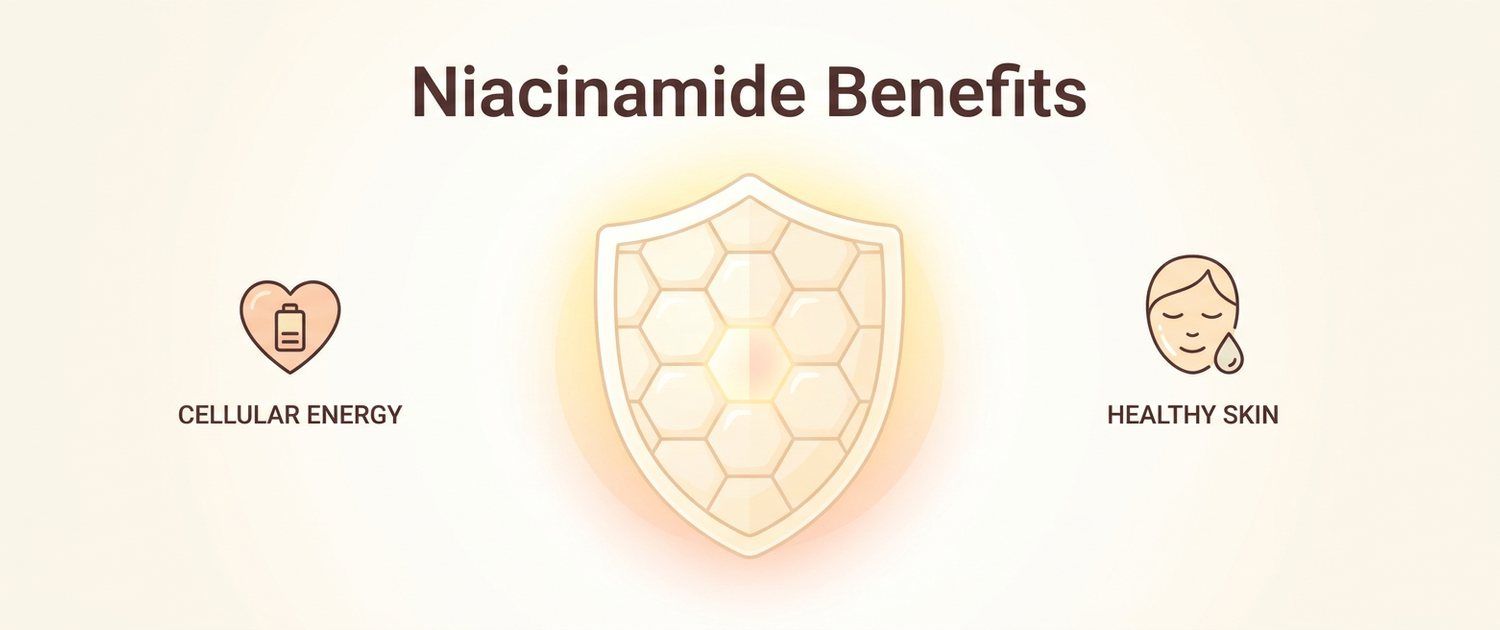
Niacinamide is one of the few cosmetic ingredients with a genuinely strong evidence base while being gentle for almost everyone. It is added to "everything", but not always at a working concentration. Let's break down what niacinamide is, what it really does for skin, what concentration works, who it suits, and how to use it correctly in a skincare routine.
What Niacinamide Is
Niacinamide (nicotinamide) is a form of vitamin B3. In the skin it participates in cell energy metabolism and the synthesis of barrier lipids. Unlike many actives, it is stable, non-irritating, and compatible with almost everything — which is why it became the "workhorse" of skincare.
What Niacinamide Does for Skin
Proven effects of niacinamide:
- Strengthens the skin barrier — stimulates ceramide synthesis, reduces water loss
- Regulates sebum — reduces oiliness and pore visibility
- Lightens pigmentation — blocks melanin transfer into skin cells; more in dark spots on the face
- Soothes — reduces redness and inflammation
- Antioxidant — supports skin under stress and UV
Thanks to sebum and barrier regulation, niacinamide is useful for both acne and sensitive skin at the same time.
What Concentration of Niacinamide Works
In studies, the effect on pigmentation and barrier is shown at about 4–5%, on sebum — from 2%. Higher concentrations are not always better: above 10% the risk of irritation rises without a clear added benefit. The concentration is rarely stated on the label, so judge by the position in the composition — how to read this is in how to check cosmetics ingredients.
Who It Suits: Oily Skin, Pigmentation, Sensitivity
- Oily and porous skin — reduces sebum and pore visibility; see blackheads and enlarged pores
- Pigmentation and post-acne — lightens, evens out tone
- Sensitive skin and rosacea — strengthens the barrier, soothes
- Acne — gentle support alongside main treatments; on causes — acne
How to Use Niacinamide and What to Combine It With
- Suitable for morning and evening, on cleansed skin before cream
- Combines well with zinc (sebum control), hyaluronic acid, SPF
- Compatible with retinoids and acids (the old myth about "incompatibility with vitamin C" has been debunked — they can be used together or at different times)
- Starting once a day is enough, then as tolerated
Niacinamide: Myths and Side Effects
- "Niacinamide can't go with vitamin C" — a myth, modern data debunk it
- "The higher the percentage, the better" — no, above 10% the irritation risk rises
- Side effects are rare: mild redness at high concentrations in sensitive skin
Matching a niacinamide product to your skin and goals is helped by cosmetics matching by composition.
This information is for educational purposes and does not replace a specialist consultation.
For informational purposes only
This article is for informational purposes only and does not constitute medical advice, diagnosis, or treatment. Please consult a healthcare professional for medical guidance.