Dark Spots on the Face: Causes and What Actually Helps
Reviewed by the LabReadAI medical team
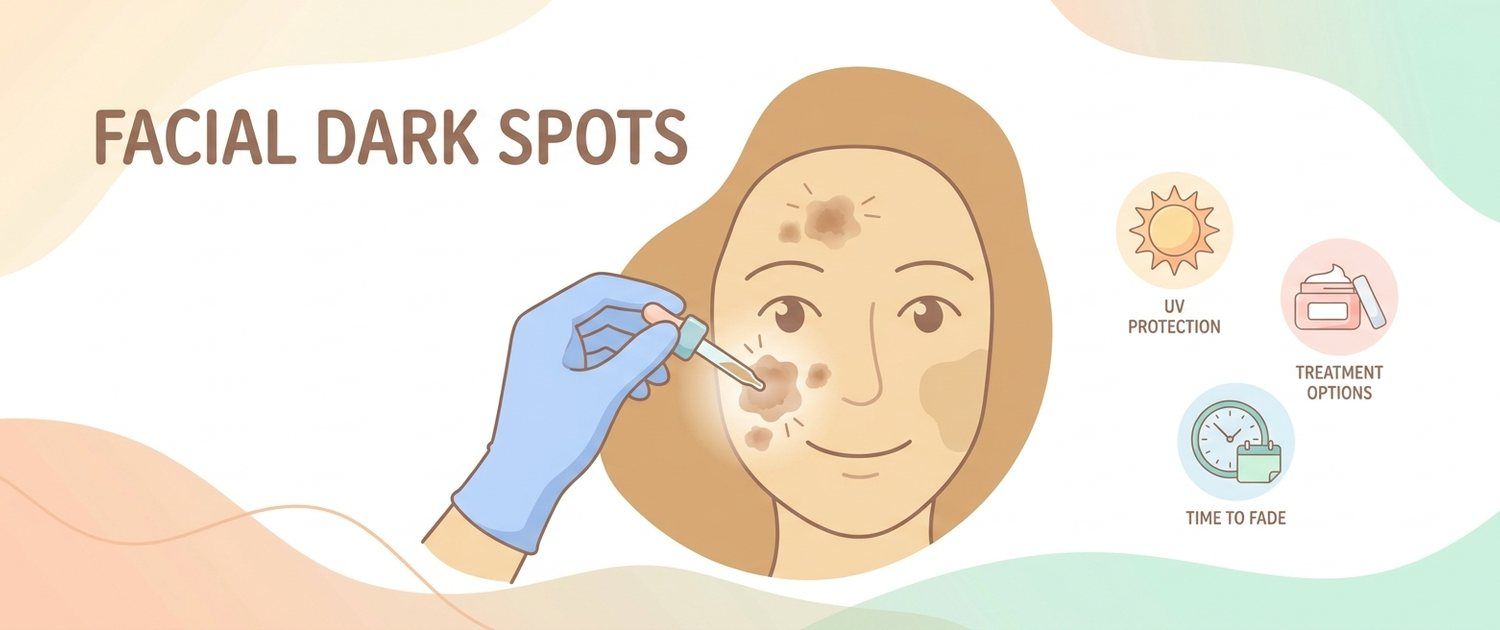
Dark spots are one of the most common facial skin complaints, and one of the hardest to fix. "One week" creams do not work, and without the key step (sun protection) spots come back. Let's break down why hyperpigmentation appears, what types of spots exist, what actually lightens skin, and when to see a doctor.
Why Dark Spots Appear: Causes
Spots are areas where melanocytes produce too much pigment (melanin). The main triggers:
- UV — the primary factor: the sun both stimulates melanin and keeps spots from fading
- Inflammation — after acne, injury, or aggressive procedures, post-acne pigmentation remains
- Hormones — pregnancy, contraceptives (melasma)
- Age — lentigines ("age spots") from accumulated UV
So fighting spots always rests on two pillars: blocking new pigment production and protecting from the sun.
Types of Pigmentation: Melasma, Post-Acne, Lentigines
- Melasma — symmetric patches on cheeks, forehead, upper lip; linked to hormones and sun, prone to recurrence
- Post-acne (PIH) — marks where pimples were; they fade on their own but slowly. How to reduce acne itself is in acne: causes
- Lentigines — discrete dark spots from UV, more common after 40
The Main Rule — Sun Protection
Without daily SPF any lightening is pointless: new UV undoes the result. You need an SPF 30–50 cream every day, including winter and cloudy weather; for melasma, products with iron oxide (protection from visible light too) are preferable. This is not "one of the steps" but the foundation.
What Lightens Skin: Azelaic Acid, Vitamin C, Niacinamide
Proven lightening ingredients:
- Azelaic acid — reduces pigment, gentle, safe in pregnancy
- Vitamin C — antioxidant, slows melanin synthesis
- Niacinamide — blocks pigment transfer into skin cells; more in niacinamide: what it is for
- Retinoids, acids — speed up skin renewal; overview in acids for the face
- Hydroquinone, tranexamic acid — strong, but under medical supervision
Matching ingredients to your skin type without irritation is helped by cosmetics matching by composition. What to look for on the label and how to read it is in how to check cosmetics ingredients.
Hormones and Hyperpigmentation
Melasma is often linked to hormonal fluctuations (pregnancy, combined contraceptives, perimenopause). For stubborn melasma in women, it is reasonable to consider the hormonal background — we cover age-related changes in women's hormones after 35.
What to Avoid and Myths
- Aggressive scrubs and "whitening" folk remedies (lemon, baking soda) worsen inflammation and pigmentation
- A tan "evens out tone" — a myth, UV only worsens it
- Dropping SPF after the first result guarantees recurrence
When to See a Doctor
If a spot changes quickly, grows, has irregular edges or varied color — see a dermatologist promptly (to rule out melanoma). Persistent melasma and pronounced pigmentation respond better to therapy under specialist supervision.
This information is for educational purposes and does not replace a specialist consultation.
For informational purposes only
This article is for informational purposes only and does not constitute medical advice, diagnosis, or treatment. Please consult a healthcare professional for medical guidance.