Dandruff and Seborrheic Dermatitis: Causes and What Helps
Reviewed by the LabReadAI medical team
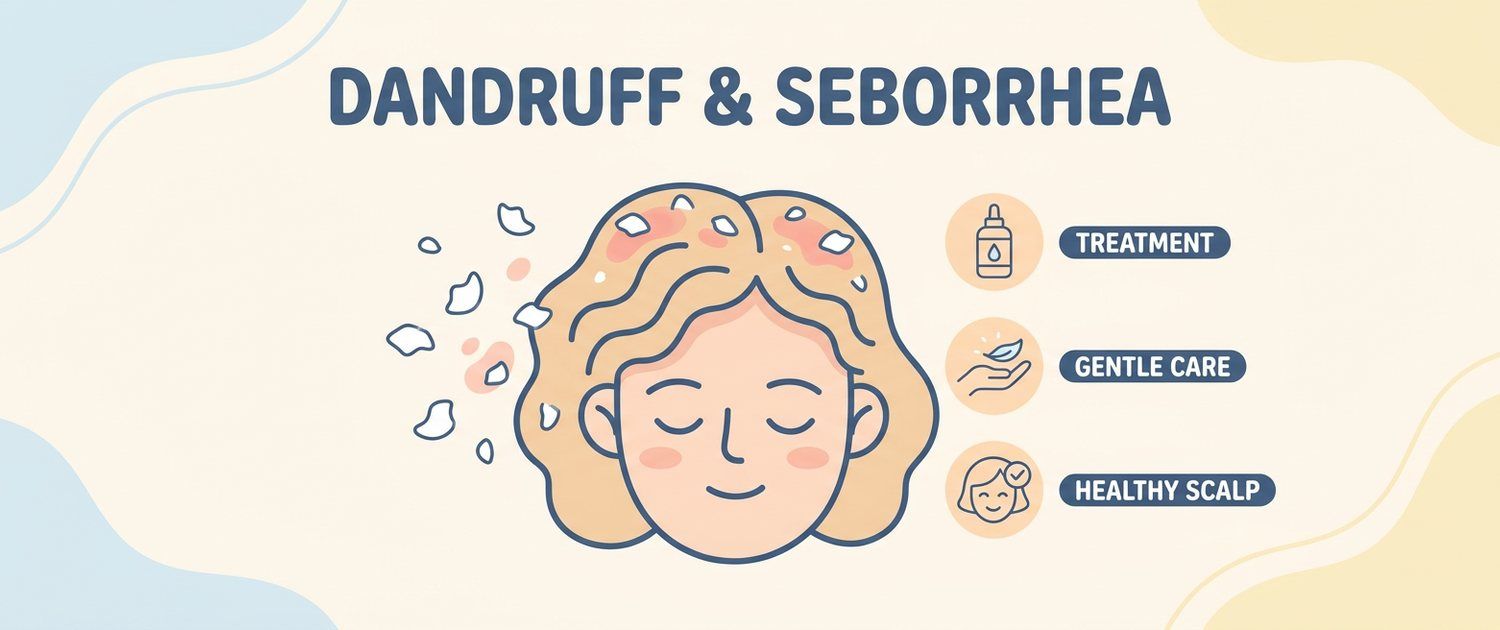
Dandruff is not about "dry skin" or poor hygiene, as people assume. It usually starts with the skin's reaction to the yeast fungus Malassezia, which is why a regular shampoo does not clear it. Let's break down where dandruff comes from, how it differs from seborrheic dermatitis, which shampoo ingredients really help, and how to choose a product by its composition rather than its ad.
Where Dandruff Comes From
The fungus Malassezia lives on everyone's scalp. It feeds on sebum and releases substances to which some people's skin reacts with inflammation, accelerated flaking, and itching. Hence the three factors of dandruff:
- Malassezia — the provoking fungus
- Sebum (skin oil) — its "food"
- Individual sensitivity of the skin
So dandruff is not dryness: it is more often linked to an oily scalp. Dry flakes also occur, but the mechanism is inflammatory.
Dandruff or Seborrheic Dermatitis — the Difference
It is the same condition of varying severity. Dandruff is the mild form (flakes, light itching without marked inflammation). Seborrheic dermatitis is more severe: redness, yellow greasy scales, itching, sometimes spreading beyond the scalp (eyebrows, sides of the nose, behind the ears). They are treated similarly, but seborrheic dermatitis needs more active and regular therapy.
What Really Helps: Active Ingredients
Products that act on the fungus and inflammation work — not "strengthening" shampoos:
- Ketoconazole 1–2% — antifungal, one of the most effective
- Ciclopirox — antifungal, an alternative to ketoconazole
- Zinc pyrithione — antifungal and anti-inflammatory
- Selenium sulfide — reduces fungus and flaking
- Salicylic acid, coal tar — help remove scales
In comparative studies, ketoconazole 2% performed slightly better than zinc pyrithione 1%, but both are effective. What matters is not the brand but the active ingredient and regular use.
How to Choose an Anti-Dandruff Shampoo (Read the Composition)
Look not at the promises on the front but at the list of active ingredients. Ideally — alternate products with different actives (for example, ketoconazole and zinc pyrithione), leave on for 3–5 minutes, and use 2–3 times a week in the active phase, then less often for maintenance. How to read the composition of care products in general is in how to check cosmetics ingredients; matching a product to your scalp is helped by cosmetics matching by composition.
Deficiencies and Hormones in Seborrhea
Stress, hormonal shifts, zinc deficiency, and immunosuppression can worsen seborrhea. If hair loss occurs alongside it, it is worth checking deficiencies — see vitamins for hair and hair loss: causes. Persistent flaking and dry skin overall are covered in dry and flaky skin.
What Does Not Help and Myths
- "Dandruff from dryness" → more often the opposite, from excess sebum
- Frequent washing with a "regular" shampoo does not treat it — no action on the fungus
- Folk oils may even feed Malassezia
When to See a Doctor
- Severe inflammation, weeping, crusts, spread to the face and body
- Dandruff does not clear in 4–6 weeks of correct therapy
- Hair loss, patches, tenderness
A dermatologist will prescribe prescription products (including antifungals and short courses of topical steroids).
This information is for educational purposes and does not replace a specialist consultation.
For informational purposes only
This article is for informational purposes only and does not constitute medical advice, diagnosis, or treatment. Please consult a healthcare professional for medical guidance.