Dry and Flaky Skin: Causes and Which Tests to Take
Reviewed by the LabReadAI medical team
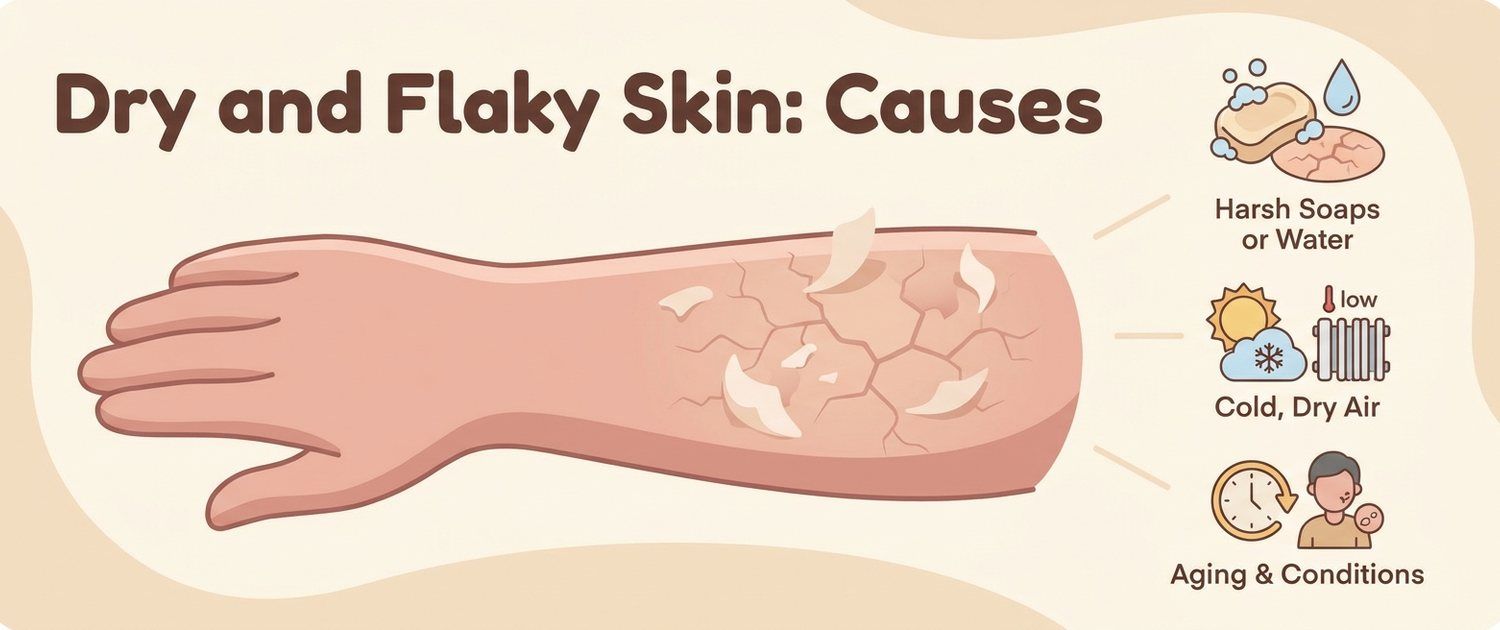
Dry, tight, flaky skin is familiar to almost everyone, especially in winter. Most often the cause is everyday and harmless, but sometimes persistent dryness is a signal that something is off inside: for example, reduced thyroid function or a deficiency of iron and vitamins. Let us go through it calmly: why skin becomes dry, when it is a reason to take tests, and what is really worth checking.
Why Skin Becomes Dry and Flaky
Dry skin (xerosis) occurs when the protective barrier is disturbed and the skin loses moisture. It can be linked to external factors (weather, skincare) or internal ones (hormones, deficiencies, diseases). The skin is a "mirror" of metabolism, so persistent flaking that does not go away with a cream sometimes points to a systemic cause visible on tests.
Everyday Causes (Weather, Care, Age)
The most common causes of dryness are harmless: cold and dry air in winter, heating, hot showers and harsh soap, frequent washing, hard water, age (over the years the skin holds less moisture). In these cases basic care helps: gentle cleansing, moisturisers, a humidifier. If the dryness goes away with care and is seasonal, a work-up is usually not needed.
When Dry Skin Is a Thyroid Signal
Dry, rough and flaky skin is one of the early signs of reduced thyroid function (hypothyroidism). Skin cells have receptors for thyroid hormones, and when these are lacking, skin renewal slows. So with persistent dryness, especially combined with fatigue, cold intolerance, weight gain and hair loss, it is sensible to check TSH. More is in the article on hypothyroidism.
Deficiencies: Iron, Vitamins, Zinc
Persistent dryness and flaking can be linked to deficiencies: a lack of iron (low ferritin), vitamin D, and also vitamins A and E and zinc. Interestingly, in hypothyroidism both iron and vitamin D are often low at the same time, so these markers are logically checked together. Uncontrolled "skin" vitamin intake without a confirmed deficiency is not justified.
Which Tests to Take for Persistent Dryness
If dryness is persistent, does not go away with care or comes with other symptoms, a sensible basic set (in agreement with a doctor): TSH and if abnormal — thyroid hormones, ferritin and iron studies, vitamin D, and with risk factors — glucose (dry skin occurs with diabetes). These tests help tell "just dry skin" from a systemic cause.
Care and When to See a Doctor
Basic care (gentle cleansing, moisturising, protection from cold) helps in most cases. See a doctor if dryness does not go away with care, comes with intense itching, redness, cracks or sores, or there are general symptoms (fatigue, cold intolerance, weight change). Intense itchy skin and persistent flaking are a reason not to guess but to see a doctor and, if needed, take tests.
This article is for informational purposes only and does not replace a doctor's consultation.
For informational purposes only
This article is for informational purposes only and does not constitute medical advice, diagnosis, or treatment. Please consult a healthcare professional for medical guidance.