Pregnancy Screening: Timing, What It Shows and Norms
Reviewed by the LabReadAI medical team
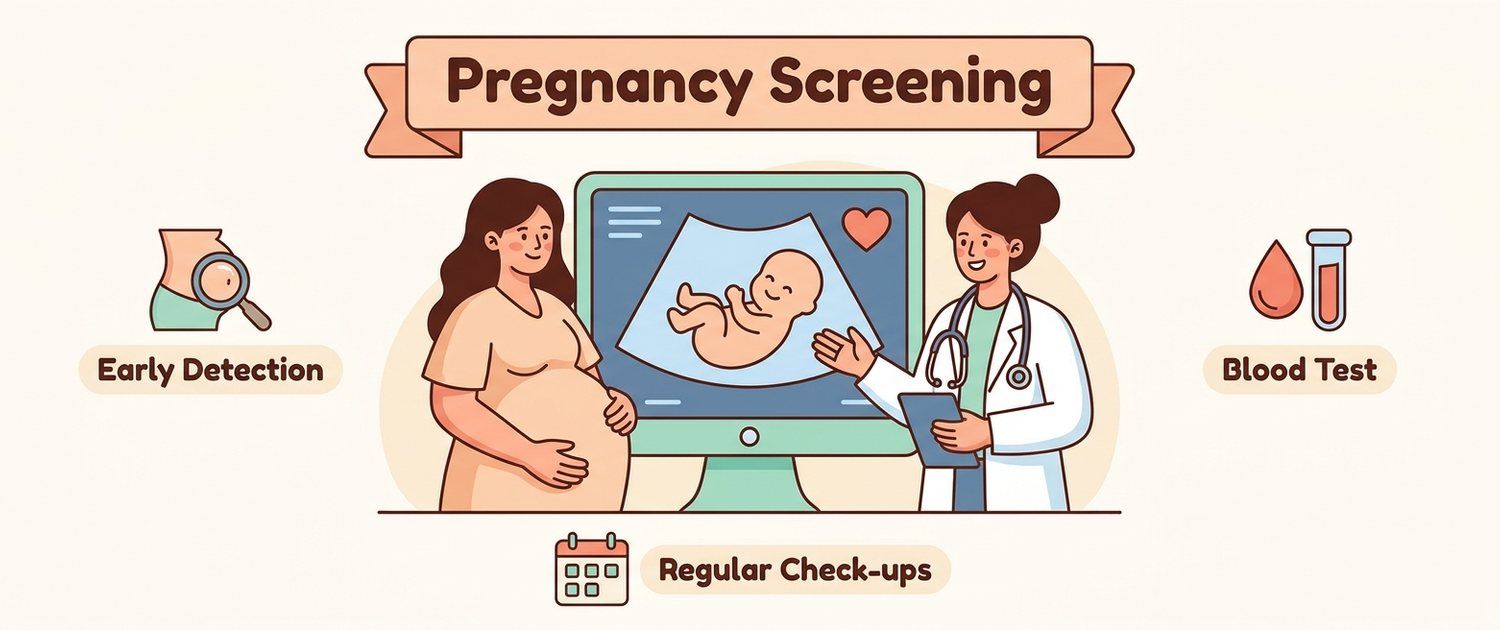
Prenatal screening frightens with words like "risk", "PAPP-A", "MoM". In fact it is not a diagnosis but a probability estimate — to offer in-depth testing in time. Let's break down when pregnancy screening is done, what ultrasound and biochemistry show, and how to read the result.
What Screening Is and Why It Is Done
Pregnancy screening is a combination of ultrasound and a blood test (biochemistry) used to calculate the risk of chromosomal anomalies (Down syndrome and others). It is a probability estimate, not a diagnosis: "high risk" does not mean disease, and "low risk" does not guarantee its absence.
First and Second Trimester Screening: Timing
- 1st screening (11–14 weeks): ultrasound (dates, NT — nuchal translucency) + biochemistry (hCG and PAPP-A). More on the ultrasound part — ultrasound in pregnancy.
- 2nd screening (18–21 weeks): primarily ultrasound fetal anatomy; biochemistry (AFP, hCG, estriol) on indication.
The hCG level is one of the key markers in the calculation.
Reading the Result: Risk and MoM
Biochemical markers are expressed in MoM (multiples of the median): normal is roughly 0.5–2.0 MoM. The screening result is a calculated risk as a fraction (e.g., 1:1500). The larger the denominator, the lower the risk. A "threshold" is often a risk above 1:250–1:300 — a reason not to panic but to see a geneticist.
What to Do with "High Risk"
High screening risk is an indication for clarification: NIPT (non-invasive prenatal test from maternal blood) or invasive testing (amniocentesis) as decided by a geneticist. Screening only selects who needs further testing — it does not make the diagnosis itself.
When to See a Doctor
Discuss a high calculated risk, marked ultrasound or biochemistry deviations, or changes over time with your doctor. Screening is part of the overall plan; the full list is in what tests are done in pregnancy.
To understand your screening report in plain language, upload it (PDF or photo) to the lab results interpretation service: the AI will explain the markers and MoM for the dates. This helps you understand the result but does not replace a geneticist.
This article is informational. Screening interpretation and management are the doctor's job.
For informational purposes only
This article is for informational purposes only and does not constitute medical advice, diagnosis, or treatment. Please consult a healthcare professional for medical guidance.