Formula · 5.0
Brand · 5.8
Tefia · collagen + panthenol + vitamin E · Russia
Tefia MyCare Color shampoo for coloured hair with chia and babassu oils
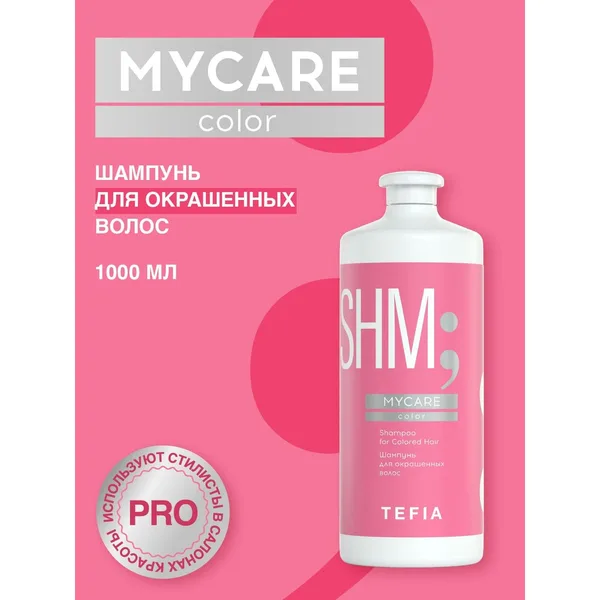
LabReadAI label score
How the score is calculated- Actives and evidence0.5Actives with strong evidence: 0 of 3
- Completeness for the purpose1.0For “colour protection for dyed hair” — 100 %; no UV filter — though in a rinse-off product it barely works anyway; pomegranate extract; could be added without conflict: benzophenone-4 (sulisobenzone), pomegranate extract; a broad formula across 4 purposes
- Cleansing base0.7Harsh surfactants: sodium laureth sulfate (SLES); mild surfactants: cocamidopropyl betaine, disodium cocoamphodiacetate, mild surfactants and emulsifiers; irritation potential of the base — 33 % of SLS; film: silicones
- Tolerance0.2Rinse-off product; debatable groups: cocamide DEA, isothiazolinone preservatives (MIT/MCI) (skin test positive in 6 of 100 tested), isothiazolinone preservatives (MIT/MCI), parabens (skin test positive in 1 of 100 tested), fragrance and its allergens (skin test positive in 13 of 100 tested)
- adults
- children
- pregnancytopical — allowed
- colour-treated hair
- babies
- dry skin
- sensitive skinirritation possible
- atopic skinfragrance is a common trigger
- dry scalpmay dry
Ingredients — 32 components, 3 of them active
The rest is the formula base: it holds texture, shelf life and application, and is not meant to act.
What works: 3 of 32 ingredients: collagen, panthenol, vitamin e. Dye is washed out by water and cleansing surfactants rather than “faded”: colour loss is slowed by a mild base, acidic pH and a film on the hair — silicones or hydrolysed proteins that smooth the cuticle. A UV filter in a rinse-off shampoo barely stays on the hair, so its contribution is weak.
Strengths: completeness for the purpose
What lowers the score: actives and evidence: actives with strong evidence: 0 of 3; cleansing base: harsh surfactants: sodium laureth sulfate; tolerance: rinse-off product
Questions: sodium laureth sulfate (SLES): sodium laureth sulfate — the main cleansing surfactant; can dry a sensitive scalp — the reason people look for «sulfate-free»; unrestricted in rinse-off products; cocamide DEA — a thickener and foam booster. It is restricted: in the presence of nitrites diethanolamides can form nitrosamines, so the regulator caps secondary amines and forbids nitrosating additives; California lists it under Proposition 65.; parabens: methylparaben, ethylparaben, propylparaben; isothiazolinone preservatives (MIT/MCI): methylisothiazolinone, methylchloroisothiazolinone; fragrance and its allergens: fragrance, limonene, linalool, geraniol
- Aqua (Water base: coating, fillers · water — the solvent and base; listed first because there is more of it than anything else; in supplements — part of the capsule shell
- Sodium Laureth Sulfate questions · the main cleansing surfactant; can dry a sensitive scalp — the reason people look for «sulfate-free»; unrestricted in rinse-off products
- Cocamidopropyl Betaine base: coating, fillers · a mild amphoteric surfactant: it builds dense foam and softens the harsh sulfates next to it. It occasionally causes contact allergy, and the culprit is a manufacturing impurity rather than the ingredient itself.
- Sodium Chloride base: coating, fillers · tune the acidity and texture; salt is a common shampoo thickener
- Disodium Cocoamphodiacetate base: coating, fillers · an amphoteric surfactant of baby and very mild products: it cleanses less strongly than the sulfates and irritates the eyes less.
- Polysorbate 20 base: coating, fillers · cleanse and bind water with oils; milder than the sulfate ones
- Cocamide DEA questions · a thickener and foam booster. It is restricted: in the presence of nitrites diethanolamides can form nitrosamines, so the regulator caps secondary amines and forbids nitrosating additives; California lists it under Proposition 65.
- Polyquaternium-7 base: coating, fillers · a conditioning polymer: it removes static, makes combing easier and softens the foam.
- Glycol Distearate base: coating, fillers · humectants and solvents — hold water and help actives dissolve
- Polyquaternium-10 base: coating, fillers · soften, condition and carry the actives; the backbone of the texture
- Bis(C13-15 Alkoxy) PG-Amodimethicone base: coating, fillers · form a smooth film and shine; inert and not absorbed — a preference question, not a safety one
- Citric Acid base: coating, fillers · acidity regulator
- Propylene Glycol base: coating, fillers · humectants and solvents — hold water and help actives dissolve
- Hydrolyzed Elastin base: coating, fillers · proteins cut into short pieces: they settle on hair and skin as a film and make hair smooth and denser to the touch.
- Desamido Collagen works · the active ingredient — what the product is for; form: hydrolysed (type not stated)
- Emblica Officinalis (Amla) Fruit Pulp Oil base: coating, fillers · the plant base: emollient oils, waxes and care extracts
- Orbignya Oleifera (Babassu) Seed Oil base: coating, fillers · a light oil close to coconut oil; does not clog pores
- Salvia Hispanica (Chia) Seed Oil base: coating, fillers · the plant base: emollient oils, waxes and care extracts
- Glycerin base: coating, fillers · a humectant: coats the tablet, holds moisture in creams and shampoos; does not clog pores
- Panthenol works · the active ingredient — what the product is for; form: panthenol
- Tocopheryl Acetate works · the active ingredient — what the product is for; form: tocopheryl acetate (ester; in cosmetics)
- Benzophenone-4 base: coating, fillers · absorbs or reflects ultraviolet light to protect the skin
- Phenoxyethanol base: coating, fillers · the most widespread cosmetic preservative: it keeps the product sterile. Permitted in the EU up to 1 %, recognised as safe at that level.
- Methylparaben questions · preservatives; methyl- and ethylparaben are recognised as safe at permitted levels, propyl- and butyl- are limited by the EU to 0.14 %; a frequent buyer question rather than proven harm
- Ethylparaben questions · preservatives; methyl- and ethylparaben are recognised as safe at permitted levels, propyl- and butyl- are limited by the EU to 0.14 %; a frequent buyer question rather than proven harm
- Propylparaben questions · preservatives; methyl- and ethylparaben are recognised as safe at permitted levels, propyl- and butyl- are limited by the EU to 0.14 %; a frequent buyer question rather than proven harm
- Methylisothiazolinone questions · preservatives; banned in EU leave-on products and limited in rinse-off (0.0015%) — a frequent cause of contact allergy
- Methylchloroisothiazolinone questions · preservatives; banned in EU leave-on products and limited in rinse-off (0.0015%) — a frequent cause of contact allergy
- Parfum (Fragrance questions · the fragrance and its aromatic components; the EU requires 26 of them to be listed separately — matters to people allergic to fragrance, does not affect how the product works
- Limonene questions · the fragrance and its aromatic components; the EU requires 26 of them to be listed separately — matters to people allergic to fragrance, does not affect how the product works
- Linalool questions · the fragrance and its aromatic components; the EU requires 26 of them to be listed separately — matters to people allergic to fragrance, does not affect how the product works
- Geraniol questions · the fragrance and its aromatic components; the EU requires 26 of them to be listed separately — matters to people allergic to fragrance, does not affect how the product works
- Acid Red 52 (CI 45100 base: coating, fillers · gives hair its colour
Tefia MyCare Color shampoo for coloured hair with chia and babassu oils is a product whose active ingredient is collagen + panthenol (pro-vitamin b5) + vitamin e. The concentration is not declared; the active sits after the 1 % line, but works at small shares. There is little evidence of effect: collagen, vitamin e. The effect is moderately supported: panthenol (pro-vitamin b5). The formula has 32 ingredients, 3 of which do the work; the rest is the formula base. Worth noting: Sodium Laureth Sulfate (the main cleansing surfactant; can dry a sensitive scalp — the reason people look for «sulfate-free»; unrestricted in rinse-off products); Cocamide DEA (a thickener and foam booster. It is restricted: in the presence of nitrites diethanolamides can form nitrosamines, so the regulator caps secondary amines and forbids nitrosating additives; California lists it under Proposition 65.); Methylparaben, Ethylparaben, Propylparaben; Methylisothiazolinone, Methylchloroisothiazolinone; Parfum (Fragrance), Limonene, Linalool, Geraniol. Dye is washed out by water and cleansing surfactants rather than “faded”: colour loss is slowed by a mild base, acidic pH and a film on the hair — silicones or hydrolysed proteins that smooth the cuticle. A UV filter in a rinse-off shampoo barely stays on the hair, so its contribution is weak. By the list, no alcohol (alcohol denat), formaldehyde releasers, mineral oils and petrolatum, soap, gelatin in the coating, toning dyes, tar. Suitable for: adults, children, pregnancy, colour-treated hair, babies, dry skin. sensitive skin, atopic skin, dry scalp — ask a doctor. prone to contact allergy, fragrance allergy — not without a doctor. Use: in a shampoo, conditioner or mask after washing, along the length. When to expect an effect: smoothness — right away, until the next wash. Label score — 5.0 out of 10 (actives with strong evidence: 0 of 3; harsh surfactants: sodium laureth sulfate (sles); mild surfactants: cocamidopropyl betaine, disodium cocoamphodiacetate, mild surfactants and emulsifiers; irritation potential of the base — 33 % of sls; film: silicones; rinse-off product; debatable groups: cocamide dea, isothiazolinone preservatives (mit/mci) (skin test positive in 6 of 100 tested), isothiazolinone preservatives (mit/mci), parabens (skin test positive in 1 of 100 tested), fragrance and its allergens (skin test positive in 13 of 100 tested)). Per the pack: avoid contact with eyes; rinse thoroughly with water on contact. A restatement of the label, not an assessment.
Who it does not suit
- prone to contact allergyone of the most frequent cosmetic allergens
- fragrance allergyrisk of reaction
When to stop: rarely — contact allergy: rash, itching — stop
Per the maker's leaflet: Per the pack: avoid contact with eyes; rinse thoroughly with water on contact. A restatement of the label, not an assessment.
Is this product right for your hair?
The score describes the formula, not your hair: a sulfate shampoo suits an oily scalp and fails a dry, sensitive one. Tell us about your hair, scalp and the problem — shedding, dandruff, oiliness, dryness — and we will build a routine and say whether this product suits you.
Similar products
Same nutrient and the same purpose — closest by form and dose. Each has its own score by the same method, so you can see whether there is an option nearby that is more honest or simpler in composition.
 СеленцинSelencin Hair Therapy anti-shedding rinse-off conditioner3.8
 Aravia ProfessionalARAVIA Professional All In One Styler7.5
 Моё солнышкоMoyo Solnyshko Juicy Mandarin Kids Shampoo5.2
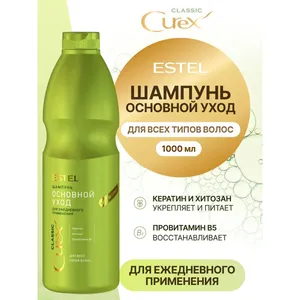 Estel ProfessionalEstel Curex Classic daily shampoo “Moisture and nutrition”4.8
 СеленцинSelencin Hair Therapy Anti-Hair-Loss Mask3.6
 DucrayDucray Anaphase+ strengthening conditioner for weakened, shedding hair3.3
 OlaplexOlaplex No.3 Plus Complete Repair treatment7.8
 Planeta OrganicaPlaneta Organica Savon De Alep Anti-Dandruff Shampoo7.7