Formula · 9.9
Brand · 8.1
The Ordinary · glycolic acid 7% (AHA) · Canada
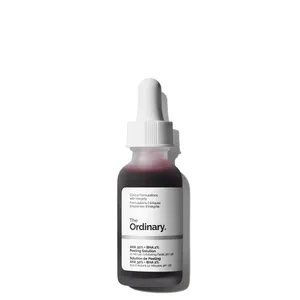
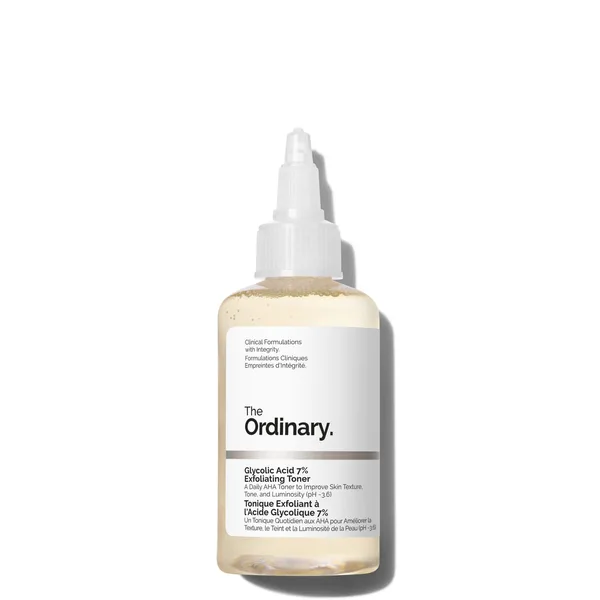
The Ordinary Glycolic Acid 7% Toning Solution
LabReadAI label score
How the score is calculated- Actives and evidence1.0Effect supported by studies
- Active concentration1.0Concentration within the working range
- Completeness for the purpose1.0For “skin texture and pores” — 100 %; without niacinamide, which makes pores less visible; without a retinoid — it renews the skin deeper than acids; could be added without conflict: niacinamide (vitamin b3); a broad formula across 3 purposes
- Tolerance0.9Debatable ingredient groups: hexyl nicotinate
- adults
- pregnancyallowed per the leaflet
- oily skin
- sensitive skintingling, start 1–2 times a week
- before sunSPF is a must in the daytime
Ingredients — 24 components, 1 of them active
The rest is the formula base: it holds texture, shelf life and application, and is not meant to act.
What works: 1 of 24 ingredients: glycolic acid. Bumps and enlarged pores are smoothed by acids (glycolic, lactic, mandelic, PHA, salicylic) — one is enough; niacinamide makes pores less visible, a retinoid renews the skin more deeply. Pores do not “close” — they become less noticeable.
Strengths: actives and evidence, active concentration, completeness for the purpose, tolerance
Questions: hexyl nicotinate — a nicotinic-acid ester that dilates skin vessels: boosts blood flow and gives some people visible redness and warmth (Dermatologica 1987, laser Doppler in healthy volunteers); in toners it is claimed “for radiance” — a tolerance question, not an allergen
- Aqua (Water base: coating, fillers · water — the solvent and base; listed first because there is more of it than anything else; in supplements — part of the capsule shell
- Glycolic Acid works · the active ingredient — what the product is for; form: AHA acid
- Rosa Damascena Flower Water base: coating, fillers · plant and algae extracts and floral waters: flavouring and marketing components — at these shares there is no proven effect on the skin; rare reactions in people allergic to that particular plant
- Centaurea Cyanus Flower Water base: coating, fillers · plant and algae extracts and floral waters: flavouring and marketing components — at these shares there is no proven effect on the skin; rare reactions in people allergic to that particular plant
- Aloe Barbadensis Leaf Water base: coating, fillers · plant and algae extracts and floral waters: flavouring and marketing components — at these shares there is no proven effect on the skin; rare reactions in people allergic to that particular plant
- Propanediol base: coating, fillers · a humectant and solvent from corn sugar: it holds water and helps actives dissolve. A gentler replacement for propylene glycol.
- Glycerin base: coating, fillers · a humectant: coats the tablet, holds moisture in creams and shampoos; does not clog pores
- Triethanolamine base: coating, fillers · a pH adjuster and thickener neutraliser; rarely clogs pores in leave-on face products
- Aminomethyl Propanol base: coating, fillers · tune the acidity and texture; salt is a common shampoo thickener
- Panax Ginseng Root Extract base: coating, fillers · plant and algae extracts and floral waters: flavouring and marketing components — at these shares there is no proven effect on the skin; rare reactions in people allergic to that particular plant
- Tasmannia Lanceolata Fruit/Leaf Extract base: coating, fillers · the plant base: emollient oils, waxes and care extracts
- Aspartic Acid base: coating, fillers · amino acids, lipids and sugars akin to the skin’s own components — support for its barrier
- Alanine base: coating, fillers · amino acids, lipids and sugars akin to the skin’s own components — support for its barrier
- Glycine base: coating, fillers · amino acids, lipids and sugars akin to the skin’s own components — support for its barrier
- Serine base: coating, fillers · amino acids, lipids and sugars akin to the skin’s own components — support for its barrier
- Valine base: coating, fillers · amino acids, lipids and sugars akin to the skin’s own components — support for its barrier
- Isoleucine base: coating, fillers · amino acids, lipids and sugars akin to the skin’s own components — support for its barrier
- Proline base: coating, fillers · amino acids, lipids and sugars akin to the skin’s own components — support for its barrier
- Threonine base: coating, fillers · amino acids, lipids and sugars akin to the skin’s own components — support for its barrier
- Histidine base: coating, fillers · amino acids, lipids and sugars akin to the skin’s own components — support for its barrier
- Phenylalanine base: coating, fillers · amino acids, lipids and sugars akin to the skin’s own components — support for its barrier
- Glutamic Acid base: coating, fillers · amino acids and PCA — substances the skin itself keeps in the outer layer to hold water; in a product they are humectants copying its own set
- Arginine base: coating, fillers · amino acids, lipids and sugars akin to the skin’s own components — support for its barrier
- Pca base: coating, fillers · amino acids and PCA — substances the skin itself keeps in the outer layer to hold water; in a product they are humectants copying its own set
- Sodium Pca base: coating, fillers · a component of the skin own moisturising factor: it draws water into the upper layer.
- Sodium Lactate base: coating, fillers · tune the acidity and texture; salt is a common shampoo thickener
- Fructose base: coating, fillers · amino acids, lipids and sugars akin to the skin’s own components — support for its barrier
- Glucose base: coating, fillers · amino acids, lipids and sugars akin to the skin’s own components — support for its barrier
- Sucrose base: coating, fillers · plain sugar: topically — a humectant from the NMF set, in supplements — a sweetening filler in milligrams, no effect on dietary sugar
- Urea base: coating, fillers · amino acids, lipids and sugars akin to the skin’s own components — support for its barrier
- Hexyl Nicotinate questions · a nicotinic-acid ester that dilates skin vessels: boosts blood flow and gives some people visible redness and warmth (Dermatologica 1987, laser Doppler in healthy volunteers); in toners it is claimed “for radiance” — a tolerance question, not an allergen
- Dextrin base: coating, fillers · a starch breakdown product: a filler, thickener and film former; does not act
- Citric Acid base: coating, fillers · acidity regulator
- Polysorbate 20 base: coating, fillers · cleanse and bind water with oils; milder than the sulfate ones
- Gellan Gum base: coating, fillers · hold the texture: gels, creams and foam do not separate
- Trisodium Ethylenediamine Disuccinate base: coating, fillers · bind hard-water metals so the formula stays stable and the foam works
- Sodium Chloride base: coating, fillers · tune the acidity and texture; salt is a common shampoo thickener
- Hexylene Glycol base: coating, fillers · humectants and solvents — hold water and help actives dissolve
- Potassium Sorbate base: coating, fillers · a mild preservative against mould and yeast: used both in cosmetics and in foods and supplements (E202).
- Sodium Benzoate base: coating, fillers · a preservative both in cosmetics and in supplements: a salt of benzoic acid that works in an acidic medium. Permitted as food additive E211 and in cosmetics up to 0.5 %.
- 1,2-Hexanediol base: coating, fillers · a solvent and humectant with antimicrobial action: it helps the product keep without classic preservatives.
- Caprylyl Glycol base: coating, fillers · a humectant that also holds bacteria back, which is why it often replaces part of the preservative.
The Ordinary Glycolic Acid 7% Toning Solution is a product whose active ingredient is glycolic acid at a declared 7 %. The effect is supported by studies: 5–10 %: renews skin, evens texture and tone — RCTs. The formula has 24 ingredients, 1 of which does the work; the rest is the formula base. Worth noting: Hexyl Nicotinate (a nicotinic-acid ester that dilates skin vessels: boosts blood flow and gives some people visible redness and warmth (Dermatologica 1987, laser Doppler in healthy volunteers); in toners it is claimed “for radiance” — a tolerance question, not an allergen). Bumps and enlarged pores are smoothed by acids (glycolic, lactic, mandelic, PHA, salicylic) — one is enough; niacinamide makes pores less visible, a retinoid renews the skin more deeply. Pores do not “close” — they become less noticeable. By the list, no alcohol (alcohol denat), sulfates (SLS/SLES), formaldehyde releasers, isothiazolinones (MIT/MCI), parabens, mineral oils and petrolatum, soap, silicones, fragrance, gelatin in the coating, toning dyes, tar. Suitable for: adults, pregnancy, oily skin. sensitive skin, before sun — ask a doctor. rosacea, eczema, children — not without a doctor. Use: in the evening, 2–3 times a week; SPF in the daytime. When to expect an effect: texture, glow — 2–4 weeks. Label score — 9.9 out of 10 (debatable ingredient groups: hexyl nicotinate). AHA acids increase sun sensitivity — the maker positions this as evening care. A restatement of the product type, not an assessment.
Who it does not suit
- rosacea, eczemanot on inflamed skin
- childrenonly if prescribed
When to stop: burning, persistent redness — stop; do not use the same evening as a retinoid
Per the maker's leaflet: AHA acids increase sun sensitivity — the maker positions this as evening care. A restatement of the product type, not an assessment.
Is this product right for your skin?
The score describes the formula, not your skin: the same product dries one person and saves another. Describe your skin type, reactions and goals, attach a photo of the ingredient list or the product — we will go through every ingredient and say whether it suits you, what to pair it with and what to avoid.
Similar products
Same nutrient and the same purpose — closest by form and dose. Each has its own score by the same method, so you can see whether there is an option nearby that is more honest or simpler in composition.