Formula · 9.6
Brand · 6.3
Bioderma · glycolic acid 15% · France
Bioderma Sébium Night Peel
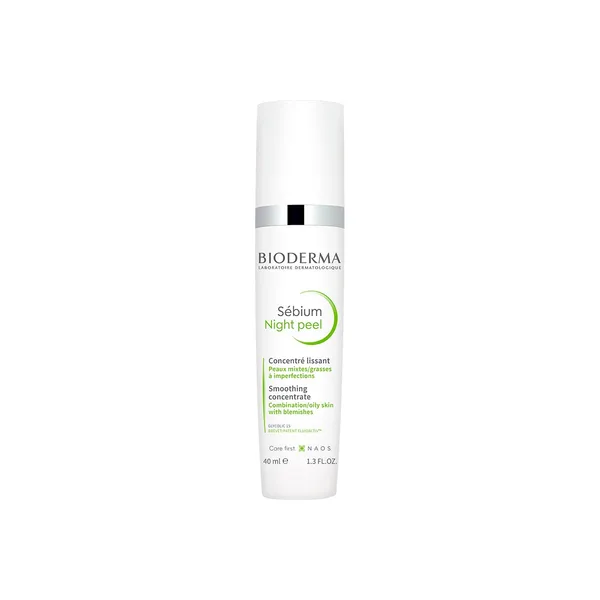
LabReadAI label score
How the score is calculated- Actives and evidence0.9Actives with strong evidence: 1 of 2
- Active concentration1.0After the 1 % line: panthenol (pro-vitamin b5) — the concentration is likely token
- Completeness for the purpose1.0For “skin texture and pores” — 100 %; without niacinamide, which makes pores less visible; without a retinoid — it renews the skin deeper than acids; could be added without conflict: niacinamide (vitamin b3); a broad formula across 3 purposes
- Tolerance0.9Debatable ingredient groups: fragrance and its allergens (skin test positive in 13 of 100 tested)
- adults
- pregnancyallowed per the leaflet
- oily skin
- babies
- sensitive skintingling, start 1–2 times a week
- before sunSPF is a must in the daytime
- atopic skinfragrance is a common trigger
Ingredients — 15 components, 2 of them active
The rest is the formula base: it holds texture, shelf life and application, and is not meant to act.
What works: 2 of 15 ingredients: glycolic acid, panthenol. Bumps and enlarged pores are smoothed by acids (glycolic, lactic, mandelic, PHA, salicylic) — one is enough; niacinamide makes pores less visible, a retinoid renews the skin more deeply. Pores do not “close” — they become less noticeable.
Strengths: actives and evidence, active concentration, completeness for the purpose, tolerance
Questions: fragrance and its allergens: fragrance — the fragrance and its aromatic components; the EU requires 26 of them to be listed separately — matters to people allergic to fragrance, does not affect how the product works
- Aqua/Water/Eau base: coating, fillers · water — the solvent and base; listed first because there is more of it than anything else; in supplements — part of the capsule shell
- Glycolic Acid works · the active ingredient — what the product is for; form: AHA acid
- Sodium Hydroxide base: coating, fillers · tune the acidity and texture; salt is a common shampoo thickener
- Panthenol works · the active ingredient — what the product is for; form: panthenol
- Ammonium Acryloyldimethyltaurate/VP Copolymer base: coating, fillers · makes the product thicker or thinner
- Dipropylene Glycol base: coating, fillers · humectants and solvents — hold water and help actives dissolve
- Hydroxyethylcellulose base: coating, fillers · hold the texture: gels, creams and foam do not separate
- Mannitol base: coating, fillers · draws water in and holds it in the upper layer of the skin
- Propyl Gallate base: coating, fillers · skin-microbiome ferments, prebiotics and formula antioxidants
- Xylitol base: coating, fillers · draws water in and holds it in the upper layer of the skin
- Sodium Metabisulfite label wording · an allergen (sodium (salt)) — matters when limiting salt, for example with blood pressure; the label says it is absent
- Rhamnose base: coating, fillers · draws water in and holds it in the upper layer of the skin
- Fructooligosaccharides base: coating, fillers · plant sugars: they hold water and feed skin bacteria; in a product this is the humectant part of the base
- Caprylic/Capric Triglyceride base: coating, fillers · a coconut-oil fraction, a light emollient and carrier of actives; does not clog pores
- Laminaria Ochroleuca Extract base: coating, fillers · plant and algae extracts and floral waters: flavouring and marketing components — at these shares there is no proven effect on the skin; rare reactions in people allergic to that particular plant
- Fragrance (Parfum questions · the fragrance and its aromatic components; the EU requires 26 of them to be listed separately — matters to people allergic to fragrance, does not affect how the product works
Bioderma Sébium Night Peel is a product whose active ingredient is glycolic acid + panthenol (pro-vitamin b5) at a declared 15 %. The effect is supported by studies: glycolic acid. The effect is moderately supported: panthenol (pro-vitamin b5). The formula has 15 ingredients, 2 of which do the work; the rest is the formula base. Worth noting: Fragrance (Parfum (the fragrance and its aromatic components; the EU requires 26 of them to be listed separately — matters to people allergic to fragrance, does not affect how the product works). Bumps and enlarged pores are smoothed by acids (glycolic, lactic, mandelic, PHA, salicylic) — one is enough; niacinamide makes pores less visible, a retinoid renews the skin more deeply. Pores do not “close” — they become less noticeable. By the list, no alcohol (alcohol denat), sulfates (SLS/SLES), formaldehyde releasers, isothiazolinones (MIT/MCI), parabens, mineral oils and petrolatum, soap, silicones, gelatin in the coating, toning dyes, tar. Suitable for: adults, pregnancy, oily skin, babies. sensitive skin, before sun, atopic skin — ask a doctor. rosacea, eczema, children, fragrance allergy — not without a doctor. Use: in the evening, 2–3 times a week; SPF in the daytime. When to expect an effect: texture, glow — 2–4 weeks. Label score — 9.6 out of 10 (actives with strong evidence: 1 of 2; after the 1 % line: panthenol (pro-vitamin b5) — the concentration is likely token; debatable ingredient groups: fragrance and its allergens (skin test positive in 13 of 100 tested)). The acid share is above the 10% that European cosmetic safety experts treat as the ceiling for home products. It is applied at night in a course; sun protection is mandatory during the day. Not for damaged skin or rosacea.
Who it does not suit
- rosacea, eczemanot on inflamed skin
- childrenonly if prescribed
- fragrance allergyrisk of reaction
When to stop: burning, persistent redness — stop; do not use the same evening as a retinoid
Per the maker's leaflet: The acid share is above the 10% that European cosmetic safety experts treat as the ceiling for home products. It is applied at night in a course; sun protection is mandatory during the day. Not for damaged skin or rosacea.
Is this product right for your skin?
The score describes the formula, not your skin: the same product dries one person and saves another. Describe your skin type, reactions and goals, attach a photo of the ingredient list or the product — we will go through every ingredient and say whether it suits you, what to pair it with and what to avoid.
Similar products
Same nutrient and the same purpose — closest by form and dose. Each has its own score by the same method, so you can see whether there is an option nearby that is more honest or simpler in composition.
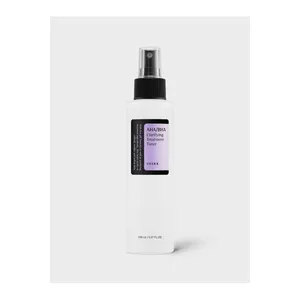 COSRXCOSRX AHA/BHA Clarifying Treatment Toner8.0
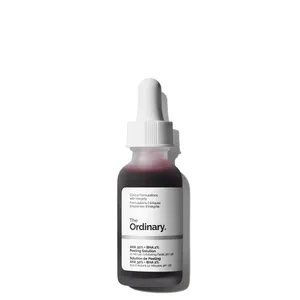 The OrdinaryThe Ordinary AHA 30% + BHA 2% Peeling Solution7.7
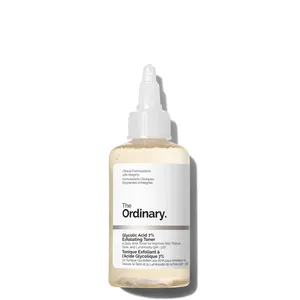 The OrdinaryThe Ordinary Glycolic Acid 7% Toning Solution9.9
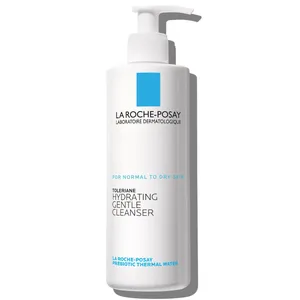 La Roche-PosayLa Roche-Posay Toleriane Hydrating Gentle Cleanser9.6
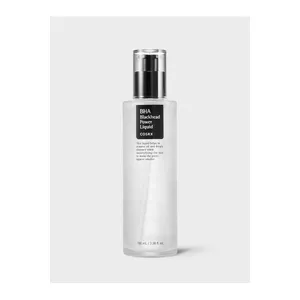 COSRXCOSRX BHA Blackhead Power Liquid8.9
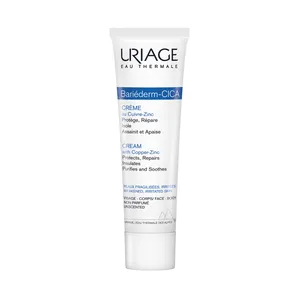 UriageUriage Bariéderm-CICA Crème8.8
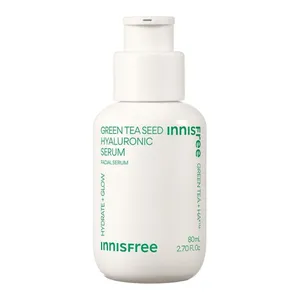 innisfreeinnisfree Green Tea Seed Hyaluronic Serum8.7
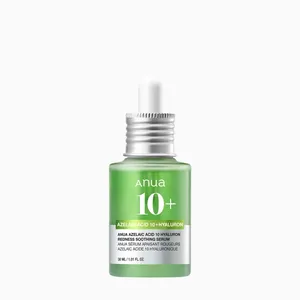 AnuaAnua Azelaic Acid 10 Hyaluron Redness Soothing Serum8.7