Whooping Cough (Pertussis): Symptoms, Cough and Treatment
Reviewed by the LabReadAI medical team
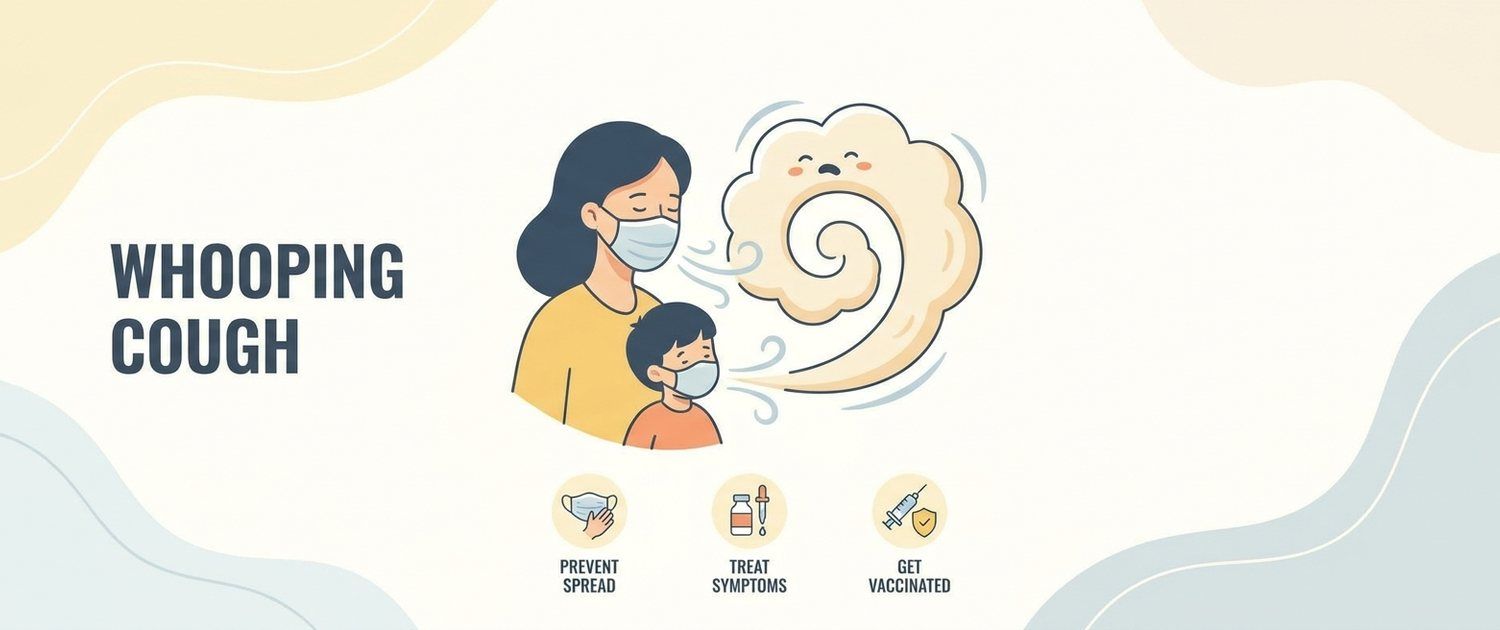
Many people think of whooping cough as a vanished childhood illness, but it is back — including among teenagers and adults whose post-vaccine immunity has waned. Its trickiness is that it disguises itself as an ordinary lingering cough, while for infants it can be deadly. Here are the symptoms of whooping cough in children and adults, how long it lasts and stays contagious, and why the vaccine is needed.
What Whooping Cough Is and What Causes It
Whooping cough is caused by the bacterium Bordetella pertussis. It attacks the airways and releases toxins that make the cough agonizing and prolonged. It spreads through the air and is highly contagious: in close contact most unvaccinated people fall ill. Immunity after illness and vaccination is not lifelong, so adults get it too.
Symptoms: the Fitful Cough
The classic sign is coughing fits: a series of coughs with no chance to breathe in, then a whooping intake of breath, sometimes vomiting after the fit. Between fits the person may look well. In infants, instead of coughing there may be dangerous breathing pauses (apnea). Fever is usually low — which sets whooping cough apart from many infections.
Stages and How Long the Cough Lasts
The illness passes through stages: catarrhal (like an ordinary cold, 1–2 weeks, the most contagious period), paroxysmal (coughing fits, 2–6 weeks or longer) and recovery, when the cough gradually settles. Because it lasts so long, whooping cough is called the "hundred-day cough".
Whooping Cough in Children and Adults
Infants under a year, especially unvaccinated, are hit hardest and need hospital care. In vaccinated children, teenagers and adults it is milder and often looks like a stubborn dry cough without dramatic fits, so it goes unrecognized for a long time. Yet adults are a source of infection for infants in the family.
How Contagious It Is and the Incubation Period
The incubation period is usually 7–10 days (up to 3 weeks). A person is most contagious in the first weeks, in the catarrhal stage. Antibiotics started early reduce contagiousness; they are also given to protect close contacts in the family, especially if there are infants or pregnant women.
Which Tests Confirm Whooping Cough
The diagnosis is confirmed by PCR or culture of a nasopharyngeal swab (most useful early), and later by a blood antibody test. A complete blood count typically shows a marked rise in leukocytes driven by lymphocytes. If a report is confusing, you can upload it for decoding.
Treatment
Antibiotics work mainly in the early (catarrhal) stage: they cut contagiousness and ease the course but do little for an "established" cough. After that comes supportive care: rest, humidified air, small frequent drinks. Infants and severe cases are treated in hospital. Cough suppressants are usually of little help.
Prevention: the Vaccine
The main protection is vaccination: in children the pertussis component is part of the combined DTP vaccine, and adults and pregnant women are advised a booster to protect the newborn (a "cocoon" around the infant). Immunity wanes over time, so boosters matter. After contact with a case in a family with an infant, a doctor may prescribe a preventive antibiotic.
When to See a Doctor
Urgently — for a cough in an infant, breathing pauses, blue color, vomiting after coughing, if the cough lasts more than 2 weeks or comes with labored breathing. In adults, a reason to see a doctor is a stubborn cough for weeks, especially with contact with unvaccinated children. If you are unsure where to start, you can describe your symptoms.
How to tell pertussis cough from other types and where the chronic threshold lies is covered in cough in children.
This article is for informational purposes only and does not replace a doctor's consultation. Diagnosis and treatment are determined by a specialist.
For informational purposes only
This article is for informational purposes only and does not constitute medical advice, diagnosis, or treatment. Please consult a healthcare professional for medical guidance.