Chickenpox (Varicella): Symptoms, in Adults and How Contagious
Reviewed by the LabReadAI medical team
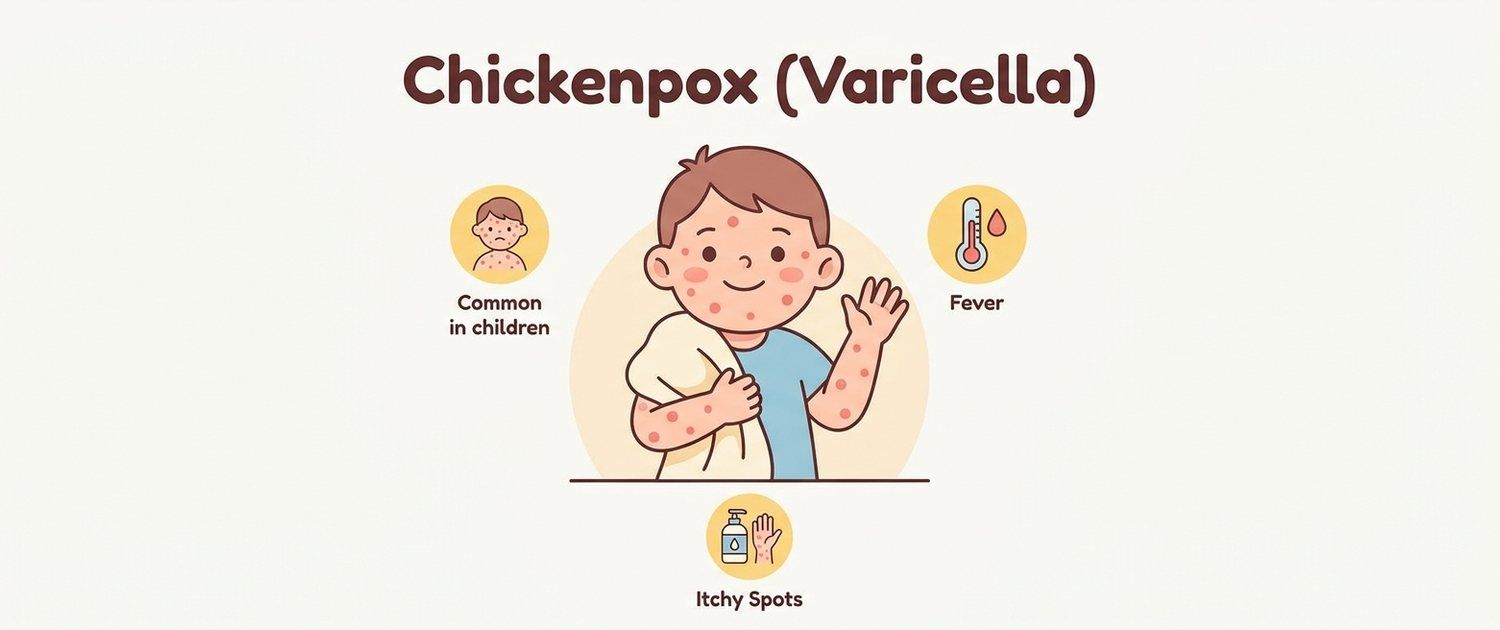
Chickenpox (varicella) is one of the most contagious infections: it is caused by the varicella-zoster virus (a herpesvirus). Children get it most often and usually have a mild course, but in adults, pregnant women and people with weakened immunity it can be severe. Here is how to recognize chickenpox, how long it stays contagious and when medical help is needed.
What Chickenpox Is and How It Spreads
The virus spreads through the air and through contact with the fluid in the blisters — it is extremely contagious, and almost all non-immune household members catch it. After the infection the virus stays in the body for life and years later can "wake up" as shingles. Once you have had chickenpox, getting it again is very rare.
Chickenpox Symptoms: the Rash and Its Stages
The classic sign is a characteristic rash that goes through stages: first a red spot, then a blister with clear fluid, then a crust. A feature of chickenpox is that new crops appear in waves, so the skin shows elements of different "maturity" at once. The rash is usually itchy, often starts on the trunk and face and can be even on the scalp and in the mouth. It is often preceded by fever, weakness and headache.
How Long Chickenpox Is Contagious and the Incubation Period
The incubation period (from infection to first symptoms) is usually 10–21 days. A person becomes contagious about 1–2 days before the rash appears and stays contagious until all blisters have dried and crusted over — usually about 5 days after the last spots. That is why, until the crusts form, the patient is isolated from those who have not had it and are not vaccinated.
Chickenpox in Adults — Why It Is Worse
In adults chickenpox is usually more severe than in children: higher fever, a heavier rash and a higher risk of complications — above all viral pneumonia. Chickenpox in pregnancy and in people with weakened immunity is of special concern. In these groups, after contact with a patient or at the first symptoms, it is important to see a doctor as early as possible — antiviral treatment may be needed.
Complications and Shingles
Most often complications come from scratching and a secondary bacterial skin infection. Less commonly there is pneumonia, involvement of the nervous system or dehydration. A separate story is shingles: the same virus reactivates years later and causes a painful rash along a nerve, usually in adults and older people.
Which Tests Are Needed for Chickenpox
In typical cases the diagnosis is clinical — from the look of the rash, without tests. Lab confirmation is needed in doubtful situations, severe disease or in pregnancy: testing for antibodies to the virus and PCR of the blister fluid. In severe infection a doctor may order a complete blood count, looking at white cells and signs of inflammation — CRP.
How to Ease Symptoms and Care for the Skin
The main thing is symptom relief: lowering fever with permitted medicines (not aspirin in children), plenty of fluids, short nails and anti-itch measures so as not to scratch. Blisters must not be opened. Antiviral drugs are prescribed by a doctor — mainly for adults and risk groups. If you are unsure how serious it is, you can describe the symptoms — the service suggests what to watch for and when to see a doctor.
Chickenpox Vaccine: Who and Why
There is a live varicella vaccine; it lowers the risk of getting ill and especially of a severe course. It is considered for people who have not had chickenpox, including at-risk adults, and as emergency prevention after contact. The question of vaccination and its timing is decided with a doctor individually.
When to See a Doctor
Do not delay if chickenpox affects an adult, a pregnant woman or someone with weakened immunity; if a high fever lasts more than a few days, or shortness of breath, severe headache, confusion or seizures appear; if the rash becomes infected or the general state suddenly worsens. Otherwise chickenpox resolves on its own, and care comes down to comfort and easing the itch.
Chickenpox is one of five major groups of childhood rash; the groups and the glass test are covered in rash in children.
This article is for informational purposes only and does not replace a doctor's consultation. Management and treatment are chosen by a specialist.
For informational purposes only
This article is for informational purposes only and does not constitute medical advice, diagnosis, or treatment. Please consult a healthcare professional for medical guidance.