Skin Rash in Adults: Causes, Allergy and What to Do
Reviewed by the LabReadAI medical team
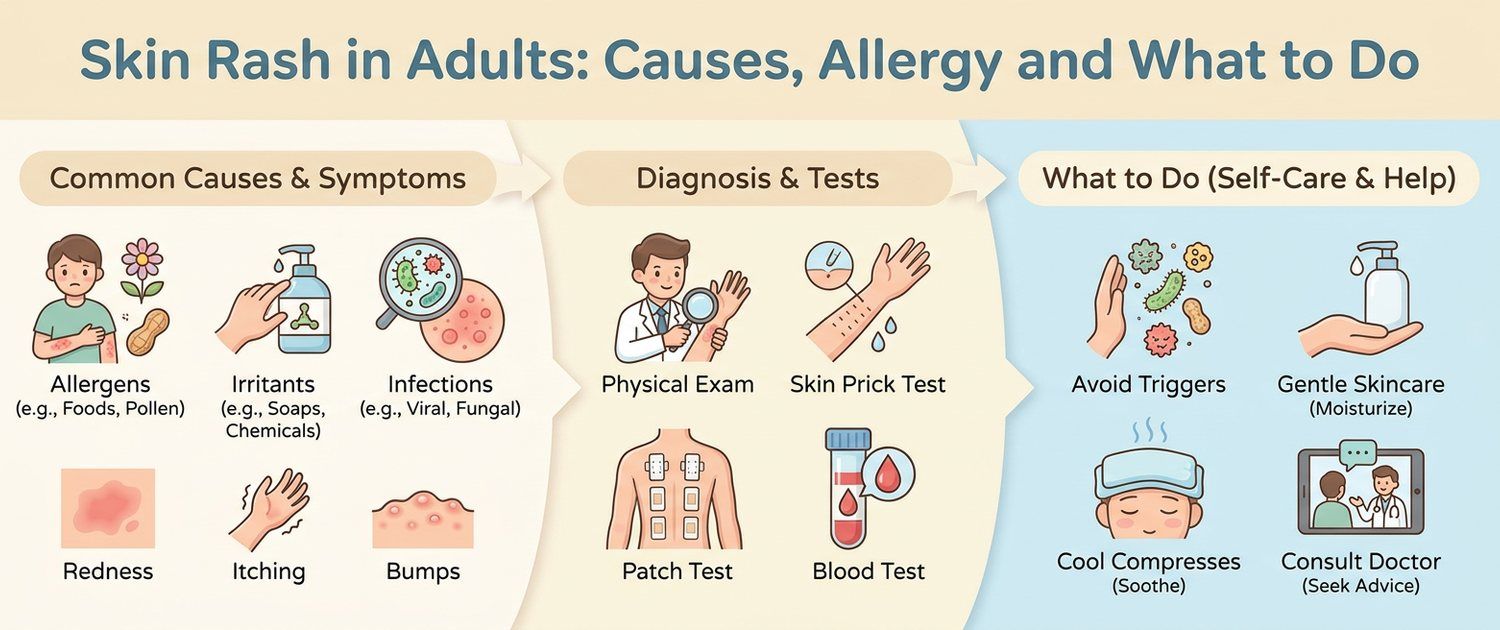
A skin rash is a common and worrying complaint: spots, bumps, welts or redness can appear suddenly and are alarming. In adults, a rash is most often linked to allergy and hives, less often to infection, medication or systemic disease. Many rashes are diagnosed by appearance, so an exam (or at least a photo) matters more than blood tests, but in some cases a work-up helps. Here are the main causes.
When a Skin Rash Is Worth Looking Into
Brief irritation from friction, sweat or a new cosmetic usually clears on its own. A rash is worth looking into when it lasts more than a few days, spreads, itches intensely, recurs, or comes with general symptoms (fever, swelling, feeling unwell). It is important to describe how the rash looks, where it started and what preceded it — this guides the diagnosis more than any test.
Allergy and Hives — the Most Common Cause
Hives (urticaria) are itchy pink welts, like a "nettle sting", that come and go within hours. They can be acute (to a food, drug or infection) or chronic (over 6 weeks, often without a clear cause). The diagnosis is clinical; when allergy is suspected, total IgE and an allergy panel are informative, and raised blood eosinophils support an allergic nature. More detail in the articles on food allergy and atopic dermatitis.
Infections and Rash
Many infections (viral and bacterial) cause a rash — usually together with fever and malaise. In adults this includes, for example, shingles (painful blisters along a nerve), fungal infections, and less often childhood infections caught in adulthood. An infectious rash with fever should be assessed by a doctor.
Drug Rash
A rash can be a reaction to a medication — often a few days after starting it. It is usually symmetrical red spots over the body. Most drug rashes are not dangerous, but some (with facial swelling, blisters, mucous-membrane involvement, fever) are threatening and require immediate stopping of the drug and medical help.
Autoimmune and Systemic Causes
Less often a rash is a sign of systemic disease (such as lupus) or blood disorders. A persistent rash with general symptoms — joint pain, fever, weakness, hair loss — points this way. In such cases a doctor may order a broader work-up, including inflammation markers (such as CRP) and immunological tests.
When a Rash Comes with Itching
Intense itch is typical of allergy and hives. But if the skin itches without a rash (only scratch marks), the cause may be internal — liver, kidneys, thyroid; see the separate article on itchy skin without a rash. The combination "rash + itch" more often points to a skin-allergic nature.
Which Tests Can Help with a Rash
A rash is largely a "visual" symptom, and basic tests are ordered selectively:
- When allergy is suspected — total IgE, eosinophils on a complete blood count, and an allergy panel as indicated.
- For a rash with general symptoms — inflammation markers and a doctor's work-up.
Because appearance matters, it is convenient to describe the situation and attach a photo — the service suggests likely causes and what to discuss with your doctor.
When to Seek Urgent Care
Call emergency services if the rash comes with swelling of the lips, tongue or throat and difficulty breathing (anaphylaxis); if it is rapidly spreading dark-red or purple spots with a high fever and a severe condition (possible meningococcal infection); or with blisters and mucous-membrane involvement on a medication. Routinely — for a persistent, recurrent or intensely itchy rash.
This article is for informational purposes only and does not replace a doctor's consultation. A rash is diagnosed by a doctor, and if needed by a dermatologist or allergist.
For informational purposes only
This article is for informational purposes only and does not constitute medical advice, diagnosis, or treatment. Please consult a healthcare professional for medical guidance.