Shortness of Breath: Causes and Which Tests to Take
Reviewed by the LabReadAI medical team
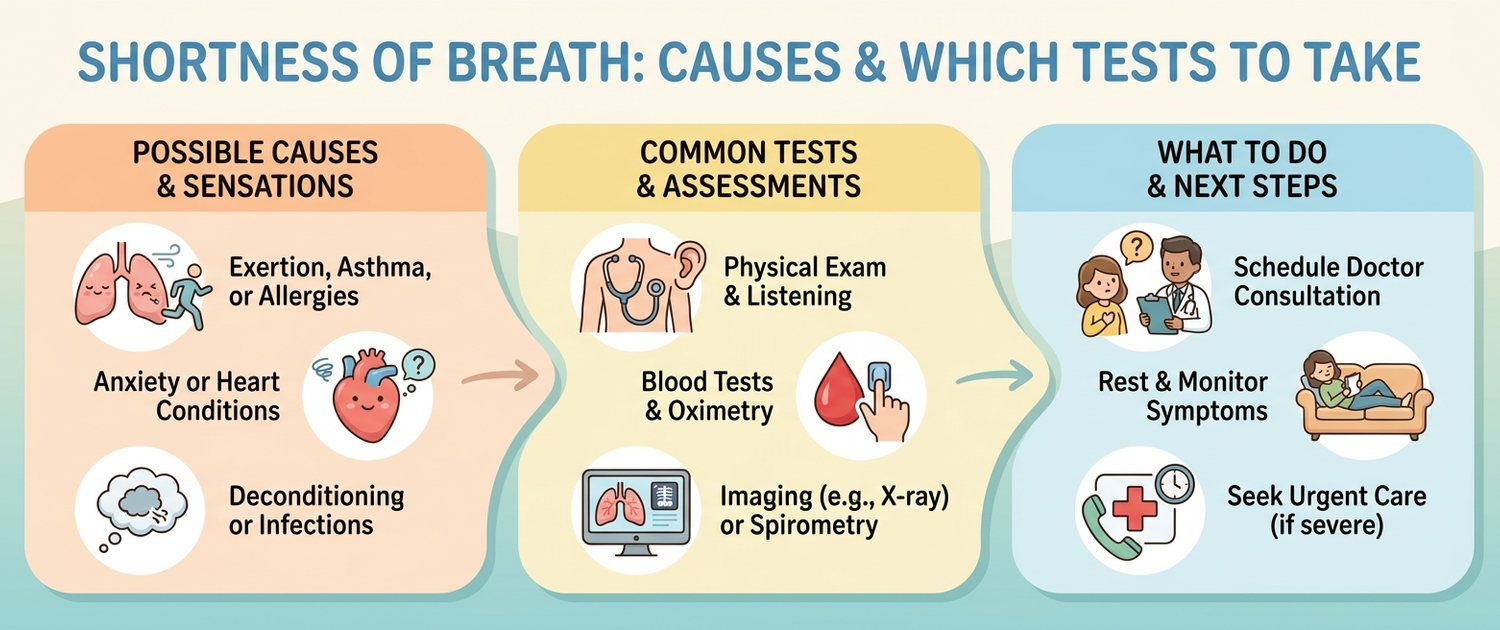
Shortness of breath is the feeling of not getting enough air or of laboured breathing. After a run or climbing stairs it is normal, but if breathing is hard with ordinary activity — let alone at rest — it is a symptom you should not ignore. The causes are very varied: from anemia and excess weight to heart and lung disease. Here is why breathlessness happens and which tests help find the cause.
When Breathlessness Is Normal and When It Is a Symptom
Faster, deeper breathing with physical effort, excitement or at altitude is a normal response. It becomes a symptom when breathlessness appears with usual, light activity or at rest, worsens over time, wakes you at night or makes you sleep on high pillows. It matters whether it came on acutely (minutes to hours — a reason for urgent care) or develops over weeks (chronic).
Heart Disease: Breathlessness on Exertion and at Rest
Heart failure is a common cause of chronic breathlessness: the heart pumps less effectively and fluid backs up in the lungs. Typical features are breathlessness on exertion and lying down, with leg swelling by evening. BNP (a heart-failure marker) and troponin for suspected acute conditions help in the assessment; more detail in the article on heart failure.
Lung Disease: When It Is Hard to Breathe
Asthma, COPD, pneumonia and bronchitis are common pulmonary causes. The character of the breathlessness matters (wheeze, cough, link to allergens), and the investigations — a chest X-ray and spirometry — are done by a doctor. Blood tests help tell a lung cause from a cardiac or anemic one.
Anemia and Air Hunger
With anemia the blood lacks oxygen-carrying capacity, and breathlessness appears with even slight exertion, along with weakness, pallor and palpitations. The basic check is hemoglobin on a complete blood count; if it is low from iron deficiency, see iron deficiency anemia. It is one of the most common reversible causes.
Pulmonary Embolism — a Dangerous Cause
Sudden breathlessness, especially with chest pain, a racing heartbeat and after recent surgery, a flight or immobility, can be a pulmonary embolism — a medical emergency. A D-dimer and imaging are used in the work-up; more detail in the article on pulmonary embolism. If suspected — seek help immediately.
Obesity, Anxiety and Other Causes
Excess weight and low fitness cause breathlessness on exertion without heart or lung disease. Anxiety and hyperventilation cause a sense of air hunger with rapid shallow breathing, often together with palpitations. Less often the cause is thyroid disease or a metabolic disturbance.
Which Tests and Investigations to Take for Breathlessness
A sensible starting set depends on the picture:
- Complete blood count — anemia; BNP — when heart failure is suspected.
- D-dimer — when embolism is suspected (on a doctor's order).
- Chest X-ray, ECG and spirometry — at the doctor's.
If you are not sure where to begin, you can describe your symptoms — the service suggests likely causes and which tests to discuss with your doctor.
When to Call Emergency Services
Seek urgent help if breathlessness came on suddenly and severely; comes with chest pain, blue lips, confusion or fainting; or if you cannot speak because of air hunger. A routine work-up is needed for worsening breathlessness on exertion, breathlessness lying down and night-time awakenings from air hunger.
This article is for informational purposes only and does not replace a doctor's consultation. The set of tests and any treatment are chosen by a specialist.
For informational purposes only
This article is for informational purposes only and does not constitute medical advice, diagnosis, or treatment. Please consult a healthcare professional for medical guidance.