Heart Palpitations and Tachycardia: Causes and Which Tests
Reviewed by the LabReadAI medical team
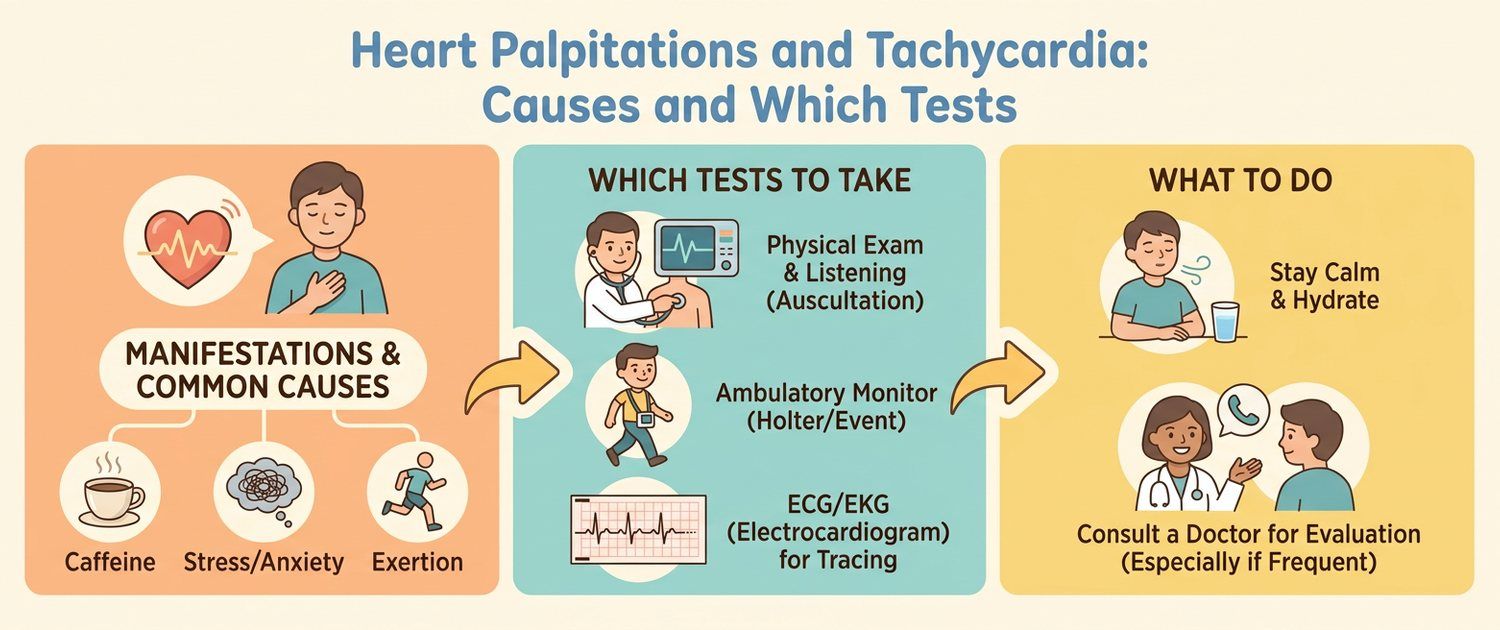
When your heart "pounds", "jumps out of your chest" or beats too fast, it is frightening — but it does not always mean heart disease. More often, fixable causes lie behind palpitations: the thyroid, anemia, stress, coffee, dehydration. Here is when it is normal, which tests help find the cause, and when palpitations need urgent care.
When a Fast Heartbeat Is Normal and When It Is Tachycardia
At rest the pulse is usually 60–100 beats per minute. A rate above 100 at rest is called tachycardia. Speeding up with exertion, excitement, coffee or heat is a normal response. It becomes a symptom when palpitations occur at rest, last a long time, come with skipped beats, dizziness, chest pain or breathlessness, or wake you at night. Note whether the rhythm is regular (just fast) or irregular (possible arrhythmia).
The Thyroid (Hyperthyroidism) and Palpitations
An overactive thyroid (hyperthyroidism) speeds up metabolism and the heart — one of the most common "test-detectable" causes of persistent palpitations. Sweating, tremor, weight loss and anxiety are added. The basic check is TSH and free T4; more detail in the article on hyperthyroidism. If found, an endocrinologist's review is needed.
Anemia and a Fast Pulse
With anemia the blood lacks oxygen-carrying capacity, and the heart compensates by speeding up — hence a fast pulse, especially on exertion, along with weakness and pallor. Hemoglobin is checked; if it is low from iron deficiency, see iron deficiency anemia. Correcting the cause usually normalizes the pulse.
Stress, Anxiety and Stimulants
Anxiety and panic attacks are a very common cause of palpitation attacks with a feeling of breathlessness and fear; more detail in the article on panic attacks. Coffee, energy drinks, nicotine, some medications and alcohol all intensify palpitations. It is important to rule out physical causes with tests before blaming nerves.
Dehydration, Electrolytes and Medications
Loss of fluid and salts (heat, vomiting, diarrhea, diuretics) speeds up the pulse — assessing electrolytes, including potassium, helps. Low potassium or magnesium provokes skipped beats. A number of drugs (decongestants, thyroid hormones, bronchodilators) also speed the heart — review your medication list with a doctor.
Heart Disease and Arrhythmia
If the rhythm is irregular, with "dropouts", fainting or chest pain, the cause may be an arrhythmia (such as atrial fibrillation) or other heart disease. These do not show on routine blood tests — the key methods here are ECG interpretation and a cardiologist's exam; for infrequent attacks, 24-hour monitoring is used. Troponin is useful when an acute condition is suspected.
Which Tests and ECG to Take for Palpitations
A sensible starting set:
- Thyroid hormones — TSH and free T4.
- Complete blood count — anemia; electrolytes (potassium, magnesium).
- An ECG (and, for infrequent attacks, 24-hour monitoring) and a cardiologist's exam.
If you are not sure where to begin, you can describe your symptoms — the service suggests likely causes and which tests to discuss with your doctor.
When to Seek Urgent Care
Call emergency services if palpitations come with chest pain or pressure, severe breathlessness, fainting or near-fainting, or if the pulse is very fast and irregular and does not pass. A routine visit to a cardiologist or endocrinologist is needed for recurrent palpitations at rest, especially with dizziness or weakness.
This article is for informational purposes only and does not replace a doctor's consultation. The set of tests and any treatment are chosen by a specialist.
For informational purposes only
This article is for informational purposes only and does not constitute medical advice, diagnosis, or treatment. Please consult a healthcare professional for medical guidance.