BNP Blood Test: Normal Levels, Results and Heart Failure
Reviewed by the LabReadAI medical team
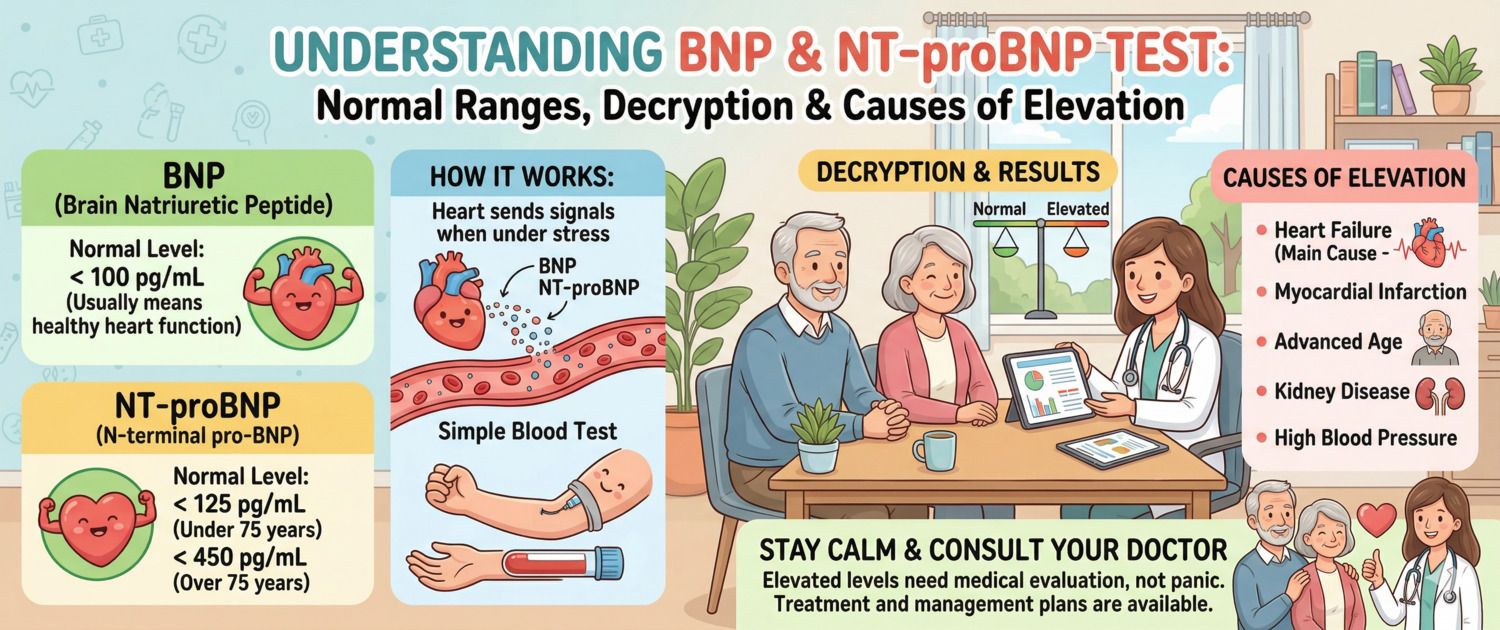
Shortness of breath climbing the stairs. Swollen ankles by evening. Fatigue that sleep does not fix. These are the symptoms that prompt a doctor to order a BNP or NT-proBNP test — natriuretic peptides that the heart releases into the bloodstream when it is working under excess strain. This article explains what each marker measures, what the numbers mean, and when a high result demands immediate action.
What Is BNP and Why Is It Measured?
BNP stands for brain natriuretic peptide — a name rooted in a historical accident, because the molecule was first isolated from pig brain tissue. In humans it is produced almost exclusively by the ventricles of the heart. When ventricular walls are stretched by excess blood volume or elevated pressure, cardiomyocytes synthesise a precursor molecule called proBNP, which is immediately cleaved into two fragments: the biologically active BNP and the inert NT-proBNP.
Think of the heart as a balloon: the more it is overfilled, the more distress signal it releases. BNP is that signal. Under normal conditions its blood concentration is negligible. In heart failure it rises in direct proportion to disease severity, making it one of the most clinically useful objective markers in cardiology.
Both peptides serve the same purpose: diagnosing and monitoring heart failure. The choice between them depends on the laboratory's equipment — the two results cannot be compared against each other, as each uses entirely different reference ranges.
BNP and NT-proBNP Normal Ranges: Reference Table
Diagnostic thresholds recommended by European heart failure guidelines differ between the two peptides and are adjusted for patient age.
BNP (pg/mL)
| Interpretation | BNP value |
|---|---|
| Normal — heart failure unlikely | < 100 |
| Grey zone — further workup needed | 100–400 |
| Heart failure likely | > 400 |
NT-proBNP (pg/mL) — age-adjusted
| Age | Chronic normal threshold | Acute HF likely |
|---|---|---|
| < 50 years | < 125 | > 450 |
| 50–75 years | < 125 | > 900 |
| > 75 years | < 450 | > 1800 |
In the acute emergency setting, a single age-independent rule applies: NT-proBNP below 300 pg/mL effectively excludes acute heart failure as the cause of sudden breathlessness, regardless of age.
Older patients have physiologically higher NT-proBNP because kidney filtration declines with age and the peptide accumulates. Obesity has the opposite effect — adipose tissue accelerates BNP degradation, shifting effective thresholds downward in patients with a high body mass index.
BNP vs NT-proBNP: What Is the Difference?
Both peptides are cleaved from proBNP simultaneously and in equimolar amounts. The practical differences lie in their half-lives and stability.
BNP is biologically active: it dilates blood vessels, promotes renal sodium and water excretion, and lowers blood pressure. Its half-life is approximately 20 minutes. NT-proBNP is inert but far more stable — it circulates for 1–2 hours, providing a more integrated picture of chronic ventricular overload. BNP, in contrast, responds more rapidly to acute haemodynamic changes.
In practice the choice is made by the laboratory, not the clinician. The key rule for serial monitoring: never mix the two tests. If the baseline measurement was BNP, all follow-up measurements must also be BNP.
Causes of High BNP and NT-proBNP
Elevated natriuretic peptides almost always signal overload or damage to the heart muscle — but the range of causes extends well beyond heart failure alone.
Cardiac causes. Chronic and acute heart failure — both with reduced and preserved ejection fraction — are the primary driver of elevated peptides. Myocardial infarction causes an acute surge: the necrotic zone stretches the ventricular wall and triggers proBNP synthesis. To distinguish infarction from pure decompensated failure, troponin is measured simultaneously — it is far more specific for cardiomyocyte necrosis.
Renal causes. The kidneys are the primary clearance route for NT-proBNP. In chronic kidney disease and acute kidney injury, peptide levels rise even without underlying cardiac pathology. Evaluating creatinine alongside the natriuretic peptide is essential: an elevated NT-proBNP paired with renal failure demands careful interpretation, not an automatic heart failure label.
Other causes. Pulmonary embolism overloads the right ventricle and raises both markers. Severe pneumonia, sepsis, thyrotoxicosis and anaemia — conditions that force the heart to work harder than normal — can cause moderate elevations. When interpreting results, the physician also orders a kidney function test and assesses sodium levels, which carry independent prognostic weight in heart failure patients.
What Does Low BNP Mean?
A low BNP is reassuring. A patient presenting with breathlessness whose BNP is below 100 pg/mL can be reliably told that heart failure is an unlikely explanation for their symptoms. This is one of medicine's most useful negative predictive values — a normal result genuinely rules out cardiac origin in the vast majority of cases.
Truly low peptides despite real cardiac pathology occur in two situations: obesity (adipose tissue accelerates BNP degradation) and patients responding well to treatment. A falling natriuretic peptide on serial measurement is among the strongest signals that heart failure therapy is working.
How to Prepare for a BNP Blood Test
BNP and NT-proBNP are analytically stable cardiac biomarkers. A few practical steps improve the reliability of results.
The test is best performed fasting or two to three hours after a light meal — not critical, but recommended. Moderate physical activity transiently raises BNP, so avoid strenuous exercise on the day of the blood draw. Most importantly, inform your doctor about all medications: sacubitril/valsartan (ARNI class) artificially elevates BNP while simultaneously lowering NT-proBNP — this substantially changes how results are interpreted.
Blood is drawn from a vein, typically in the morning. No demanding twelve-hour fasting or medication holds are required.
When High BNP Requires Emergency Attention
A mildly elevated BNP in a patient with established chronic heart failure is a routine finding managed by a cardiologist at scheduled outpatient visits. Certain combinations of symptoms and laboratory findings, however, cannot wait.
Call emergency services immediately if a high BNP coincides with: sudden severe breathlessness at rest; pink or frothy sputum; crushing chest pain radiating to the arm or jaw; loss of consciousness or near-syncope; a sharp drop in blood pressure; markedly reduced urine output alongside worsening oedema.
These are signs of acute decompensated heart failure or an acute coronary event — both are time-critical emergencies.
Conclusion
BNP and NT-proBNP are a quantitative measure of how hard the heart is working and how close it is to its limits. A normal result practically excludes a cardiac cause of breathlessness. A high result calls for urgent cardiology workup — and combined with severe symptoms, for an immediate emergency call. Neither peptide can be interpreted in isolation from clinical findings, ECG and echocardiography. All treatment decisions are made by your physician.
For informational purposes only
This article is for informational purposes only and does not constitute medical advice, diagnosis, or treatment. Please consult a healthcare professional for medical guidance.