Measles, Rubella and Mumps: Symptoms, Risks and the MMR Vaccine
Reviewed by the LabReadAI medical team
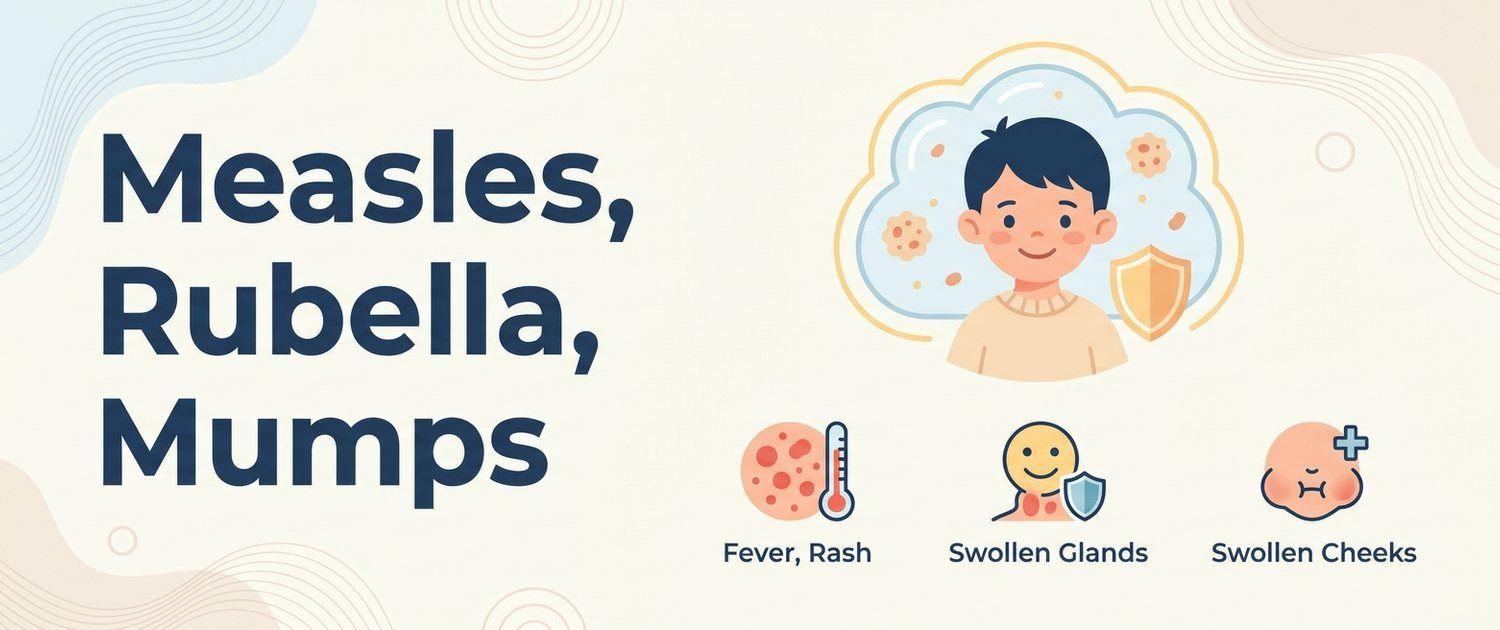
Measles, rubella and mumps are grouped together for a reason: they are three childhood viral infections protected against by a single combined vaccine — MMR. Once almost all children caught them, but vaccination sharply cut the rates. Because of vaccine refusals, measles is returning in outbreaks in places, so it is important to know its symptoms and danger. Let's go through all three infections in turn.
What Measles, Rubella and Mumps Have in Common
All three are caused by viruses, spread through the air and are typical of childhood, though unvaccinated adults get them too. The MMR vaccine protects against all three. They differ in presentation and their main dangers, so let's cover each.
Measles: Symptoms, Rash and Why It Is Dangerous
Measles is one of the most contagious infections there is. It starts like a severe cold: high fever, cough, runny nose, conjunctivitis, then a characteristic blotchy rash that spreads from top to bottom. Measles is dangerous for its complications — pneumonia, brain involvement (encephalitis), especially in young children and adults. It is precisely because of complications that measles is not a "harmless childhood illness".
Rubella: Symptoms and the Danger in Pregnancy
Rubella in children is usually mild: a low fever, a fine pink rash, swollen occipital lymph nodes. But it is extremely dangerous in pregnancy: infection in the first trimester can lead to severe birth defects (congenital rubella). So when planning pregnancy it is important to know your immunity to rubella from a blood test.
Mumps: Symptoms and Complications
Mumps affects the salivary glands — a painful swelling of the cheeks and behind the ears, with fever. In teenage and adult men there can be inflammation of the testicles (orchitis), sometimes affecting fertility; less often pancreatitis and meningitis. So mumps is not as "harmless" as it seems.
How They Spread and How Contagious They Are
All three spread through the air and are contagious before the rash or gland swelling appears. Measles is so contagious that almost all unvaccinated contacts fall ill. So when it is suspected, the patient is isolated, and a doctor decides when they can return to school.
Which Tests Are Needed (Antibodies)
The diagnosis is often clinical, but to confirm it and assess immunity a blood test for IgM and IgG antibodies is used. IgM indicates a recent infection, IgG a past illness or post-vaccine immunity. This matters especially for rubella when planning pregnancy. A complete blood count may show non-specific viral changes. A confusing report can be uploaded for decoding.
Treatment and Care
There is no specific antiviral treatment — care is supportive: rest, fluids, lowering fever, watching for complications. In measles, adequate vitamin A as prescribed matters for children. Antibiotics are given only for bacterial complications. Severe cases and complications are treated in hospital.
The MMR Vaccine: Protection Against All Three
The combined MMR vaccine protects against measles, rubella and mumps at once. It is given in childhood in two doses per the schedule; unvaccinated adults should also be vaccinated. High vaccination coverage is exactly what holds back measles outbreaks. Vaccination and immunity checks are decided with a doctor.
When to See a Doctor
See a doctor for a high fever with a rash, suspected measles (especially after contact) and gland swelling in mumps. Urgently — for confusion, seizures, severe headache or shortness of breath (risk of complications). A pregnant woman exposed to rubella should see a doctor as soon as possible. Unsure about a rash — you can describe your symptoms.
How to tell this rash from other childhood eruptions and which are dangerous is covered in rash in children.
This article is for informational purposes only and does not replace a doctor's consultation. Diagnosis and management are determined by a specialist.
For informational purposes only
This article is for informational purposes only and does not constitute medical advice, diagnosis, or treatment. Please consult a healthcare professional for medical guidance.