Scarlet Fever: Symptoms in Children and Adults, Rash, Treatment
Reviewed by the LabReadAI medical team
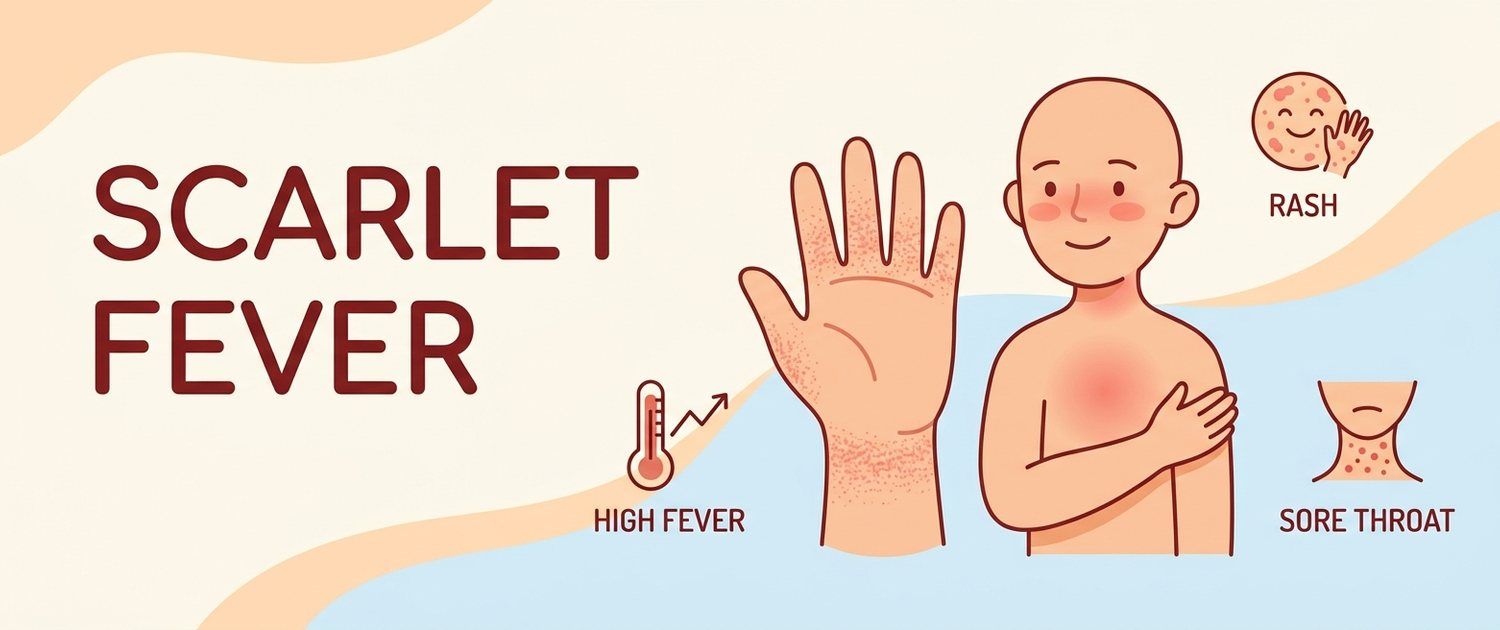
Scarlet fever is often pictured as a distinct childhood illness, but it is essentially a streptococcal infection — the same bacterium that causes a streptococcal sore throat, just with a characteristic rash. It was once a fearsome disease; today, thanks to antibiotics, it usually resolves well. The key is to recognize it in time and not miss complications. Here are the symptoms of scarlet fever in children and adults, how contagious it is and how it is treated.
What Scarlet Fever Is and What Causes It
Scarlet fever is caused by group A beta-hemolytic streptococcus. It releases a toxin that produces the characteristic rash. The infection spreads through the air and by contact. In essence it is a streptococcal sore throat plus a skin reaction to the toxin, so treatment approaches are similar.
Symptoms: Sore Throat, Rash and "Strawberry Tongue"
The classic triad: a sudden sore throat with high fever, a fine bright-pink rash (first on the neck and chest, then over the body, denser in skin folds) and a "strawberry tongue" — bright red with prominent papillae. The area around the mouth stays pale. About a week later the rash often peels, especially on the palms and soles.
Scarlet Fever in Children and Adults
Scarlet fever most often affects children aged 2–10. In adults it is rarer but can be more severe with stronger intoxication. Adults especially should not "tough it out" and should complete the full antibiotic course because of the risk of complications.
How Contagious It Is and the Incubation Period
The incubation period is short — usually 1–7 days. The patient is contagious from the first symptoms; on antibiotics contagiousness drops sharply within a day or two of starting. So the child is isolated and returns to school by the doctor's decision after starting antibiotics and improving.
Complications and Why Antibiotics Matter
The danger is not the rash itself but the complications of untreated strep: suppurative ones (ear infection, lymphadenitis) and late immune ones — rheumatic fever affecting the heart and post-streptococcal glomerulonephritis (kidneys). This is exactly why antibiotics are mandatory in scarlet fever: they prevent these complications rather than merely speeding recovery.
Which Tests Are Needed
The diagnosis is often clinical — from the typical picture. To confirm strep a throat swab is taken (rapid test or culture). A complete blood count shows signs of a bacterial infection. The antistreptolysin-O level (ASO) reflects a recent streptococcal infection and helps when complications are suspected. A confusing report can be uploaded for decoding.
Treatment
The basis is a course of antibiotics (usually penicillins) prescribed by a doctor, plus plenty of fluids, fever reducers and gentle food. It is critical to complete the whole course even if you feel better by day 2–3 — this is what protects against complications on the heart and kidneys.
Prevention and Care
There is no specific vaccine against scarlet fever. Prevention means isolating the patient, hygiene and airing rooms. At home the patient gets their own dishes and towel. After recovery the doctor may order follow-up urine tests and an ECG to make sure there are no complications.
When to See a Doctor
See a doctor for a sore throat with a rash and high fever — do not self-treat, as antibiotics are prescribed by a doctor. Urgently — if swelling, a change in urine color, joint or heart pain, or shortness of breath appear 1–3 weeks after the illness. If you are unsure about the nature of a rash, you can describe your symptoms — the service suggests likely causes.
The general algorithm for any childhood rash is in rash in children.
This article is for informational purposes only and does not replace a doctor's consultation. The antibiotic and its dose are chosen by a specialist.
For informational purposes only
This article is for informational purposes only and does not constitute medical advice, diagnosis, or treatment. Please consult a healthcare professional for medical guidance.