Antibody Titer After Vaccination: Why It Is Measured and Boosters
Reviewed by the LabReadAI medical team
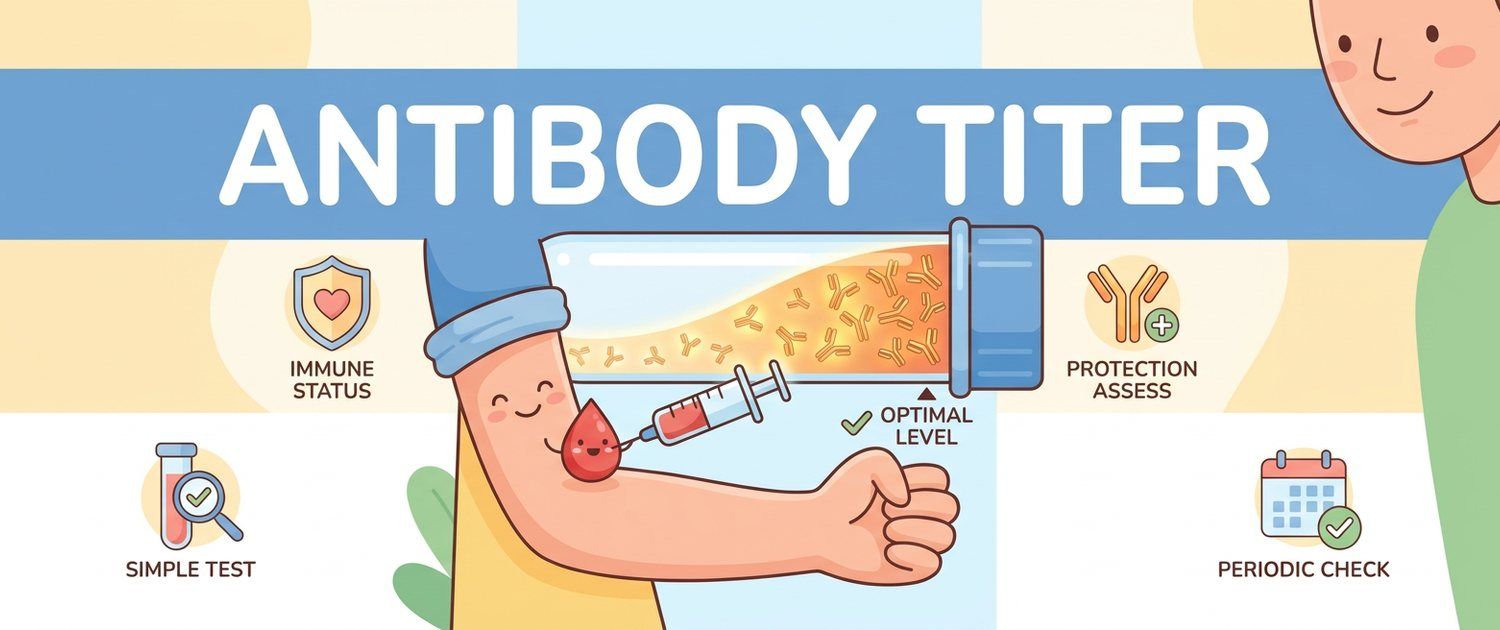
After a vaccination a logical question often arises: "Did immunity actually develop?" An antibody titer test helps answer it. But it does not always need checking, and the result should be read carefully — "few antibodies" does not always mean "no protection". Let's sort out what a titer is, why and when it is measured, and how to understand the numbers.
What an Antibody Titer Is
An antibody titer is the concentration of specific antibodies to a pathogen in the blood, expressed as a number. Antibodies are produced by the immune system in response to infection or a vaccine. The higher the titer, the more protection-ready molecules circulate in the blood right now. An important nuance: immune memory lives not only in antibodies but also in memory cells, so even with a low titer the body can often quickly restore protection when it meets the pathogen.
Why the Titer Is Measured After Vaccination
There are several main reasons. First — to confirm that a response to the vaccine formed (for example, anti-HBs after hepatitis B vaccination in at-risk groups). Second — to assess whether immunity has persisted over the years. Third — to check status before a potentially risky contact or procedure. That said, for most routine vaccines a healthy person does not need to measure the titer: booster timing is already calculated and built into the national vaccination schedule.
IgG and IgM: What They Show
Antibody tests most often report two classes. IgM appear first, in the acute phase of infection, and soon disappear — a marker of a recent encounter with the pathogen. IgG appear later and remain for a long time, reflecting established immunity (including post-vaccination). So a "titer after vaccination" is almost always about IgG. The IgG/IgM principle and avidity are covered in detail using pregnancy infections in the article on TORCH infections.
Is There a "Protective" Level and Norms
For some infections a protective antibody threshold is known and recognised: for example hepatitis B, measles, rubella, tetanus. For these the lab gives a reference, and the result reads as "immunity present / absent / equivocal". But for many other vaccines no clear "protective titer" is established — in that case the number alone decides little, and you cannot rely on it. A single "good titer for all cases" is a myth: norms are always tied to a specific infection and the lab's method.
When the Test Is Truly Needed
There are situations where checking the titer is justified:
- pregnancy planning — immunity to rubella and measles is checked;
- work in healthcare and blood contact — anti-HBs monitoring after hepatitis B vaccination;
- immunodeficiency or immunosuppressive therapy;
- after an animal bite when rabies is a question — at the doctor's discretion;
- an unclear vaccination history when records are lost.
Otherwise a routine "antibody check just in case" is usually unnecessary and only adds anxiety.
How to Take the Test and Read the Result
An antibody titer is measured in venous blood; special preparation is usually not required. The result comes with the antibody class (IgG/IgM), the value and the lab's reference. If the post-vaccination titer is protective, a booster is usually not needed; if it is below the threshold, the doctor decides whether an extra dose is warranted. If the lines of the report are unclear, you can upload it for decoding — the service explains the markers in plain language, while the booster plan is set by a doctor.
This article is for informational purposes only and does not replace a doctor's consultation. The need to check an antibody titer and to give a booster is assessed by a specialist based on the infection, vaccination history and health status.
For informational purposes only
This article is for informational purposes only and does not constitute medical advice, diagnosis, or treatment. Please consult a healthcare professional for medical guidance.