Vaccination Schedule 2026: For Children and Adults by Age
Reviewed by the LabReadAI medical team
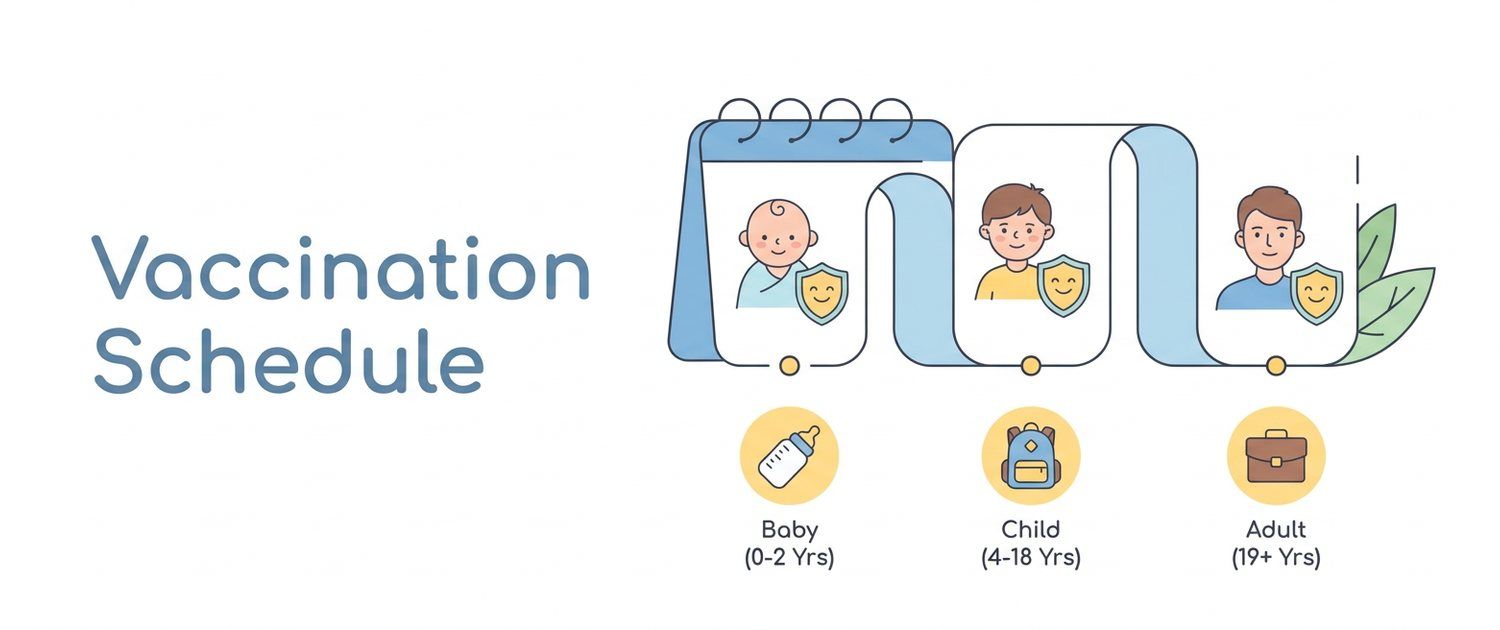
The vaccination schedule frightens parents with its mass of unfamiliar abbreviations and dates. In fact it is a carefully designed plan built so that protection forms exactly when a child is especially vulnerable. Here is how the national vaccination schedule works, which vaccines children and adults need and what to do if the schedule slips.
What the National Vaccination Schedule Is
The national vaccination schedule is an approved plan of vaccination by age. It sets which vaccines are given, and when, to protect the population from dangerous infections. The timings are not random: they are tied to the age at which a disease is most dangerous and to when the immune response to the vaccine is best.
Childhood Vaccines: the Schedule by Age
The first shots begin in the maternity hospital: BCG against tuberculosis and hepatitis B vaccination. Then, month by month, DTP (pertussis, diphtheria, tetanus), polio and others are added, and after a year — MMR (measles, rubella, mumps) and more. Many vaccines are given in several doses with boosters — that is how lasting immunity forms.
Which Diseases Vaccines Protect Against
The schedule covers the most dangerous infections: tuberculosis, hepatitis B, pertussis, diphtheria, tetanus, polio, measles, rubella, mumps, and in many regions pneumococcus, Haemophilus influenzae, chickenpox and flu. Each vaccine in the schedule sits where it brings the most benefit.
Vaccines for Adults and Revaccination
Vaccination is not only a children's topic. Immunity weakens over time, so adults need boosters: above all against tetanus and diphtheria about every 10 years. By indication, adults get flu shots and "catch up" on what was not done in childhood.
Main Vaccines: DTP, BCG, MMR and Others
To avoid confusion over abbreviations: DTP is pertussis-diphtheria-tetanus, BCG is tuberculosis, MMR is measles-rubella-mumps. Separately, remember the tests that are not vaccines: Mantoux and Diaskintest check for contact with tuberculosis, they do not vaccinate.
Deferral and Deviations from the Schedule
If a vaccine had to be postponed (illness, a contraindication), that does not mean "never" — the doctor draws up an individual schedule. A deferral is a shift to a suitable time, not a cancellation of protection. Small shifts usually do not require restarting the course; the decision is made by a doctor.
How to Tell Which Vaccines Are Missing
You can track your vaccines by a vaccination certificate or medical record. If the data is lost or you do not remember, a doctor can assess immunity by a blood antibody test for some infections and draw up a "catch-up" plan. A confusing antibody report can be uploaded for decoding. Why antibodies are measured after vaccination and whether a booster is needed is in the article on the antibody titer.
By-indication and Situational Vaccines
Besides the routine schedule there are vaccines for specific situations: tick-borne encephalitis for endemic regions, HPV for teenagers, emergency rabies vaccination after an animal bite, and travel vaccines. What you need depends on age, health and lifestyle — worth discussing with a doctor.
How to handle post-vaccination and any other fever in a child is covered in fever in children.
This article is for informational purposes only and does not replace a doctor's consultation. An individual vaccination schedule and contraindications are determined by a specialist. This is reference information, not a call to action.
For informational purposes only
This article is for informational purposes only and does not constitute medical advice, diagnosis, or treatment. Please consult a healthcare professional for medical guidance.