Formula · 6.3
Brand · 6.3
Bioderma · cream for dry skin · France
Bioderma Atoderm Crème Ultra
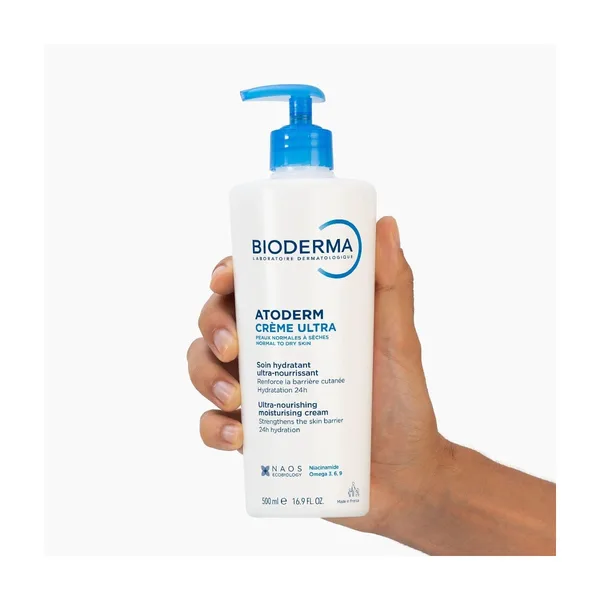
LabReadAI label score
How the score is calculated- Actives and evidence0.6Actives with strong evidence: 1 of 2
- Active concentration0.3After the 1 % line: niacinamide (vitamin b3) — the concentration is likely token
- Completeness for the purpose0.9For “dryness and a damaged barrier” — 92 %; a formula with one main purpose
- Tolerance1.0No ingredients from irritant or allergen lists
- adults
- pregnancyallowed per the leaflet
- oily skin
- acne-prone
- dry skin
- sensitive skinat 10 % flushing is possible
- rosaceaask a dermatologist
Ingredients — 23 components, 2 of them active
The rest is the formula base: it holds texture, shelf life and application, and is not meant to act.
What works: 2 of 23 ingredients: niacinamide, vitamin e. Dry skin needs three things at once: draw water in (glycerin, hyaluronate), rebuild the barrier (ceramides with cholesterol, panthenol) and seal moisture with a film (petrolatum, oils). One of the three is half the job.
Strengths: completeness for the purpose, tolerance
What lowers the score: actives and evidence: actives with strong evidence: 1 of 2; active concentration: after the 1 % line: niacinamide — the concentration is likely token
Questions: no debatable ingredients in the formula
- Aqua/Water/Eau base: coating, fillers · water — the solvent and base; listed first because there is more of it than anything else; in supplements — part of the capsule shell
- Paraffinum Liquidum/Mineral Oil base: coating, fillers · purified cosmetic-grade petroleum products: form a protective barrier film; safety is established, a preference question; 0–2 of 5 (depends on the raw-material source), cosmetic white oil per DiNardo (2005) is non-comedogenic
- Glycerin base: coating, fillers · a humectant: coats the tablet, holds moisture in creams and shampoos; does not clog pores
- Brassica Campestris (Rapeseed) Seed Oil base: coating, fillers · the plant base: emollient oils, waxes and care extracts
- Sodium Polyacrylate label wording · an allergen (sodium (salt)) — matters when limiting salt, for example with blood pressure; the label says it is absent
- Pentylene Glycol base: coating, fillers · humectants and solvents — hold water and help actives dissolve
- Cetearyl Alcohol base: coating, fillers · a fatty-alcohol blend (C16–C18), an emulsifier and thickener, does not dry the skin; paired with ceteareth-20 — 4 of 5; rarely clogs pores in leave-on face products
- 1,2-Hexanediol base: coating, fillers · a solvent and humectant with antimicrobial action: it helps the product keep without classic preservatives.
- Caprylyl Glycol base: coating, fillers · a humectant that also holds bacteria back, which is why it often replaces part of the preservative.
- Acrylates/C10-30 Alkyl Acrylate Crosspolymer base: coating, fillers · hold the texture: gels, creams and foam do not separate
- Sodium Citrate base: coating, fillers · tune the acidity and texture; salt is a common shampoo thickener
- Xylitol base: coating, fillers · draws water in and holds it in the upper layer of the skin
- Cetearyl Glucoside base: coating, fillers · soften, condition and carry the actives; the backbone of the texture
- Mannitol base: coating, fillers · draws water in and holds it in the upper layer of the skin
- Tocopherol works · the active ingredient — what the product is for; form: tocopherol (in cosmetics)
- Rhamnose base: coating, fillers · draws water in and holds it in the upper layer of the skin
- Xylitylglucoside base: coating, fillers · humectants and solvents — hold water and help actives dissolve
- Helianthus Annuus (Sunflower) Seed Oil base: coating, fillers · a light emollient oil rich in linoleic acid (in tablets — a coating component); does not clog pores
- Anhydroxylitol base: coating, fillers · humectants and solvents — hold water and help actives dissolve
- Niacinamide works · the active ingredient — what the product is for; form: niacinamide
- Glucose base: coating, fillers · amino acids, lipids and sugars akin to the skin’s own components — support for its barrier
- Fructooligosaccharides base: coating, fillers · plant sugars: they hold water and feed skin bacteria; in a product this is the humectant part of the base
- Caprylic/Capric Triglyceride base: coating, fillers · a coconut-oil fraction, a light emollient and carrier of actives; does not clog pores
- Laminaria Ochroleuca Extract base: coating, fillers · plant and algae extracts and floral waters: flavouring and marketing components — at these shares there is no proven effect on the skin; rare reactions in people allergic to that particular plant
Bioderma Atoderm Crème Ultra is a product whose active ingredient is niacinamide (vitamin b3) + vitamin e. The concentration is not declared and the active sits after the 1 % line — more for the label than for the effect. The effect is supported by studies: niacinamide (vitamin b3). There is little evidence of effect: vitamin e. The formula has 23 ingredients, 2 of which do the work; the rest is the formula base. Dry skin needs three things at once: draw water in (glycerin, hyaluronate), rebuild the barrier (ceramides with cholesterol, panthenol) and seal moisture with a film (petrolatum, oils). One of the three is half the job. By the list, no alcohol (alcohol denat), sulfates (SLS/SLES), formaldehyde releasers, isothiazolinones (MIT/MCI), parabens, soap, silicones, fragrance, gelatin in the coating, toning dyes, tar. Suitable for: adults, pregnancy, oily skin, acne-prone, dry skin. sensitive skin, rosacea — ask a doctor. Use: morning and evening, on clean skin. When to expect an effect: tone, pores — 4–8 weeks; sebum — 2–4. Label score — 6.3 out of 10 (actives with strong evidence: 1 of 2; after the 1 % line: niacinamide (vitamin b3) — the concentration is likely token; for “dryness and a damaged barrier” — 92 %; a formula with one main purpose).
Who it does not suit
When to stop: persistent burning — stop; rarely — contact allergy: rash, itching — stop
Is this product right for your skin?
The score describes the formula, not your skin: the same product dries one person and saves another. Describe your skin type, reactions and goals, attach a photo of the ingredient list or the product — we will go through every ingredient and say whether it suits you, what to pair it with and what to avoid.
Similar products
Same nutrient and the same purpose — closest by form and dose. Each has its own score by the same method, so you can see whether there is an option nearby that is more honest or simpler in composition.
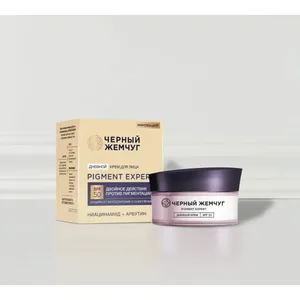 Чёрный жемчугBlack Pearl PIGMENT EXPERT Day Cream SPF 507.6
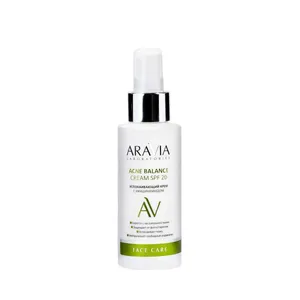 ARAVIA LaboratoriesARAVIA Laboratories Acne Balance Cream SPF 206.6
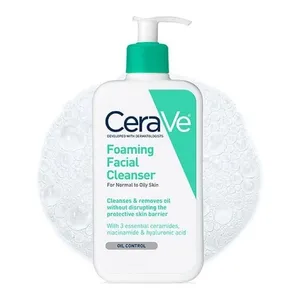 CeraVeCeraVe Foaming Facial Cleanser9.6
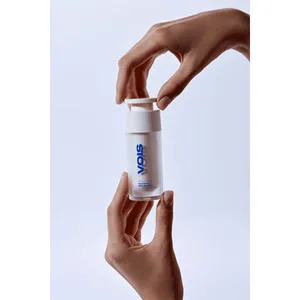 VOISVOIS Blemish Control Serum8.7
 MEDIHEALMEDIHEAL Derma Ampoule Mask H.P.A8.6
 numbuzinnumbuzin No.3 Skin Softening Serum8.5
 GarnierGarnier Skin Naturals Salicylic Anti-Blemish Serum7.5
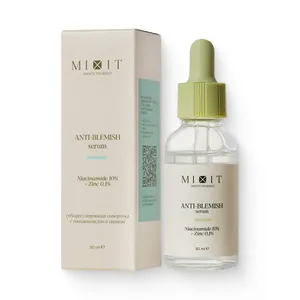 MIXITMIXIT Skin Chemistry Stop Acne Face Serum7.3