Which Tests a Woman Over 40 Should Take: List and Screenings
Reviewed by the LabReadAI medical team
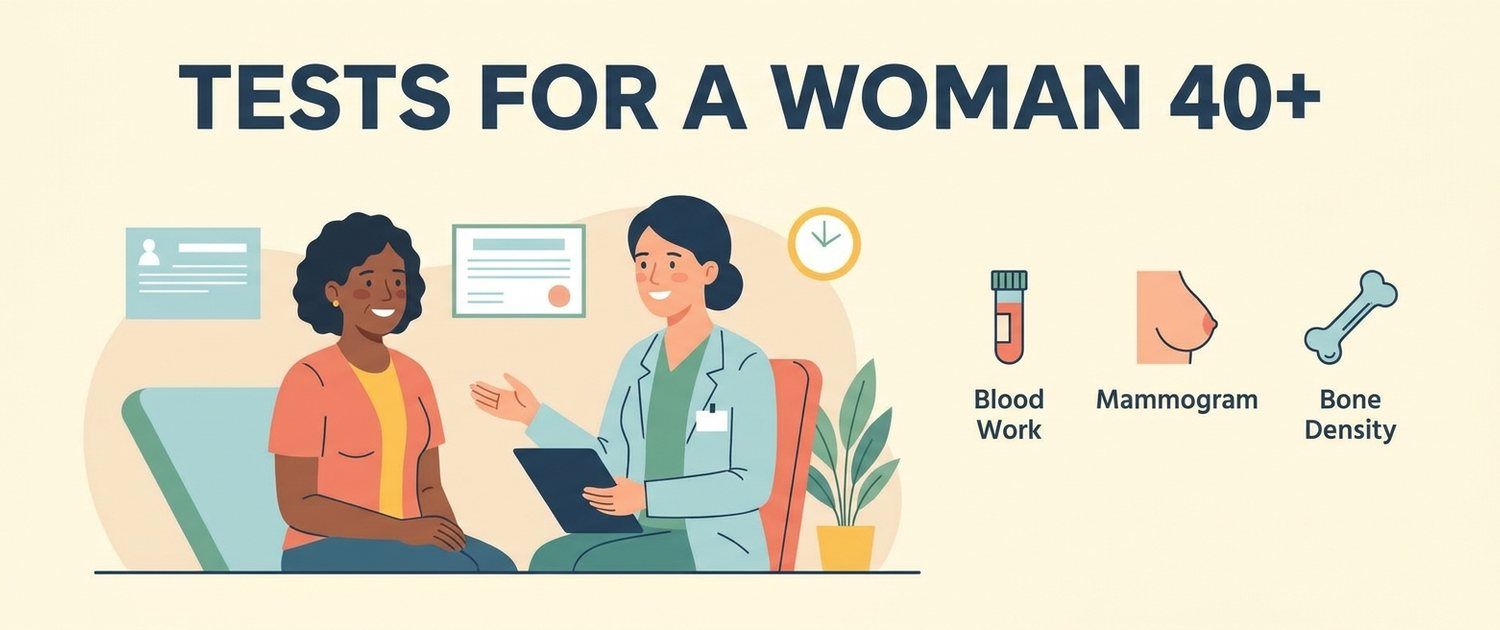
"Which tests should a woman over 40 take?" is a question that comes up when energy drops and the body changes. The good news: to keep your health in check you do not need to "test everything". There is a basic set and a few topics that matter specifically at this age, which a doctor chooses by complaints and family history. Let's sort out a sensible list.
Why a Woman Over 40 Should Take Tests
After 40 metabolic risks (sugar, cholesterol), thyroid problems and iron deficiency gradually rise, and the onset of perimenopause adds its own changes. Many problems go without symptoms, so preventive tests help catch them in time. But "test the maximum" is not the goal: unnecessary tests produce random deviations and worry.
The Basic Set and What to Add After 40
The core stays the same (CBC, glucose, lipids, urinalysis), and after 40 it is sensible to add assessment of ferritin and iron, TSH for the thyroid, glucose and, by indication, HbA1c, a lipid profile and vitamin D. This extended set covers hidden problems common for the age. The general approach to a body check-up is covered in the article on which tests to take.
Iron and Ferritin: A Common Deficiency in Women
Before menopause women often have low iron stores because of menstruation, and fatigue and hair loss are frequently linked to exactly this. So ferritin (iron stores) and a complete blood count for anemia are among the most useful tests at this age. Low ferritin with normal hemoglobin already indicates a hidden deficiency worth correcting.
Thyroid, Sugar and Lipids
The thyroid affects weight, mood and energy, and its problems become more frequent after 40 — the basic marker here is TSH. Glucose metabolism is monitored with fasting sugar and, at risk, HbA1c (average sugar over 3 months). The lipid profile shows cholesterol and cardiovascular risk, which rises with age. These three topics are the core of a work-up after 40.
Age Screenings: Cytology, Mammography, Fecal Occult Blood
Besides blood tests, cancer screenings matter after 40. Regular cervical cytology detects precancerous changes; mammography is recommended by age for early breast cancer detection; a fecal occult blood test screens the bowel. The exact intervals depend on age and history and are set by a doctor — these checks save the most lives.
Hormones in Perimenopause
If hot flashes, cycle disturbances, sweating or mood swings bother you, a doctor may discuss hormone assessment, but perimenopause is diagnosed mainly by symptoms and age, not "by one hormone". Symptoms and management are covered in detail in the article on menopause and hot flashes. Routinely running the whole hormone profile without complaints is unnecessary.
What to Do with the Results
A single "bad number" without symptoms is often not a disease but a reason to retest or show a doctor. A diagnosis is not made from one report. If the results are unclear, you can upload them for decoding — the service explains the values in plain language and suggests questions for your doctor.
This article is for informational purposes only and does not replace a doctor's consultation. The set of tests and screenings is chosen by a specialist individually by age and history.
For informational purposes only
This article is for informational purposes only and does not constitute medical advice, diagnosis, or treatment. Please consult a healthcare professional for medical guidance.