Which Virus Is Going Around Now: Symptoms and What to Do
Reviewed by the LabReadAI medical team
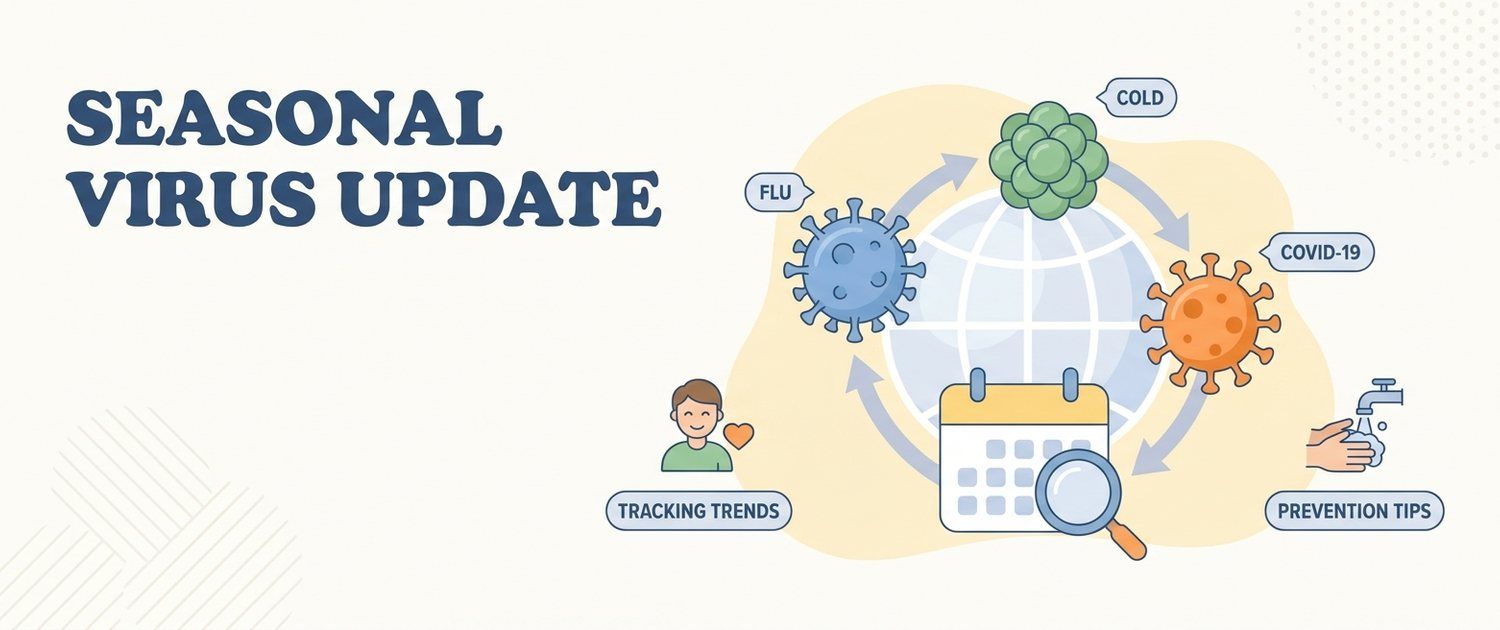
"Which virus is going around now?" is one of the most common questions in cold season. The honest answer: you can only name the pathogen for sure from regional lab reports, and from how you feel — only get oriented. But that hardly matters: most seasonal viruses are treated similarly, and it is symptoms and "red flags" that decide, not the name. Here is how to tell what is going around and what to do.
How to Tell Which Virus Is Going Around
Go by three things: the season, the symptom pattern and what people around you are sick with (family, daycare, work). Respiratory viruses cause a runny nose, sore throat, cough and fever; intestinal ones cause vomiting and diarrhea. Precisely identifying the virus is rarely needed (for example a flu or COVID test when indicated) — management usually does not change.
Seasonality: What Circulates in Autumn, Winter and Summer
In autumn and winter respiratory viruses dominate — colds, flu, coronavirus; the peak is in the cold season. In summer and early autumn intestinal and enterovirus infections are more common. In spring and summer "outdoor" threats are added — for example tick-borne infections (that is no longer a "cold", see tick bite).
Respiratory Viruses: Colds, Flu, COVID
This is the most common group of "what is going around": a stuffy nose, sore throat, cough, fever, aches. Flu usually starts more abruptly and with a higher fever, a cold is milder. Telling them apart "by eye" is hard, and they are mostly treated the same way — symptomatically. Antibiotics do not help; they are only for bacterial complications as prescribed by a doctor.
Intestinal Viruses: Rotavirus and Norovirus
If vomiting and diarrhea are "going around", it is most often rotavirus or norovirus. They are highly contagious and spread quickly in groups. The main task is to prevent dehydration; first-aid details are in the article on intestinal infection.
"Summer" Viruses and Childhood Infections
In summer enteroviruses (including coxsackievirus) are active, causing fever, rash and a sore throat. In children, classic infections also "go around" through the year — for example chickenpox. So the "virus going around" can be different for a child and an adult.
General Rules: What to Do with a Virus
For most seasonal viruses the same things help: rest, plenty of fluids, lowering fever when you feel unwell, light food. Isolation and hygiene protect those close to you. There is no need to take antibiotics "just in case" — they do not work on viruses and can be harmful.
Treatment and When Tests Are Needed
Treatment of viruses is mostly symptomatic; specific antivirals (for example for flu) are prescribed by a doctor when indicated. Tests are not always needed: a complete blood count helps tell a viral infection from a bacterial one, and flu/COVID tests are done as the situation requires. If you have a confusing report, you can upload it for decoding.
When to See a Doctor
The name of the virus matters less than red flags: a high fever for more than 3–5 days or a second rise, shortness of breath and chest pain, confusion, signs of dehydration, and illness in an infant, an older person or a pregnant woman. In these cases a doctor is needed. If unsure, you can describe your symptoms — the service suggests likely causes and urgency.
How to handle a cough that lingers after infection is covered in cough in children.
This article is for informational purposes only and does not replace a doctor's consultation. Seek help for warning symptoms.
For informational purposes only
This article is for informational purposes only and does not constitute medical advice, diagnosis, or treatment. Please consult a healthcare professional for medical guidance.