Omega-3: Which to Choose, EPA and DHA, Form and Dosing
Reviewed by the LabReadAI medical team
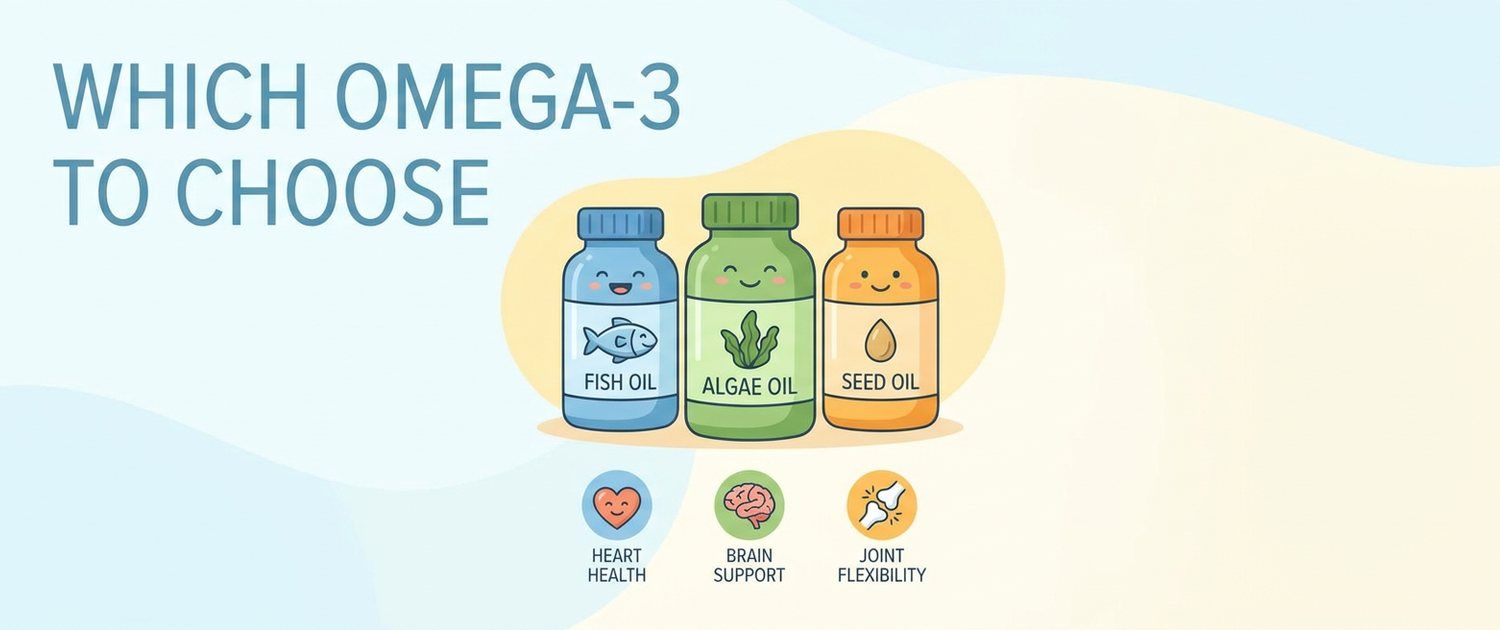
Pharmacy shelves are full of "omega-3", but the benefit per capsule varies widely. The spread is huge: cheap, low-concentration or oxidized fish oil is nearly useless, while a well-chosen supplement actually shifts the omega-3 index and lipids. Let's break down what omega-3 is for, how EPA differs from DHA, which form and dosing to choose, and how to check your level.
What Omega-3 Is For
Omega-3 are essential fatty acids the body barely synthesizes. Key effects:
- Heart and vessels — lower triglycerides, support the endothelium and rhythm
- Brain — DHA is structurally part of neuron membranes
- Inflammation — a substrate for anti-inflammatory mediators
- Eyes — DHA in the retina
- Skin — support the lipid barrier
Most people get little omega-3 from food (unless they eat fish 2–3 times a week), so a supplement is often justified. But what matters is not the capsule itself, but the dose of EPA and DHA in it.
EPA and DHA — What Matters in the Composition
The active parts are EPA and DHA, not the "omega-3 1000 mg" on the label (often the fat mass, not the acids themselves):
- EPA — more about inflammation, mood, heart
- DHA — more about brain, eyes, membranes
- General health needs both; for a mood focus, EPA-dominant blends are more common.
So on the pack, look at the "EPA … mg, DHA … mg" line, not the total fish-oil volume. Alpha-linolenic acid from flax (ALA) converts poorly to EPA/DHA, so plant sources do not replace it.
Which Omega-3 to Choose: Form and Concentration
Three practical selection criteria:
- EPA+DHA concentration — the higher it is, the fewer capsules per dose. Good concentrates give 500–800 mg EPA+DHA per capsule.
- Form — the triglyceride form absorbs better than ethyl esters (see below).
- Freshness/purity — omega oxidizes easily; oxidation markers (TOTOX) and purification from heavy metals matter.
If the goal is to lower triglycerides or raise the index given cardiovascular risk, the dose and form are conveniently matched to labs — that is what supplement matching by your tests does.
Triglyceride Form vs Ethyl Esters
- Triglyceride (rTG/TG) — close to the natural form of fish oil; absorbs better and is more oxidation-stable. Pricier.
- Ethyl esters (EE) — produced during concentration; cheaper, but absorbed worse (in several studies, 30–50% less rise in blood EPA+DHA) and oxidize faster.
A fatty meal smooths the absorption difference, but all else equal the triglyceride form is preferable. Krill is a separate source (phospholipid form, good bioavailability, but usually a low EPA+DHA dose).
How Much Omega-3 to Take (Dosing)
- Health maintenance: about 250–500 mg EPA+DHA per day (at minimum, from food or a supplement).
- Lowering triglycerides: therapeutic doses of 2–4 g EPA+DHA per day — under medical supervision.
- When: with a meal containing fat — absorption is higher.
- The effect on the omega-3 index develops over 8–12 weeks of regular intake.
How to Pick a Quality Supplement
- Look at the EPA+DHA dose, not "omega-3, mg".
- The triglyceride form is preferable.
- Quality signs: low TOTOX, purification (IFOS/certificates), dark packaging, no rancid smell.
- Store cold, do not use a rancid product.
How to Test Your Omega-3 Level
Status is objectively shown by the omega-3 index — the share of EPA+DHA in red-cell membranes. Target values are associated with lower cardiovascular risk. For detail on what the index means and how to raise it, see the omega-3 index and longevity. If the goal is lipid-related, it is reasonable to assess the lipid panel too, and the tactics of lowering cholesterol are covered in high cholesterol: what to do.
Use With Caution If
- On anticoagulants/antiplatelets — high doses of omega-3 may increase bleeding.
- Before surgery — discuss stopping high doses with a doctor.
- Allergy to fish/seafood — choose algal (vegan) DHA.
This information is for educational purposes and does not replace a specialist consultation.
For informational purposes only
This article is for informational purposes only and does not constitute medical advice, diagnosis, or treatment. Please consult a healthcare professional for medical guidance.