Hair Loss in Men: Causes, Tests and Treatment Options
Reviewed by the LabReadAI medical team
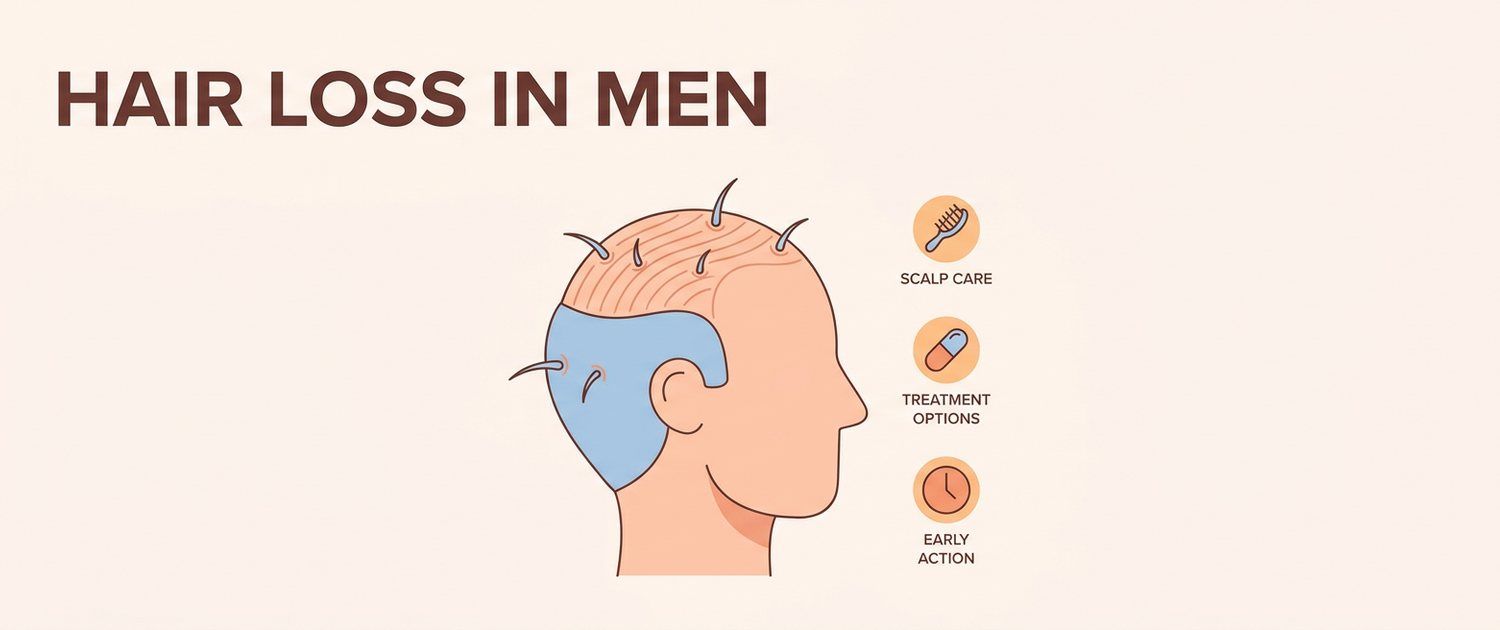
Baldness in men is a common and emotionally difficult topic surrounded by pseudo-remedies. The good news: the main cause is well studied, and some other causes are reversible. Let's break down why men lose hair, what DHT has to do with it, which tests to take, and what treatment actually works.
Normal Shedding and When to Worry
Losing 50–100 hairs a day is normal. The warning sign is thinning in specific zones (a receding hairline at the temples, the crown), a shifting hairline, or a sharply increased diffuse shedding. Male-pattern baldness usually follows a "pattern" (temples + crown), unlike the even thinning in women.
Androgenetic Alopecia — the Main Cause
Up to 80% of male baldness is androgenetic alopecia (male-pattern baldness): a hereditary sensitivity of hair follicles to androgens. Follicles gradually "miniaturize" — hair becomes thinner, shorter, and eventually stops growing. It is not a disease but a genetic trait, yet its progression can be slowed.
What DHT and Testosterone Have to Do With It
The key hormone here is not testosterone itself but its derivative DHT (dihydrotestosterone), formed by the enzyme 5-alpha-reductase. Sensitive follicles miniaturize under DHT. Importantly: high testosterone does not mean baldness — it is about the genetic sensitivity of follicles. If the hormonal background concerns you, start with testosterone and related tests; a general review is in how to increase testosterone.
Other Causes (Deficiencies, Thyroid, Stress)
Not all shedding is androgenetic. Reversible causes, shared with women:
- iron deficiency (low ferritin), zinc, vitamin D
- thyroid disease
- stress, illness, sharp weight loss (telogen effluvium)
Which nutrients really matter for hair is in vitamins for hair; a general review of causes is in hair loss: causes.
What Actually Treats It (Minoxidil, Finasteride)
The evidence base for male androgenetic alopecia:
- Minoxidil (topical) — prolongs the growth phase, improves follicle blood supply
- Finasteride (oral, prescription) — blocks DHT formation, slows loss and often restores some hair
- The minoxidil + finasteride combination is more effective than monotherapy per meta-analyses
- For marked loss — a hair transplant (surgical)
Folk "sprays and oils" are unproven. Start treatment earlier — while follicles are alive.
Which Tests to Take
To separate androgenetic shedding from reversible causes: ferritin and iron, TSH, vitamin D, and testosterone when indicated. A targeted set is convenient — the hair loss panel. The results show whether deficiency correction, thyroid treatment, or it is androgenetic alopecia.
When to See a Trichologist
If there are bald patches (round spots), scarring, itching, flaking, or sudden loss with no cause — see a dermatologist-trichologist: it may not be androgenetic alopecia but another condition needing treatment. Choosing therapy (minoxidil/finasteride) is also best done with a specialist.
This information is for educational purposes and does not replace a specialist consultation.
For informational purposes only
This article is for informational purposes only and does not constitute medical advice, diagnosis, or treatment. Please consult a healthcare professional for medical guidance.