Hair Loss Blood Tests: Ferritin, TSH, Vitamin D and Zinc
Reviewed by the LabReadAI medical team
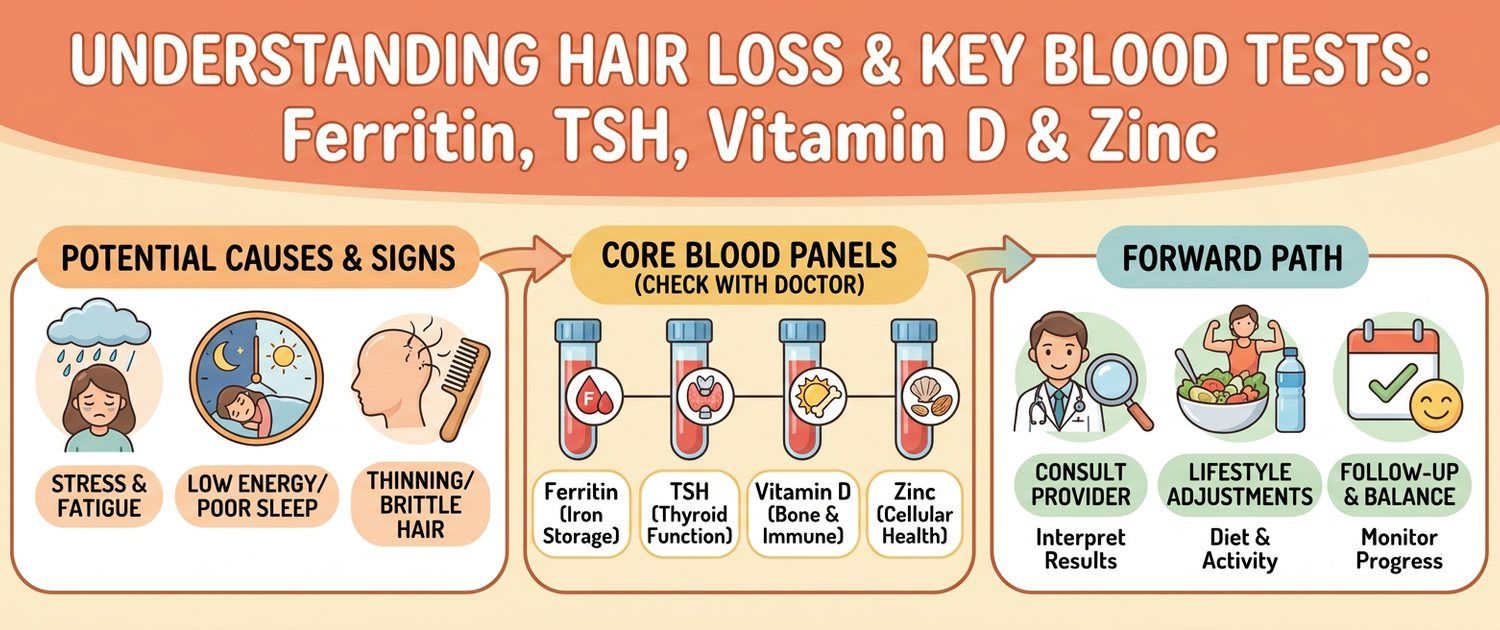
When hair noticeably thins or more than usual stays on the brush, the cause can often be found on blood tests — even before a visit to a trichologist. Most often, behind diffuse hair loss are iron deficiency, thyroid disorders and vitamin shortfalls. Here is which markers make up the basic work-up for hair loss and how to read them together.
Why Take Blood Tests for Hair Loss
Hair follicles are sensitive to iron stores, hormones and nutrients, so many causes of diffuse loss show up on tests. The aim of the work-up is to tell reversible loss from deficiencies and the thyroid (which is corrected) from androgenetic alopecia and scarring forms, which a dermatologist manages. Tests are taken when loss is diffuse and persistent, not for losing a few hairs.
Ferritin and Iron
The key marker is ferritin: it reflects iron stores and falls earlier than hemoglobin. Low ferritin with a still-normal complete blood count is a typical and common cause of hair loss, especially in women. For a full picture, iron metabolism is assessed too — an iron panel (ferritin, serum iron, TIBC).
Thyroid Hormones (TSH)
Both reduced and increased thyroid function disrupt the hair growth cycle. The basic screen is TSH; if abnormal, an extended thyroid panel is ordered. Correcting thyroid function usually restores hair growth.
Vitamin D and Zinc
Micronutrient deficiencies contribute to weakening and loss of hair. Most often vitamin D and zinc are assessed — their shortfall is common and easily corrected. These are interpreted together with iron and the thyroid, not in isolation.
Testosterone and Sex Hormones
With "male-pattern" loss (a widening part in women, a receding hairline in men), testosterone and related hormones are assessed: follicles may be genetically sensitive to androgens. In women with signs of androgen excess (acne, facial or body hair), the work-up is extended with an endocrinologist or gynaecologist.
How to Read the Results Together
No single marker is interpreted in isolation. For example, ferritin is an acute-phase protein and rises with inflammation, masking a deficiency; so it is read together with a complete blood count and iron studies. Low ferritin, an abnormal TSH or vitamin D deficiency with diffuse loss is a reason to correct them; normal results with loss along the part lean toward an androgenetic nature.
When to See a Doctor
It is worth taking tests and seeing a doctor for persistent diffuse loss, especially if it comes with fatigue, weight change or cold intolerance. Patches without hair, redness and scarring of the scalp warrant a dermatologist's exam without tests. Taking iron or vitamins "just in case" is not justified: with normal results there is no benefit, and excess iron is harmful.
This article is for informational purposes only and does not replace a doctor's consultation. The set of tests and their interpretation are chosen by a specialist based on the picture.
For informational purposes only
This article is for informational purposes only and does not constitute medical advice, diagnosis, or treatment. Please consult a healthcare professional for medical guidance.