Formula · 6.3
Brand · 6.5
ARAVIA Laboratories · phyto cleansing gel with niacinamide · Russia
ARAVIA Laboratories Phyto-Active Cleansing Gel
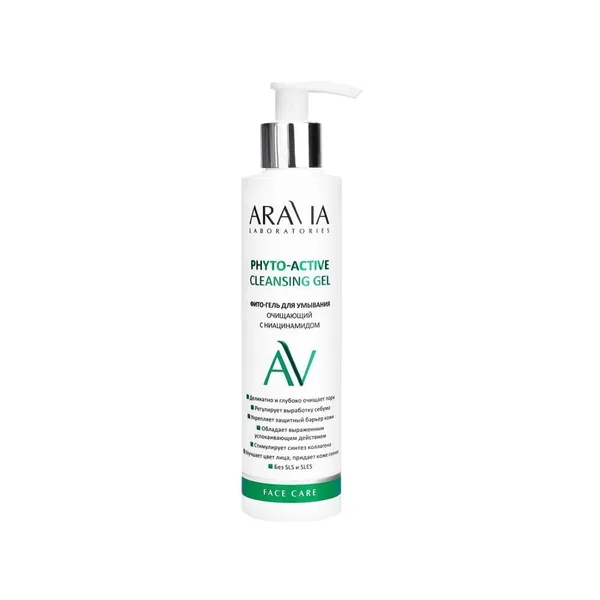
LabReadAI label score
How the score is calculated- Actives and evidence0.6Actives with strong evidence: 1 of 3
- Active concentration1.0Actives sit above the 1 % line — by list order a working concentration is 97 % likely
- Completeness for the purpose1.0For “sensitive skin and redness” — 100 %; below threshold: niacinamide (vitamin b3); a formula with one main purpose
- Tolerance0.3Rinse-off product; debatable groups: isothiazolinone preservatives (MIT/MCI) (skin test positive in 6 of 100 tested), isothiazolinone preservatives (MIT/MCI)
- adults
- pregnancyallowed per the leaflet
- oily skin
- acne-prone
- atopic skin
- children
- sensitive skinat 10 % flushing is possible
- rosaceaask a dermatologist
Ingredients — 15 components, 3 of them active
The rest is the formula base: it holds texture, shelf life and application, and is not meant to act.
What works: 3 of 15 ingredients: niacinamide, licorice extract, calendula extract. Sensitive skin needs soothing ingredients (panthenol, allantoin, bisabolol, centella, oatmeal, ectoin) and barrier ones (zinc oxide, ceramides, niacinamide) — one from each group — and as few irritants as possible: fragrance, alcohol, acids.
Strengths: active concentration, completeness for the purpose
What lowers the score: actives and evidence: actives with strong evidence: 1 of 3; tolerance: rinse-off product
Questions: isothiazolinone preservatives (MIT/MCI): methylchloroisothiazolinone, methylisothiazolinone — preservatives; banned in EU leave-on products and limited in rinse-off (0.0015%) — a frequent cause of contact allergy
- Aqua base: coating, fillers · water — the solvent and base; listed first because there is more of it than anything else; in supplements — part of the capsule shell
- Coco-Glucoside base: coating, fillers · a sugar surfactant made from coconut oil and glucose: it cleanses gently with modest foam. A common base for baby and sulfate-free shampoos.
- Cocamidopropyl Betaine base: coating, fillers · a mild amphoteric surfactant: it builds dense foam and softens the harsh sulfates next to it. It occasionally causes contact allergy, and the culprit is a manufacturing impurity rather than the ingredient itself.
- Disodium Laureth Sulfosuccinate base: coating, fillers · a mild anionic surfactant: it foams almost like the sulfates but is tolerated far better. Common in baby products.
- Laureth-2 base: coating, fillers · cleanse and bind water with oils; milder than the sulfate ones
- PEG/PPG-120/10 Trimethylolpropane Trioleate base: coating, fillers · coating glazing agent
- Niacinamide works · the active ingredient — what the product is for; form: niacinamide
- Calendula Officinalis Flower Extract works · the active ingredient — what the product is for; form: flower extract
- Chamomilla Recutita Flower Extract base: coating, fillers · plant and algae extracts and floral waters: flavouring and marketing components — at these shares there is no proven effect on the skin; rare reactions in people allergic to that particular plant
- Glycyrrhiza Glabra Root Extract works · the active ingredient — what the product is for; form: licorice root extract
- Melissa Officinalis Leaf Extract base: coating, fillers · plant and algae extracts and floral waters: flavouring and marketing components — at these shares there is no proven effect on the skin; rare reactions in people allergic to that particular plant
- Panax Ginseng Root Extract base: coating, fillers · plant and algae extracts and floral waters: flavouring and marketing components — at these shares there is no proven effect on the skin; rare reactions in people allergic to that particular plant
- Rosa Canina Fruit Extract base: coating, fillers · plant and algae extracts and floral waters: flavouring and marketing components — at these shares there is no proven effect on the skin; rare reactions in people allergic to that particular plant
- Citric Acid base: coating, fillers · acidity regulator
- Methylchloroisothiazolinone questions · preservatives; banned in EU leave-on products and limited in rinse-off (0.0015%) — a frequent cause of contact allergy
- Methylisothiazolinone questions · preservatives; banned in EU leave-on products and limited in rinse-off (0.0015%) — a frequent cause of contact allergy
ARAVIA Laboratories Phyto-Active Cleansing Gel is a product whose active ingredient is niacinamide (vitamin b3) + licorice extract + calendula extract. The concentration is not declared, but the active sits above the 1 % line in the list — a working share is likely. The effect is supported by studies: niacinamide (vitamin b3). There is little evidence of effect: licorice extract, calendula extract. The formula has 15 ingredients, 3 of which do the work; the rest is the formula base. Worth noting: Methylchloroisothiazolinone, Methylisothiazolinone (preservatives; banned in EU leave-on products and limited in rinse-off (0.0015%) — a frequent cause of contact allergy). Sensitive skin needs soothing ingredients (panthenol, allantoin, bisabolol, centella, oatmeal, ectoin) and barrier ones (zinc oxide, ceramides, niacinamide) — one from each group — and as few irritants as possible: fragrance, alcohol, acids. By the list, no alcohol (alcohol denat), sulfates (SLS/SLES), formaldehyde releasers, parabens, mineral oils and petrolatum, soap, silicones, fragrance, gelatin in the coating, toning dyes, tar. Suitable for: adults, pregnancy, oily skin, acne-prone, atopic skin, children. sensitive skin, rosacea — ask a doctor. Asteraceae allergy, prone to contact allergy — not without a doctor. Use: morning and evening, on clean skin. When to expect an effect: tone, pores — 4–8 weeks; sebum — 2–4. Label score — 6.3 out of 10 (actives with strong evidence: 1 of 3; actives sit above the 1 % line — by list order a working concentration is 97 % likely; rinse-off product; debatable groups: isothiazolinone preservatives (mit/mci) (skin test positive in 6 of 100 tested), isothiazolinone preservatives (mit/mci)). If you react to isothiazolinones, this product is unsuitable even as a rinse-off.
Who it does not suit
- Asteraceae allergychamomile, ragweed, calendula
- prone to contact allergyone of the most frequent cosmetic allergens
When to stop: persistent burning — stop; itching, rash — stop; itching or rash with Asteraceae allergy — stop
Per the maker's leaflet: If you react to isothiazolinones, this product is unsuitable even as a rinse-off.
Is this product right for your skin?
The score describes the formula, not your skin: the same product dries one person and saves another. Describe your skin type, reactions and goals, attach a photo of the ingredient list or the product — we will go through every ingredient and say whether it suits you, what to pair it with and what to avoid.
Similar products
Same nutrient and the same purpose — closest by form and dose. Each has its own score by the same method, so you can see whether there is an option nearby that is more honest or simpler in composition.
 AXIS-YAXIS-Y Dark Spot Correcting Glow Serum7.2
 ARAVIA LaboratoriesARAVIA Laboratories Acne Balance Cream SPF 206.6
 Icon SkinIcon Skin Rest Your Sebum serum concentrate for oily skin5.5
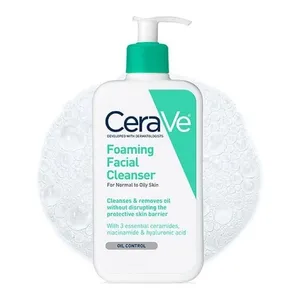 CeraVeCeraVe Foaming Facial Cleanser9.6
 VOISVOIS Blemish Control Serum8.7
 MEDIHEALMEDIHEAL Derma Ampoule Mask H.P.A8.6
 numbuzinnumbuzin No.3 Skin Softening Serum8.5
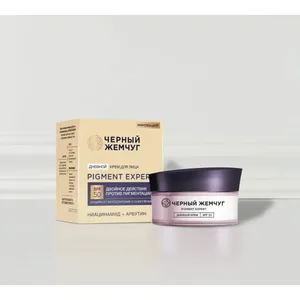 Чёрный жемчугBlack Pearl PIGMENT EXPERT Day Cream SPF 507.6