HIV Test: How to Read It, Timing, EIA and What the Result Means
Reviewed by the LabReadAI medical team
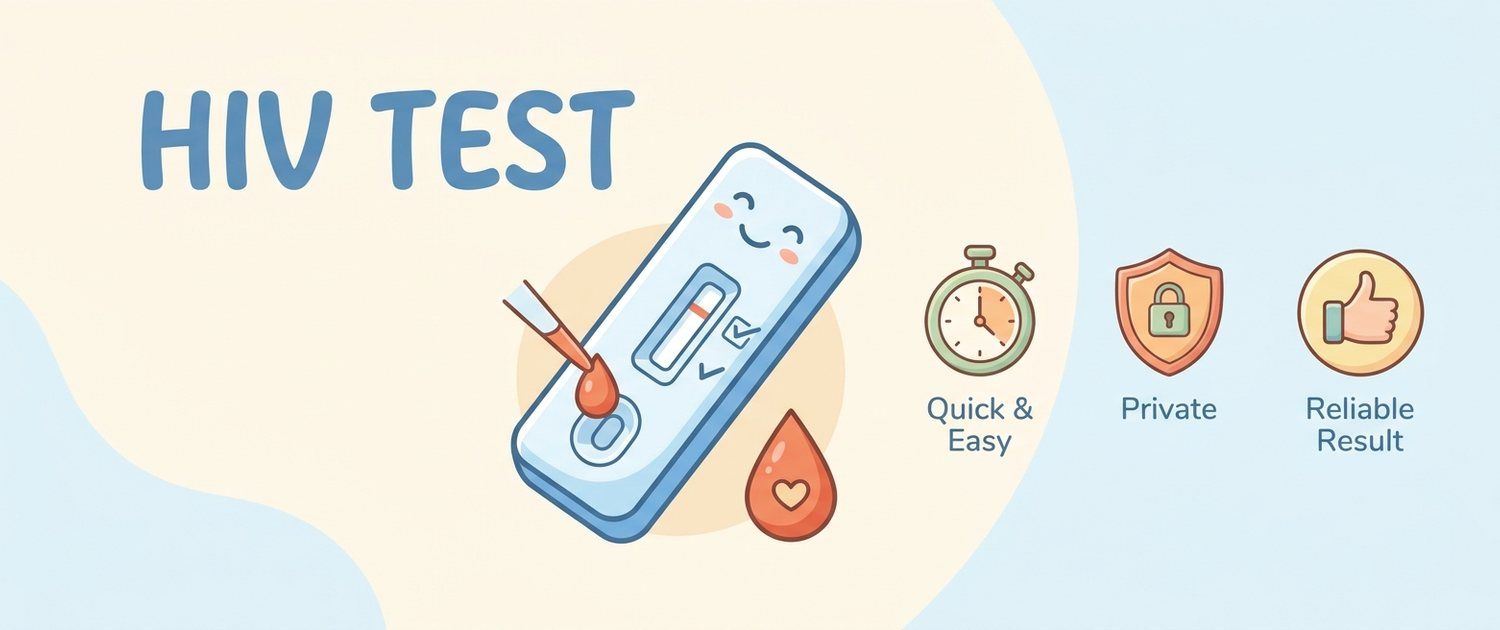
An HIV test scares many people before they even take it, though the screen itself is simple and worth approaching calmly: it is a routine check, not a verdict. The key thing to understand up front: a reactive (positive) screening result is not yet a diagnosis but a signal to do a confirmatory test. Let's sort out which HIV tests exist, when to take them, and how to read the result.
Which HIV Tests Exist
The main test is a laboratory screen from a vein. Today this is the fourth-generation HIV Combo: it simultaneously looks for antibodies to HIV types 1 and 2 and the virus's p24 antigen. The antigen appears in the blood before antibodies, so this test detects infection earlier. Separately there are rapid tests (from a drop of blood or saliva) — handy for a quick self-check, but they are usually an earlier generation and detect antibodies only, so a negative result after a recent risk needs a laboratory recheck.
Timing: the Window Period and When to Test
The window period is the time from infection to the moment the test can already see it. For a fourth-generation test it averages 2–6 weeks. A practical timeline:
- at 2 weeks the test catches infection only in some people;
- at 4 weeks sensitivity is high;
- at 6 weeks a negative result almost excludes infection;
- a follow-up test at 12 weeks after the risk gives the final answer.
If a person took post-exposure prophylaxis, the window lengthens and the follow-up test is taken later. Blood can be drawn without fasting — food does not affect the result.
What a Reactive Result Means
HIV results are reported not as "positive/negative" but as "reactive" and "non-reactive". Non-reactive, with the window observed, means no infection was found. Reactive means the test responded, which is grounds for mandatory confirmation but not a diagnosis on its own. This is where excess panic usually arises: screening is tuned not to miss infection, so it allows false reactions, which the confirmatory test then filters out.
Confirmation: Immunoblot and PCR
After a reactive screen the algorithm is: repeat the test, then run a confirmatory one — an immunoblot (detects antibodies to individual viral proteins) or PCR (finds HIV RNA itself and its amount — the viral load). Only after these steps does the doctor draw a conclusion. No isolated reactive EIA is a diagnosis. More on the infection, its transmission and stages is in the article on HIV and AIDS.
False-Positive and False-Negative Results
No test is perfectly accurate. A false-positive screen is possible in pregnancy, autoimmune diseases, after recent vaccination and from technical errors — which is why a reactive test is always confirmed. A false negative is most often due to the window period (blood drawn too early) or prophylaxis. If the report is confusing, you can upload it for decoding — the service explains the markers in plain language, while the final call is made by a doctor.
What to Do After the Test
An HIV test is often part of a panel before surgery, in pregnancy and in infection work-ups — hepatitis C antibodies and other markers are checked alongside, and sexually transmitted infections are covered in the article on STI symptoms and tests. With a reactive result, see an infectious-disease specialist for confirmatory testing — early detection and modern therapy allow a long life with an undetectable viral load.
This article is for informational purposes only and does not replace a doctor's consultation. An HIV test result is interpreted by a specialist in the context of timing, history and confirmatory tests.
For informational purposes only
This article is for informational purposes only and does not constitute medical advice, diagnosis, or treatment. Please consult a healthcare professional for medical guidance.