Anti-HCV Test: Hepatitis C Antibodies, Results and Interpretation
Reviewed by the LabReadAI medical team
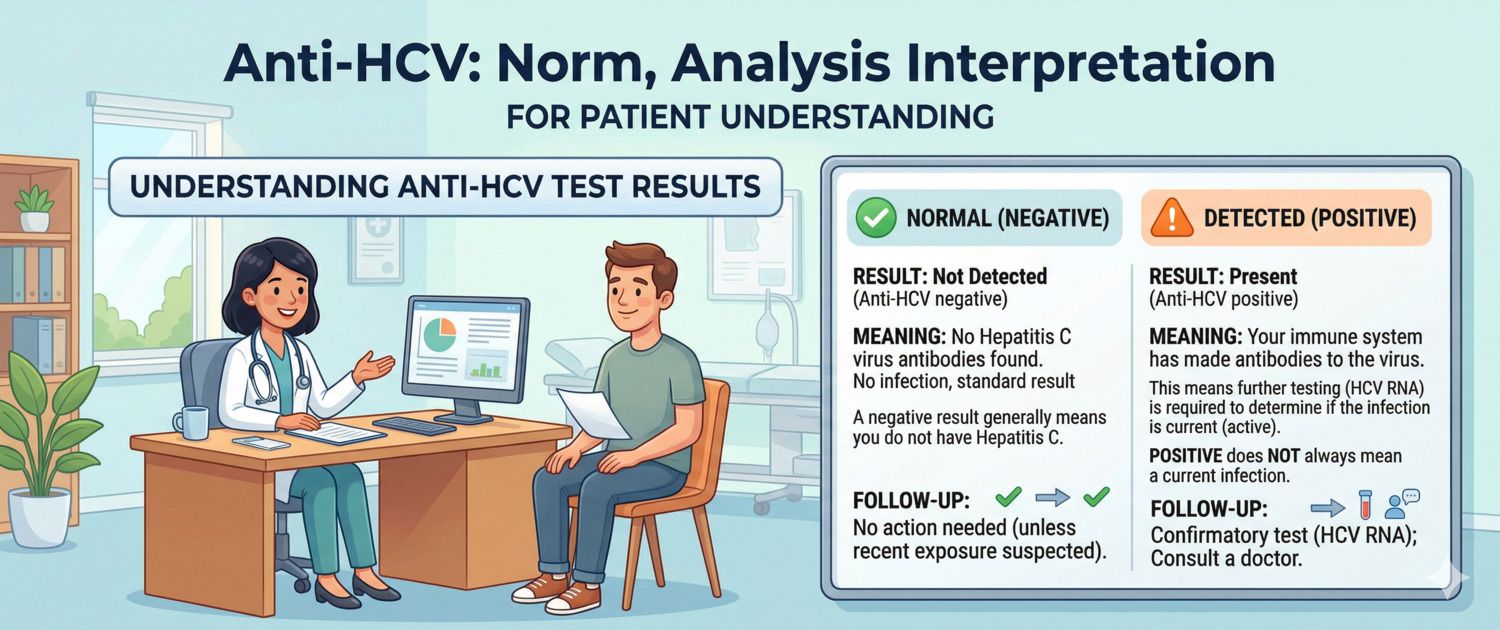
Anti-HCV refers to antibodies against the hepatitis C virus that the immune system produces in response to exposure. Detecting these antibodies in blood is the foundation of hepatitis C screening — one of the most common causes of chronic hepatitis worldwide. A positive anti-HCV result does not automatically mean active infection, but it always warrants further investigation.
What Anti-HCV Antibodies Mean and Why the Test Is Ordered
The anti-HCV test detects total antibodies (IgG and IgM) to structural and non-structural proteins of the hepatitis C virus. It is a screening test: its purpose is to identify individuals who have ever been exposed to the virus.
A key point: antibodies do not appear immediately. The "serological window" — the interval from infection to detectable anti-HCV levels — averages 4–10 weeks, occasionally extending to 6 months. This means a negative result in the first few weeks after possible exposure does not rule out infection.
Anti-HCV antibodies remain in the blood for life even after successful treatment. A positive result therefore indicates one of three scenarios: active infection, a past resolved infection, or a false-positive result.
When Anti-HCV Screening Is Ordered
Anti-HCV testing is part of standard screening programs and is ordered in the following situations:
- Unexplained elevation of ALT or AST
- Pre-surgical workup and hospital admission
- Pregnancy planning and prenatal monitoring
- Blood and organ donor screening
- Needlestick exposure or contact with an infected person's blood
- Chronic liver disease or abnormalities on a liver function test
- History of injection drug use (even a single episode)
- HIV infection (HCV co-infection is common)
The WHO recommends at least one-time anti-HCV screening for all adults, particularly those born between 1965 and 1985 — the cohort with the highest viral prevalence.
How to Prepare for an Anti-HCV Blood Test
No special preparation is needed. Blood is drawn from a vein; fasting or non-fasting status does not materially affect the result, although most laboratories recommend a morning fasting draw for standardization.
Medications do not affect antibody detection, with one exception: immunosuppressive therapy (post-transplant, autoimmune conditions) can suppress antibody production and yield a false-negative result despite active infection.
Results are typically available within 1–2 business days. Rapid anti-HCV tests (using a finger-prick blood sample) provide a preliminary answer in 15–20 minutes, but any positive rapid test must be confirmed in a laboratory.
Anti-HCV Results: Normal Range and Interpretation
| Result | Meaning | Next steps |
|---|---|---|
| Negative (antibodies not detected) | No prior exposure, or test performed during serological window | If recent risk — repeat in 3–6 months |
| Positive (antibodies detected) | Prior exposure to HCV: active infection, resolved infection, or false positive | Confirmatory test: HCV RNA PCR |
| Indeterminate (grey zone) | Antibody level near the assay threshold | Repeat testing in 2–4 weeks |
The key principle: a positive anti-HCV is not a diagnosis — it is a reason for further testing. Only detection of viral RNA by PCR confirms active infection. If PCR is negative with a positive anti-HCV, the virus was either cleared (spontaneously or after treatment) or the initial result was a false positive.
When active infection is confirmed, bilirubin and other liver function markers are assessed to determine the degree of hepatic damage.
False-Positive and False-Negative Anti-HCV Results
False-positive anti-HCV occurs in 1–2% of screening tests and is associated with:
- Autoimmune diseases (rheumatoid arthritis, systemic lupus erythematosus)
- Hypergammaglobulinemia of any cause
- Recent vaccination (particularly influenza)
- Pregnancy (due to immune status changes)
- Advanced age (nonspecific antibody elevation)
- Laboratory technical error
False-negative anti-HCV — a more dangerous situation:
- Serological window (first 4–10 weeks after infection)
- Severe immunosuppression (HIV with low CD4, chemotherapy, immunosuppressant use)
- Hemodialysis (patients on hemodialysis may not produce sufficient antibodies)
- Agammaglobulinemia
When clinical suspicion is high despite a negative anti-HCV, HCV RNA PCR should be ordered directly — this method does not depend on the immune response.
Positive Anti-HCV: Confirmatory Tests and Next Steps
The recommended algorithm for a positive anti-HCV result:
- Qualitative HCV RNA PCR — determines whether the virus is currently present in the blood
- If PCR is positive — quantitative PCR (viral load) and HCV genotyping to guide treatment selection
- Liver assessment — biochemistry panel (ALT, AST, bilirubin, albumin), liver elastography (FibroScan) or biopsy
- Co-infection screening — HBsAg test (hepatitis B), HIV test
Modern direct-acting antiviral agents (DAAs) cure chronic hepatitis C in 95–99% of cases within 8–12 weeks. Treatment is accessible, well-tolerated, and does not require interferon injections — unlike older regimens.
When to See a Doctor
Consult an infectious disease specialist or hepatologist if:
- Your anti-HCV test came back positive — even if you feel completely well
- Liver enzymes (ALT, AST) are elevated without an obvious cause
- You had contact with potentially infected blood
- You belong to a risk group and have never been tested for hepatitis C
Do not delay evaluation: hepatitis C often progresses silently for years, and early detection and treatment prevent the development of cirrhosis and liver cancer.
This article is for informational purposes only and does not replace professional medical advice. Interpretation of anti-HCV test results requires a physician's evaluation.
For informational purposes only
This article is for informational purposes only and does not constitute medical advice, diagnosis, or treatment. Please consult a healthcare professional for medical guidance.