Omega-3 by the Label: EPA and DHA per Capsule, Triglycerides or Esters
Reviewed by the LabReadAI medical team

Omega-3 is the supplement where «1000 mg» on the front most often does not refer to the active: it is the mass of fish oil in the capsule, and the actual omega-3 acids may be a third of it. Below is how to read an omega-3 supplement label: why the sum of EPA and DHA is counted, how the triglyceride form differs from ethyl esters, what 30 % and 60 % concentration mean, how to judge freshness by TOTOX and compare two products per gram of EPA+DHA.
What the omega-3 index shows, which dose is needed with high triglycerides and how long to take it is in the article on the omega-3 index. This page is about the label only.
EPA and DHA: the only numbers to look for
The actives in fish oil are two acids: EPA (eicosapentaenoic) and DHA (docosahexaenoic). An honest label states milligrams of each per capsule and per serving. If it only says «fish oil 1000 mg» or «omega-3 300 mg» without a breakdown, the EPA+DHA sum is unknown and the product cannot be compared. ALA (alpha-linolenic acid from flax and chia) converts to EPA and DHA at only a few percent, so «omega-3 from flaxseed oil» is a different product with a different task.
Triglycerides or ethyl esters
| Form on the label | Written as | Absorption | Notes |
|---|---|---|---|
| Natural triglycerides | TG, «triglyceride form» | high | as in fish; concentration up to ~30 % |
| Re-esterified triglycerides | rTG, re-esterified | the highest | 60–90 % concentrate converted back to TG |
| Ethyl esters | EE, ethyl ester | lower, depends on a fatty meal | cheap concentrate; the form of prescription drugs |
| Phospholipids (krill) | krill oil | high | low concentration; many capsules per dose |
In the comparative study by Dyerberg and colleagues (2010), re-esterified triglycerides gave higher bioavailability than natural fish oil, and ethyl esters markedly lower, especially on an empty stomach. Ethyl esters are not «harmful» — it is the form of registered medicines — but they must be taken with a fatty meal and at a higher dose. If the form is not stated on a concentrate, it is almost certainly EE.
Concentration: 30 % or 60 %
Regular fish oil holds about 300 mg of EPA+DHA per gram (~30 %). Concentrates hold 600–900 mg per gram. At a target of 1 g of EPA+DHA a day that is the difference between three capsules and one. Concentration does not make a product better by itself, but it lowers the price per gram of omega-3 and the capsule count. The Russian adequate intake of omega-3 for adults (MR 2.3.1.0253-21) is 1 g/day (0.8–1.6 g); the upper safe level from supplements per EFSA is up to 5 g of EPA+DHA a day.
Freshness: TOTOX and smell
Polyunsaturated fats oxidise, and rancid omega-3 is not merely unpleasant — oxidation products cancel the benefit. The oxidation value TOTOX (peroxide plus anisidine value) is published by honest makers in batch certificates of analysis; the GOED standard is no more than 26. On the pack look for the production date (not only the expiry), a dark bottle or blister, and vitamin E (tocopherol) as an antioxidant in the formula. Fishy smell and burps after taking it are a sign of oxidation or an oversized capsule, not of «naturalness».
What else to look at
- Source. Anchovy, sardine, mackerel — small short-lived fish accumulate less mercury; cod (liver) also brings vitamins A and D, whose dose then has to be counted. Algal DHA is the vegan option, often without EPA.
- Shell. Gelatin (fish or bovine) matters to vegans; an enteric coating reduces burps.
- Extras. Flavourings and sweeteners in liquid forms; «omega 3-6-9» — omega-6 and -9 are not needed in a supplement, the diet already has them in excess.
- Registration. The SGR number on a Russian pack lets you check the composition against the Rospotrebnadzor register; prescription omega-3 (90 % ethyl esters) carries a marketing authorisation and a leaflet.
How to compare two products: price per 1 g of EPA+DHA
Add EPA and DHA per capsule, multiply by the number of capsules — that is the total omega-3 in the pack. Divide the price by it — the price per gram. A cheap jar of «fish oil 1000 mg × 100 capsules» with 300 mg of EPA+DHA per capsule gives 30 g per pack; a concentrate of «60 capsules × 900 mg» gives 54 g. A 1 500 ₽ concentrate often works out cheaper per gram than a «budget» 500 ₽ fish oil.
Checklist before buying
- Find mg of EPA and DHA per capsule — without them the product cannot be judged.
- Check the form: triglycerides (TG/rTG) preferred; ethyl esters only with a fatty meal.
- Count the capsules needed for 1 g of EPA+DHA a day.
- Production date, dark packaging, tocopherol in the formula, TOTOX in the certificate.
- Price per 1 g of EPA+DHA is the only honest metric.
- On anticoagulants and before surgery, doses above 1 g — discuss with a doctor.
Is this omega-3 right for you
The label tells whether a product is honest and what a gram of omega-3 costs. Whether you need it and at what dose is told by your blood omega-3 level, your triglycerides and your diet: with two servings of oily fish a week a supplement is often unnecessary. Upload your report — the service will match the dose to your numbers. How products are scored in this section is explained on the method page. Products with omega-3 and their label score are in the catalogue.
Products with this nutrient in the catalogue
Full catalogue →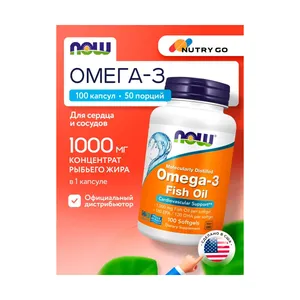
For informational purposes only
This article is for informational purposes only and does not constitute medical advice, diagnosis, or treatment. Please consult a healthcare professional for medical guidance.