Vitamin C by the Label: Ascorbic Acid, Sodium Ascorbate or Liposomal
Reviewed by the LabReadAI medical team
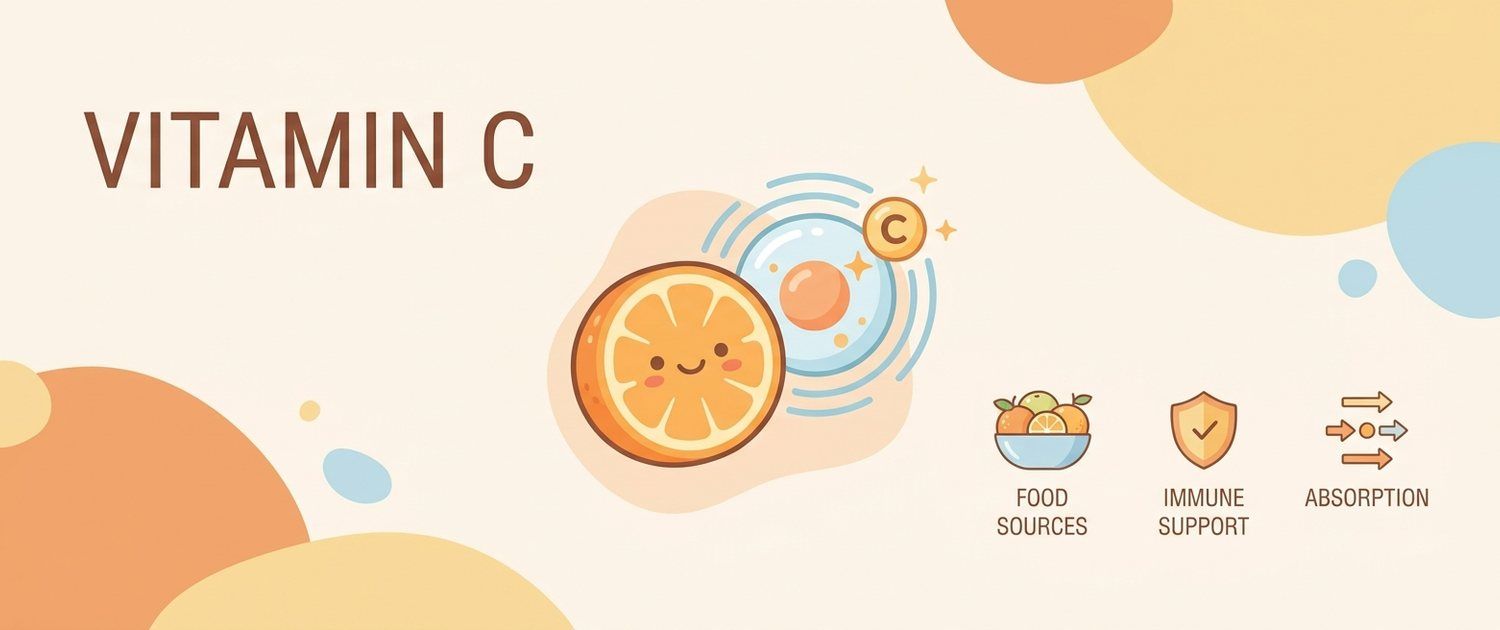
Vitamin C is the cheapest supplement on the shelf and at the same time the one where the premium for form reaches tenfold: ascorbic acid for pennies sits next to «liposomal» for a fortune. Below is how to read a vitamin C label: how ascorbic acid, sodium ascorbate, calcium ascorbate, Ester-C, ascorbyl palmitate and liposomal differ, how many mg per serving make sense at a 100 mg norm, what sits in effervescent tablets, and how to compare two products by price per 500 mg.
Vitamin C in cosmetics — serums, concentrations and stability on skin — is a different topic, covered in the article on vitamin C for the face. Here — the supplement and its label only.
Ascorbic acid, sodium ascorbate, Ester-C, liposomal: forms on the label
| Form on the label | Share of ascorbic acid | Absorption | Notes |
|---|---|---|---|
| Ascorbic acid | 100 % | the reference | cheapest; acidic, may irritate the stomach at high doses |
| Sodium ascorbate | ~89 % | same as the acid | neutral («buffered»); 1 g gives ~110 mg sodium |
| Calcium ascorbate | ~90 % | same as the acid | neutral; 1 g gives ~100 mg calcium |
| Ester-C | ~85 % (calcium ascorbate + metabolites) | same as the acid | a brand; no advantage shown in data |
| Ascorbyl palmitate | ~42 % | fat-soluble ester | mostly an antioxidant in the formula, not a dose source |
| Liposomal | product-dependent | higher blood peak in small studies | 5–10 times dearer; no clinical difference shown |
| «From rose hips, acerola» | as stated in mg | same as synthetic | same molecule; Carr and Vissers (2013) found no difference |
Vitamin C is one molecule in all forms: an ascorbate is the same ascorbic acid bound to sodium or calcium, and once dissolved they are indistinguishable. The review by Carr and Vissers (2013) directly compared synthetic and food-derived ascorbic acid and found no difference in bioavailability. Liposomal forms give a higher blood concentration peak in small studies, but there are no data that this changes anything in outcome.
How many mg per serving: why 1000 mg is absorbed by half
The reference intake is 100 mg/day (Russian MR 2.3.1.0253-21; NIH RDA 75–90 mg), higher for smokers. The classic work by Levine and colleagues (1996) showed that at about 200 mg/day plasma and cells saturate, and as the dose rises the absorbed fraction falls: at 30–180 mg 70–90 % is absorbed, at 1000 mg less than half, the rest excreted by the kidneys. So a «1000 mg» tablet is not «ten times the benefit» but mostly payment for what leaves in urine. The tolerable upper level by NIH is 2000 mg/day; EFSA set no upper level, noting that doses above 1 g cause GI upset. With a tendency to kidney stones, high doses are discussed with a doctor: part of the ascorbate is converted to oxalate.
What else to check in the formula
- Effervescent tablets. «1000 mg» in effervescent form also means bicarbonate and citric acid: up to 300 mg sodium per tablet and often sugar or sweetener. Not the best choice on a salt restriction.
- Chewables and lozenges. Sugar, glucose syrup, colourings; the acid erodes enamel with frequent use — check if buying for a child.
- Bioflavonoids, rutin, citrus extracts. Traditional neighbours; there is no evidence they improve vitamin C absorption — a surcharge.
- Zinc, D3, echinacea. «Immune complexes»: count the vitamin C dose separately and judge the other components by their own rules, for example zinc by the label.
- Registration. The registration number on the pack lets you cross-check the formula against the official register.
How to compare two products: price per 500 mg
Divide the pack price by the number of servings, then by mg of ascorbic acid per serving, and multiply by 500. Ascorbic acid as powder or tablets is the cheapest per milligram; sodium and calcium ascorbate cost 20–50 % more and are justified for a sensitive stomach; Ester-C and «from acerola» cost 2–4 times more with no difference in absorption; liposomal costs 5–10 times more for a blood peak with no proven clinical meaning.
Checklist before buying
- Find mg of ascorbic acid per serving; for ascorbates, recalculate by the form's share.
- 100–200 mg a day is the saturation dose; 500–1000 mg mostly leaves in urine.
- Ascorbic acid by default; sodium or calcium ascorbate for a sensitive stomach; liposomal is a premium.
- In effervescents check sodium and sugar; in chewables, sugar and acidity for teeth.
- Calculate the price per 500 mg and compare with plain ascorbic acid.
- With kidney stones, haemochromatosis or iron supplements, discuss high doses with a doctor.
Is this vitamin C right for you
The label tells you whether a product is honest and what you pay for. Whether you need vitamin C is told by diet and blood vitamin C: on an ordinary diet with vegetables and fruit deficiency is rare, and fatigue and frequent colds have many causes besides it — which vitamins to check first is in the article on which vitamins you are short of. Upload your report — the service will match what you actually need. How products are scored in this section is explained on the method page. Products with vitamin C and their label score are in the catalogue.
Products with this nutrient in the catalogue
Full catalogue →
For informational purposes only
This article is for informational purposes only and does not constitute medical advice, diagnosis, or treatment. Please consult a healthcare professional for medical guidance.