Swimming Pool Certificate: Which Tests Adults and Children Need
Reviewed by the LabReadAI medical team
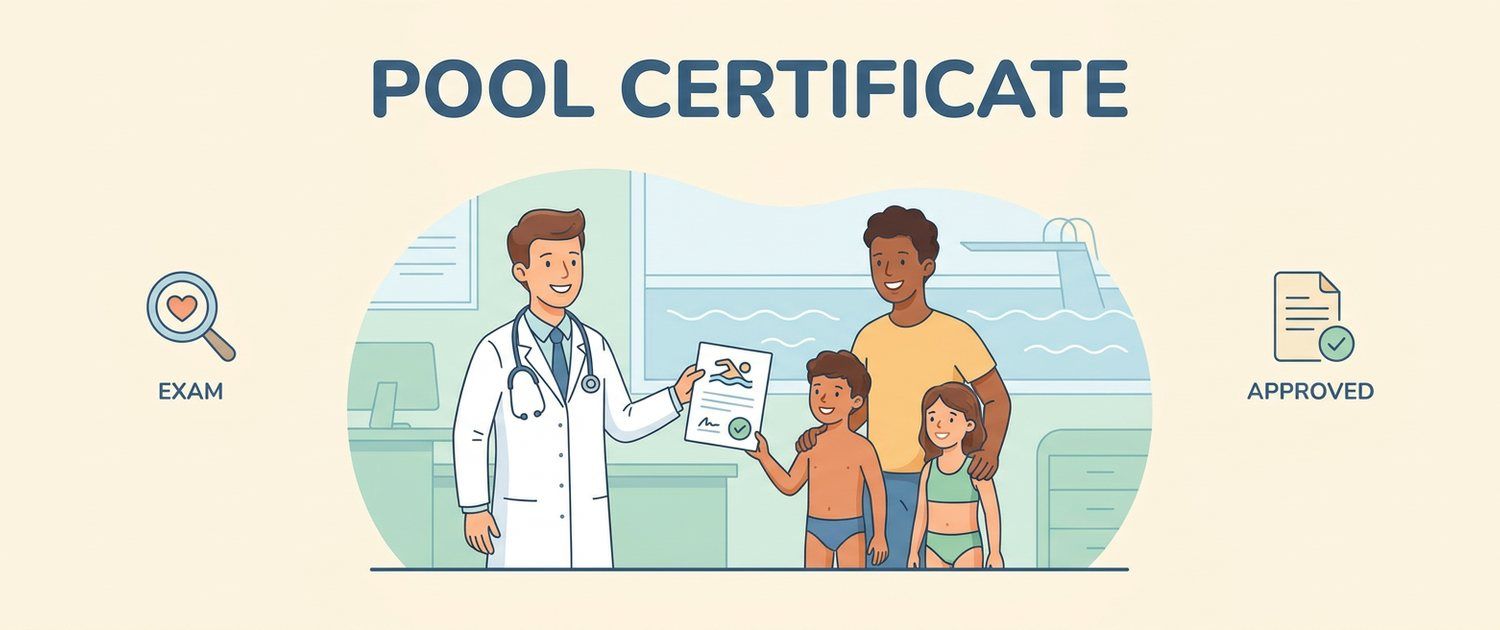
"Bring a certificate" is the first thing a new pool visitor hears. Yet what the law requires and what a particular pool requires are not the same thing, and no other certificate causes this much confusion. We are an information service: we do not issue certificates, but we will honestly sort out who actually needs one under the sanitary rules, which tests it involves, and how to get it done in a couple of days. The exact list is always defined by the current rules and the specific facility's requirements.
Does an adult need one? The honest answer
Under the current sanitary rules (SP 2.1.3678-20) swimming pools are not obliged to require a medical certificate from adult visitors. Rospotrebnadzor has clarified this publicly: an adult's certificate may only be needed during an unfavourable epidemic situation in a given area — by order of the sanitary service, not by default.
Why do pools still ask? A private pool may set its own rules in the service contract — and many do, to be safe. That is lawful as a contract term, but it is the pool's requirement, not sanitary legislation. If the pool insists, taking one swab is faster than arguing; what exactly to take is below.
Children: mandatory pinworm screening under SanPiN
With children it is the other way round. Under SanPiN 3.3686-21, children are screened for enterobiasis (pinworms) and hymenolepiasis (dwarf tapeworm) before attending a swimming pool — and without a result a child can lawfully be refused entry. The key group is children up to about 10 years old inclusive: enterobiasis is most common at that age, and water plus shared changing rooms make an easy transmission route.
The requirement is not a formality: pinworms are the most widespread helminth infection in children, and one infected child in a swimming class quickly "shares" with the group. The disease itself is covered in the article on enterobiasis.
What is taken for the certificate
| Test | For whom and why |
|---|---|
| Pinworm swab | The main test for a child's certificate: catches pinworm eggs on the perianal folds |
| Stool for helminth eggs | Detects hymenolepiasis and other intestinal parasites; some facilities ask for it alongside the swab |
| Paediatrician or physician exam | The final "cleared for the pool" note is made by the doctor based on the results |
An important detail: a "worm stool test" does not replace the swab — pinworms lay their eggs outside, on the skin, and the eggs almost never appear in a stool sample. So the pool needs the swab specifically, with stool added as a second test where hymenolepiasis is also checked.
Validity: the certificate and the tests
- The pinworm swab — the result is ready the same or the next day; for the certificate a result no older than 10–14 days is usually required.
- A child's pool certificate — with regular attendance it typically stays valid for 3 months, then the swab is repeated.
- A one-off visit — many pools admit a child on a fresh certificate without the "subscription" renewals; check the house rules.
The same logic covers other children's groups: the same tests are needed for summer camp, so before the summer season it is sensible to take the swab once and close both certificates — if the dates fit the validity windows.
The fast way
- At your clinic under public insurance: a paediatrician visit plus the swab — usually two short visits, the result next day.
- Private labs take the swab without appointment, and some offer home collection, which is much easier with small children; a doctor's note is still needed.
- The swab is taken in the morning before washing the child — otherwise a false-negative and a re-test are likely.
- If parents need certificates too (adult and child in one class), ask the pool in advance: for an adult the same swab is usually enough.
A separate case is the pool's own staff: they need not a visitor's certificate but a health record book with the full test set for the communal services sector.
The short version
An adult does not need a pool certificate under the sanitary rules — Rospotrebnadzor has confirmed this; a child up to 10 inclusive needs a pinworm swab (and hymenolepiasis screening) under SanPiN 3.3686-21. The swab is ready in a day, the certificate usually holds for 3 months. The exact list follows the current rules and the specific pool's requirements. Other routine children's tests are covered in what tests a child needs, and finished results can be uploaded for decoding — the service explains every line of the form.
For informational purposes only
This article is for informational purposes only and does not constitute medical advice, diagnosis, or treatment. Please consult a healthcare professional for medical guidance.