Which Tests Should a Man Take: Basic Set and by Age
Reviewed by the LabReadAI medical team
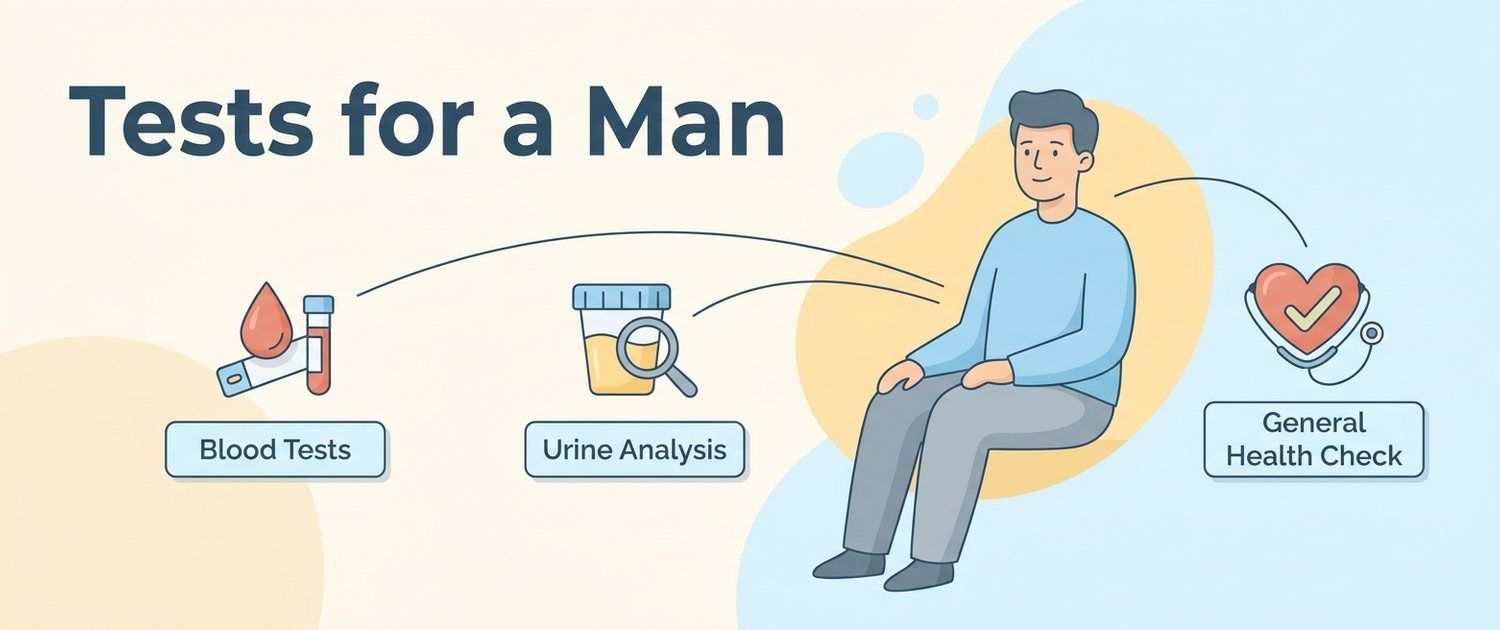
"Which tests should a man take to check his health?" is a common question, especially near 40. The good news: to keep your health in check you do not need to "test everything". There is a sensible basic set that a doctor adds to by age and complaints, plus a few specifically male topics. Let's sort out where to start and what to add over the years.
Why a Man Should Take Tests
Many problems in men go a long time without symptoms: high cholesterol, prediabetes, thyroid disorders, hidden anemia. Preventive tests help catch them in time while everything is fixable. But "test the maximum" is not the goal: the more unnecessary tests, the more random deviations and worry. It is wiser to start from the basics and complaints.
A Basic Set of Tests for a Man
A sensible core for most adult men: CBC (anemia, inflammation), glucose (diabetes), a lipid panel (cholesterol and vascular risk), TSH (thyroid), the liver enzymes ALT and AST, and a urinalysis. This set covers the most common hidden problems and works as a starting point. The general approach to a body check-up is in the article on which tests to take to check your body.
Testosterone: When It Makes Sense to Check
A total testosterone check is done not "for prevention for everyone" but by symptoms: persistent low energy, reduced libido, erection problems, loss of muscle mass, low mood. Blood is taken in the morning while fasting, usually with a repeat, because levels fluctuate. How the hormone changes and what to do about it is in the article on testosterone after 30.
PSA and Prostate Health After 45–50
PSA is a marker linked to the prostate. Mass screening for everyone is not recommended: the PSA question is discussed individually with a doctor, usually after 45–50 or earlier with a strong family history. The decision to test is made together, weighing the benefit against possible unnecessary further tests. What the marker shows and how to read the result is in the article on reading PSA.
Cardiovascular Risk with Age
Over the years the heart and vessels take the lead. Key markers: blood pressure, cholesterol (total, LDL, HDL), glucose and weight. These simple values predict heart attack and stroke better than exotic tests. They are what to monitor regularly, especially with excess weight, smoking or a family history of heart disease.
Which Tests a Man Should Take After 40 and 50
After 40 the set expands toward metabolism and vessels: cholesterol, sugar and blood pressure are watched more actively, and age-appropriate cancer screenings are added (for example a fecal occult blood test). After 50 a concrete conversation about PSA is added, plus other tests by indication. The idea is not to "test more" but to test what matters for a specific age.
What to Do with the Results
A single "bad number" without symptoms is often not a disease but a reason to retest or show a doctor. A diagnosis is not made from one report. If the results are unclear, you can upload them for decoding — the service explains the values in plain language and suggests questions for your doctor.
This article is for informational purposes only and does not replace a doctor's consultation. The set of tests and their interpretation are chosen by a specialist individually.
For informational purposes only
This article is for informational purposes only and does not constitute medical advice, diagnosis, or treatment. Please consult a healthcare professional for medical guidance.