Cat Scratching but No Fleas: Causes and When to See a Vet
Reviewed by the LabReadAI medical team
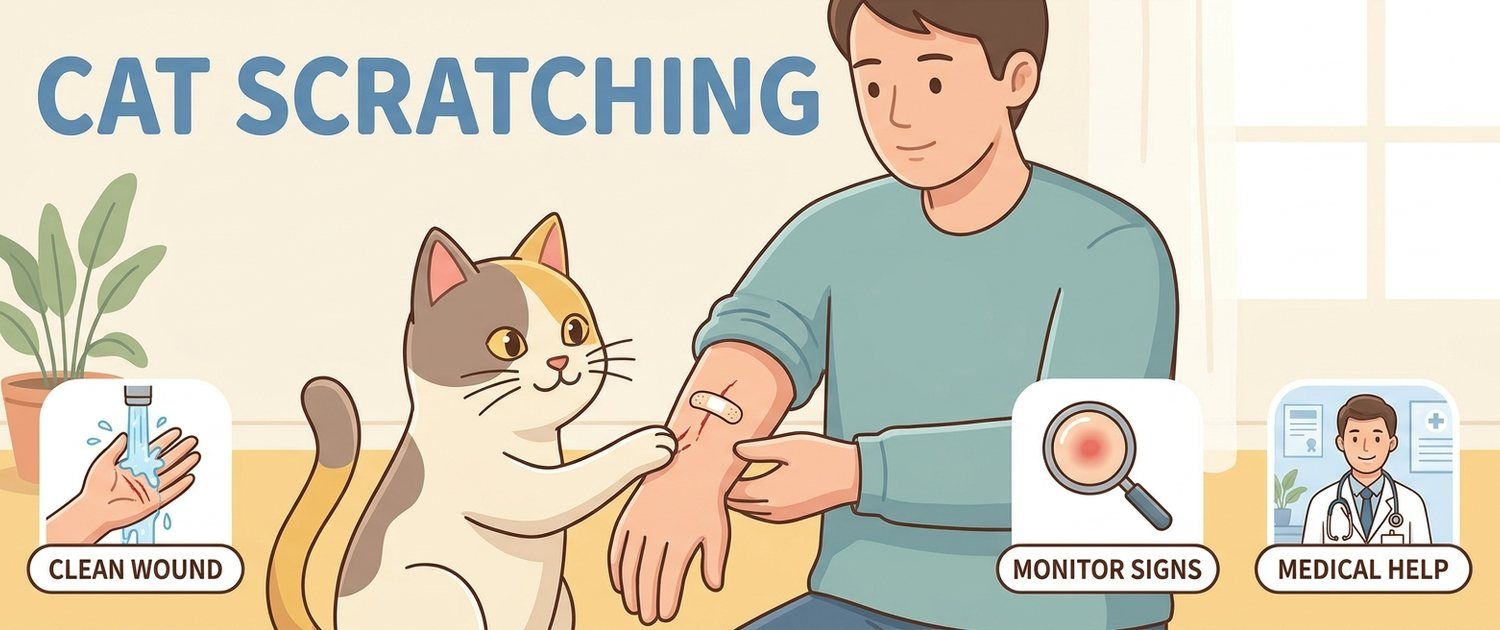
Itch is not a diagnosis but one shared signal that dozens of different roads lead to. Feline skin answers almost every problem the same way: scratching, licking, bald patches, crusts. Judging it by eye is close to impossible, so the work-up always climbs the same ladder — from the commonest cause to the rarest.
Why Is My Cat Scratching When There Are No Fleas
Start with the uncomfortable part: "no fleas" is usually an impression, not a fact. A cat is an extremely efficient groomer, swallowing the parasites it catches, so what you find on the coat is at best black specks of flea dirt. In a sensitive animal a handful of bites a month keeps the itch running — that is flea allergy dermatitis, still the leading cause worldwide, indoor cats included, because fleas arrive on shoes.
Then, in descending order:
- Environmental allergy (atopy) — pollen, mould, dust mites; often seasonal.
- Food allergy — a true adverse food reaction; less common than atopy.
- Ear mites and otitis — the itch is concentrated on head and ears.
- Other skin parasites — cheyletiella, notoedric mange, demodex, lice.
- Fungal and bacterial disease — ringworm, secondary infection of scratches.
- Pain and behaviour — licking one spot as a response to pain or stress.
Cat Food Allergy, Atopy and Flea Saliva
The three allergic mechanisms look alike and are told apart by pattern and by trial, not by a test:
| Mechanism | Where it itches | Seasonality | How it is tested |
|---|---|---|---|
| Flea allergy | Back, rump, tail base | Warmer months | Rigorous parasite control |
| Food reaction | Head, neck, ears; often gut signs too | Year-round | Strict 6–8 week diet, then rechallenge |
| Atopy | Face, belly, paws | Often seasonal | Diagnosis of exclusion |
Crucially, there is no blood test for food allergy in cats: serum allergen panels neither confirm nor exclude a food reaction. The only working method is a strict elimination diet with a chosen food and not a single treat for 6–8 weeks, followed by a return to the old diet. If the itch comes back, the theory is confirmed. How such diets are built is covered in therapeutic pet food, and everyday feeding in choosing food for a cat.
A food reaction rarely stops at the skin: some cats also get loose stools or intermittent vomiting — see vomiting and diarrhoea in cats.
Cat Ear Mites and Otitis: Why a Cat Shakes Its Head
This is the commonest reason owners search separately for a cat shaking its head. The mechanism is simple: irritation in the ear canal produces two actions at once — the cat scratches the ear with a hind paw and shakes the head to dislodge whatever is in there.
What sits behind it:
- Ear mites (otodectic mange) — cause number one in kittens and young cats. Dry dark debris like coffee grounds, intense itch, usually both ears.
- Bacterial or yeast otitis — moist discharge, an odour, a hot painful ear.
- Nasopharyngeal polyp — usually one-sided in a young cat, and head shaking may come with a head tilt and sneezing; see a sneezing cat.
- A foreign body or trauma — sudden onset, marked distress, one ear.
One sign must never be missed: a head tilt, an unsteady gait, unequal pupils or flicking eyes. That means the process has reached the inner ear and needs attention now.
Fleas You Never See: Testing the Theory Honestly
The test looks like this: treat every animal in the household with a modern vet-prescribed product, and treat the environment too — beds, carpets, floor cracks where larvae live. Judge the result at 6–8 weeks, not at three days, because the flea life cycle is longer than people expect. If nothing changed over that period with full compliance, the theory can be dropped and the list continues.
Ringworm, Bacteria and Scabs on the Skin
Once a cat is scratching to the point of scabs, a secondary infection almost always settles on top of the original cause: bacteria and yeasts live on skin permanently and exploit any break in the barrier. Hence the weeping patches, crusts, odour and pustules. Ringworm deserves separate mention — it can occur with no itch at all, is contagious to people, and is confirmed by culture.
Overgrooming and Pain
Sometimes the cat is not scratching but licking — methodically, into symmetrical bald patches on the belly, inner thighs or flanks. Owners often miss it because cats do it alone. Such a picture first requires pain to be excluded — cystitis, joints, skin — and only then may stress be discussed. How to read coat loss is set out in hair loss in cats.
When to See a Vet Urgently
- Head tilt, loss of balance, flicking eyes — likely inner ear involvement.
- A suddenly painful ear, the cat refusing to have its head touched, blood or pus.
- Scratching to the point of bleeding, facial swelling, hives or laboured breathing.
- Itch plus systemic signs: lethargy, refusing food, fever.
- Fast-spreading crusted bald patches together with lesions on people at home — think ringworm.
- A neck scratched raw within hours — that is what severe itch looks like, and it cannot wait.
What Not to Do at Home
- No human medicines. Human painkillers, fever drugs and antihistamines are lethal to cats, and "half a tablet" is not a safe dose. Any medication is a vet's decision only.
- No cotton buds in the ears and nothing poured into the canal before a vet has seen the eardrum: with a ruptured drum some products cause deafness.
- No human shampoo, and no spirit-based antiseptics or dyes on the skin — they make the inflammation worse.
- Do not change the diet every fortnight. That does not test the food theory, it only muddles it; only a strict, long enough elimination diet answers the question.
- Never use dog flea products on a cat — some of them are lethally toxic to cats.
- Do not clip or pick at the scabs yourself.
What Work-Up Clarifies the Itching Causes
Skin itch is worked up as a sequence, not as a single test:
- Skin scrapes, trichogram and cytology — the baseline in the consulting room: parasites, yeasts, bacteria.
- Otoscopy and ear cytology — separates mites from bacterial otitis.
- Dermatophyte culture — the ringworm question.
- Complete blood count and biochemistry — when systemic signs are present or long-term therapy is planned; how to read the form is in cat blood test.
- Head imaging — when a polyp or middle ear disease is suspected; the best answer comes from tomography, see MRI and CT in dogs and cats, while a plain film still shows something — cat X-ray.
Itch and mange are not cat-only problems: rabbits, guinea pigs and rodents carry their own mites and their own rules — see rabbit and rodent diseases.
A lab form from the clinic can be read in the pet results interpretation service, a scan or report in pet imaging interpretation, and if nothing has been tested yet you can describe the symptoms to get the likely causes and the urgency. How that works without an in-person visit is explained in online vet reading.
This article is informational. Diagnosis and treatment of your pet are the job of a veterinarian.
For informational purposes only
This article is for informational purposes only and does not constitute medical advice, diagnosis, or treatment. Please consult a healthcare professional for medical guidance.