Oak Pollen Allergy: Symptoms, Cross-Reactions and Treatment
Reviewed by the LabReadAI medical team
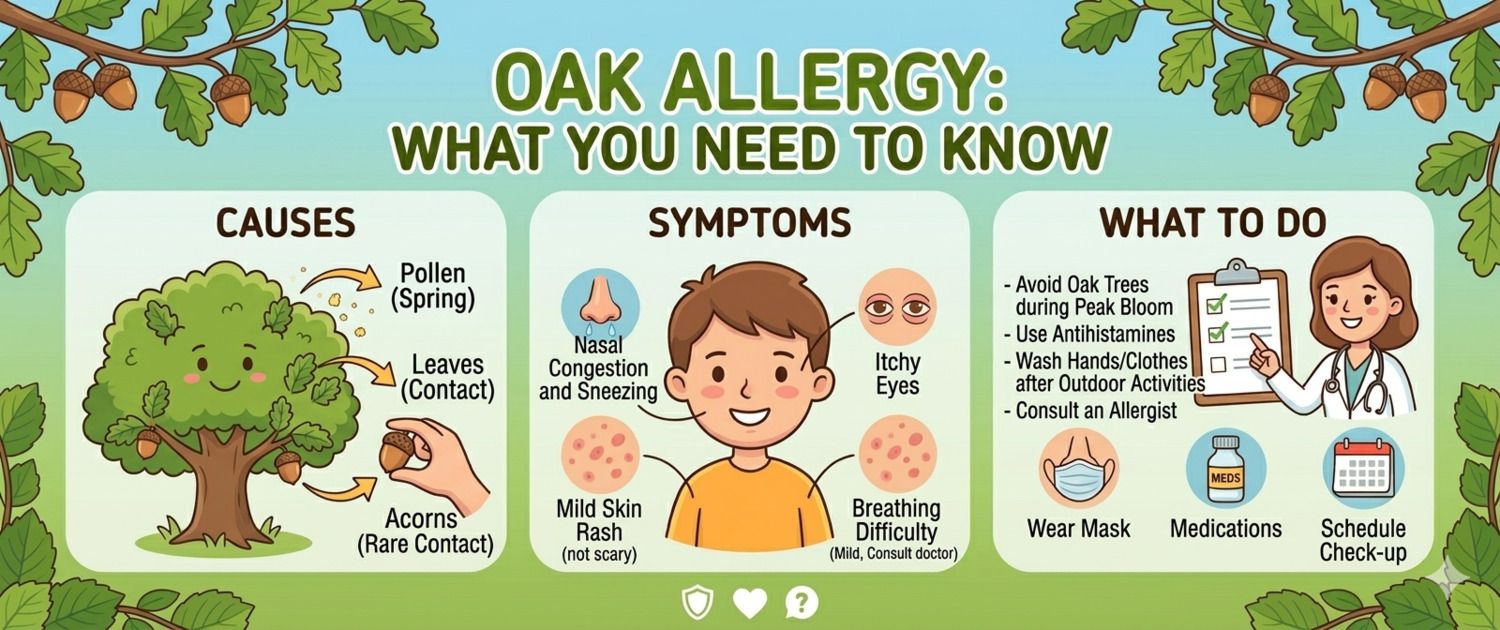
April and May bring worsening symptoms for many allergy sufferers, but not everyone connects them to a specific tree. Oak blooms inconspicuously — no showy flowers, almost silently — yet its fine pollen disperses for kilometres and reaches high concentrations in the air. Oak pollen allergy is one of the most common forms of pollinosis in temperate climates, though it receives far less attention than birch allergy. This article covers when and how oak blooms, what symptoms it causes, its cross-reactive partners, and how to treat it effectively. A full picture of pollen allergy is available in the complete allergy guide.
When Oak Blooms and Why Its Pollen Is a Problem
Oak flowers in April through early May, simultaneously with birch and alder. This spring tree season is the peak of pollinosis in temperate zones — multiple pollen types are airborne at the same time. Many patients with oak allergy have co-existing sensitisation to birch, alder, or hazel, which substantially amplifies symptoms.
Oak pollen grains are slightly larger than birch, so they penetrate the lower airways somewhat less readily. Nevertheless, at high airborne concentrations — especially in dry, windy conditions — they cause pronounced rhinoconjunctivitis and can trigger bronchospasm in susceptible patients.
Oak pollen concentration peaks in the morning (9:00–12:00) on dry, windy days. Rain dramatically reduces it — and symptoms with it. The active pollen period lasts 2–3 weeks but can extend in unfavourable weather.
One interesting feature: in cities with many oak trees (parks, avenues), pollen concentrations are often higher than in forested areas, due to the clustering of trees and pollen reflection off buildings.
Symptoms of Oak Allergy: How to Distinguish It from a Cold
Pollinosis symptoms from oak pollen are typical of any pollen allergy — virtually indistinguishable from birch or alder reactions. What differentiates it is the timing of the season and the cross-reactive profile.
Typical symptoms:
- Profuse watery nasal discharge, paroxysmal sneezing
- Itching of the nose, eyes, palate, and ears
- Red, watering, puffy eyes (allergic conjunctivitis)
- Nasal congestion, especially at night and in the morning
- Dry, persistent cough that worsens outdoors and disappears indoors
- Throat tickle
How to tell it apart from a cold:
- No fever or general malaise
- Symptoms appear rapidly when going outside and subside in closed spaces
- Rainy weather brings clear relief
- Lasts the entire season (2–4 weeks), not 5–7 days
- Antihistamines work; antivirals do not
Severe manifestations requiring immediate medical attention:
- Wheezing, breathlessness — signs of allergic bronchospasm
- Angioedema: swelling of the lips, tongue, throat
- Anaphylaxis — sudden blood pressure drop, loss of consciousness
Some patients experience an atopic dermatitis flare during oak season. Cutaneous allergy manifestations are covered in detail in atopic dermatitis.
Oak Cross-Reactive Allergy: What It Is Linked To
Oak belongs to the Fagaceae family, whose allergens are structurally similar to those of the Betulaceae (birch family). This determines a broad cross-reactive spectrum — one of the most clinically important features of oak allergy.
Cross-reactions with other trees:
- Birch — the primary cross-reactive partner. The major birch allergen Bet v 1 and its homologues in oak pollen share 50–70% structural identity. Approximately 50–60% of people sensitised to birch also react to oak. This is why the spring tree season is so difficult for many patients. For details on birch allergy, see birch allergy (pollinosis).
- Alder, hazel, hornbeam — same botanical families, similar allergenic proteins
- Chestnut, beech — weaker cross-reactive associations
Food cross-reactions — an important practical issue. During oak flowering, the immune system — already activated by pollen allergens — begins reacting to structurally similar proteins in certain foods. Typical food triggers for oak allergy:
- Apples, pears, quince, peach, plum, cherries — stone and pome fruits
- Nuts: hazelnut, almond, walnut
- Carrot, celery, parsley
- Potato (uncommonly)
- Soy and soy products
Reactions manifest as a burning sensation and itching inside the mouth, with swelling of the lips and tongue immediately after contact — oral allergy syndrome (OAS). This is not classical food allergy: the allergen is a pollen protein, not the food itself. Importantly, heat destroys these proteins — cooked carrots or baked apples are generally tolerated better than raw ones.
Diagnosis: How to Confirm Oak Pollen Allergy
Self-diagnosing "I have oak allergy" is not a medical diagnosis. Accurate confirmation requires an allergy consultation.
Skin prick tests — the gold standard. A standardised oak pollen extract is applied to the forearm with a lancet prick through the drop. A wheal ≥ 3 mm after 15–20 minutes is positive. Performed outside the pollen season.
Specific IgE blood testing — measures antibodies to a specific allergen. A tree panel can be run simultaneously: oak, birch, alder, hazel, hornbeam. Safe at any degree of allergy; no antihistamine withdrawal required.
Molecular (component-resolved) diagnostics — identifies specific allergenic components (e.g., Que a 1 for oak). Predicts how severe food cross-reactions will be and guides the selection of the right allergen for ASIT.
On a complete blood count, allergy frequently produces eosinophilia — elevated eosinophils. This is a non-specific but useful marker of allergic inflammation that a doctor factors in when interpreting the clinical picture.
Testing is best performed outside the acute season: spring testing during active flowering is less informative and reaction thresholds are lower.
Treatment of Oak Allergy: From Antihistamines to ASIT
Pollinosis management is built in layers — from symptom control to addressing the underlying cause.
Second-generation antihistamines (cetirizine, loratadine, fexofenadine, bilastine) — first line. Taken continuously throughout the season, not just when symptoms flare. Non-sedating, 24-hour action.
Intranasal corticosteroids (mometasone, fluticasone, budesonide) — most effective for moderate to severe rhinitis. Onset of action takes 3–7 days, so starting 1–2 weeks before the season peaks is important. Minimal systemic absorption; safe for long-term use.
Antihistamine eye drops (olopatadine) — for prominent conjunctivitis.
ASIT (allergen-specific immunotherapy) — the only treatment that addresses the cause: it reprogrammes the immune response to oak allergen. Course length 3–5 years, conducted outside the pollen season. Eliminates or substantially reduces symptoms, prevents the development of bronchial asthma, and reduces food cross-reactions. Prescribed by an allergist after precise allergen identification — the only way to ensure efficacy.
For combined oak and birch allergy, multi-allergen ASIT with simultaneous treatment for several trees is available.
How to Get Through Oak Season: Practical Measures
Reducing allergen exposure is as important a part of management as medication.
- Monitor pollen maps and apps; limit outdoor time on high-count days, especially in the morning.
- Keep windows closed during peak pollen hours (10:00–16:00). Ventilate in the evening after rain.
- Air conditioning with a HEPA filter removes pollen from indoor air.
- Change clothes and rinse your nose with saline immediately after coming inside.
- Do not hang laundry outside during the season.
- Wraparound sunglasses protect the eyes from airborne pollen.
- During flares, temporarily eliminate raw cross-reactive foods: fresh apples, stone fruits, hazelnuts — reducing the total allergen load.
When Urgent Medical Attention Is Needed
Most oak pollinosis presentations are well managed on an outpatient basis. But some symptoms demand immediate help:
- Breathlessness, wheezing, chest tightness — allergic bronchospasm
- Angioedema: rapidly worsening swelling of the face, lips, tongue, or throat
- Anaphylaxis: sudden weakness, blood pressure drop, loss of consciousness, widespread urticaria
- Symptoms uncontrolled by standard-dose antihistamines
- First-time pollinosis in a child under 3
- Season-on-season worsening with new cough and breathlessness — risk of progression to asthma
This content is for informational purposes only and does not replace professional medical advice.
For informational purposes only
This article is for informational purposes only and does not constitute medical advice, diagnosis, or treatment. Please consult a healthcare professional for medical guidance.