Collagen by the Label: Type, Marine or Bovine, Grams per Serving
Reviewed by the LabReadAI medical team
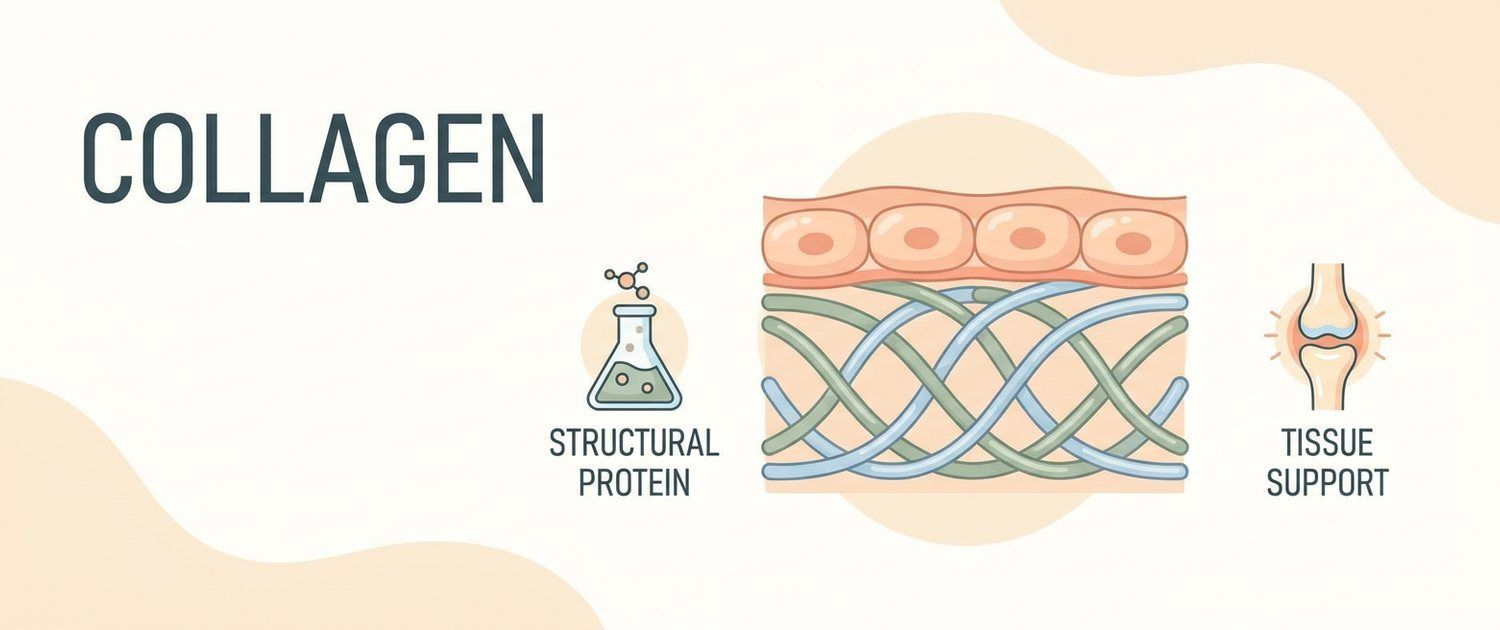
Collagen is the supplement where the label misleads most often not by composition but by scale: a handsome jar of 500 mg capsules holds a dose that no study ever used, because working doses of hydrolysate are grams, not milligrams. Below is how to read a collagen supplement label: what types I, II and III mean and why their jobs differ, how marine differs from bovine and chicken, what hydrolysate and peptides are, how many grams per serving make sense and how to compare two products per gram.
Whether collagen helps skin and joints, how long to take it and what to pair it with is in the article which collagen to choose. This page is about the label only.
Collagen types on the label: a table
| Type on the label | Where in the body | Made from | Taken for | Working dose in studies |
|---|---|---|---|---|
| I | skin, bone, tendons | bovine/porcine hide, fish skin («marine») | skin, hair, nails | 2.5–10 g hydrolysate |
| III | skin, vessels | usually together with I (bovine) | skin, elasticity | within I/III |
| II | joint cartilage | chicken cartilage | joints | 40 mg undenatured (UC-II) or ~10 g hydrolysate |
| «Multi-collagen» I/II/III/V/X | — | mixed sources | marketing | dose of each type usually not stated |
If the label names no types, it is almost always I/III from bovine or fish raw material. «Multi-collagen of 5 types» sounds impressive, but types V and X at the amounts that end up in such a product are unstudied, and the dose of each type is not disclosed — such a product cannot be assessed by its label.
How many grams per serving work
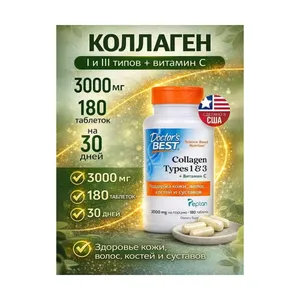
Look for grams of hydrolysed collagen (peptides) per serving. Skin studies used 2.5–5 g a day (Proksch et al., 2014), joint pain in athletes — 10 g (Clark et al., 2008), muscle in older men — 15 g (Zdzieblik et al., 2015). Hence a simple rule: powder or liquid are normal forms, capsules and tablets are almost always underdosed — to get 5 g from 500 mg capsules you need ten.
Type II is the exception: undenatured type II collagen (UC-II) works by a different mechanism and is used at 40 mg a day, so a capsule is appropriate here. Do not confuse them: 40 mg of UC-II and 40 mg of type I hydrolysate are incomparable.
Marine, bovine or chicken
«Marine» only names the source — fish skin and scales; it is type I collagen, the same as bovine, with slightly smaller peptides. In comparative studies the bioavailability of hydrolysates from different sources is similar, and the clinical effect depends on dose and duration, not origin. Marine is usually more expensive per gram and free of traces of cattle products — important to those who avoid them, irrelevant for efficacy. Chicken is the only source of type II.
Hydrolysate, peptides, gelatin
Collagen hydrolysate and collagen peptides are the same thing: protein broken into short chains that dissolve in cold water and are absorbed in the gut. Gelatin is the same collagen, partly denatured but not hydrolysed: it gels in cold water and is absorbed more slowly, but matches peptides in amino acids and costs several times less. «Native», «bioactive», «specific peptides» are marketing labels; look at the grams.
What else to look at
- Vitamin C takes part in collagen synthesis; its presence is sensible, but 50–100 mg of ascorbic acid can be had separately and cheaper.
- Hyaluronic acid, biotin, zinc are the usual neighbours in «beauty complexes»; their doses are often token — check the mg.
- Sugar and sweeteners. Flavoured powders and «collagen drinks» contain sugar or sucralose; plain unflavoured powder is the most honest option.
- Place in the list. In an honest powder collagen is the first and almost the only ingredient; if maltodextrin or sugar comes first, there is more of it than collagen.
- Registration. The SGR number on a Russian pack lets you check the declared composition against the Rospotrebnadzor register.
How to compare two products: price per 10 g
Divide the price by the total hydrolysate mass in the pack (grams per serving × servings) and multiply by 10. Plain unflavoured powders almost always win; capsules cost 3–6 times more per gram; «marine» is 1.5–3 times dearer than bovine for the same dose.
Checklist before buying
- Find the grams of hydrolysate per serving; under 2.5 g for type I/III is underdosed.
- Identify the type: I/III for skin, II (UC-II 40 mg) for joints; «5 types» without doses — skip.
- Form: powder or liquid for working doses; capsules only for UC-II.
- Check the first ingredient and sugar in the formula.
- Calculate the price per 10 g and compare with plain powder.
- Vitamin C and other extras are a bonus, not a reason to overpay.
Is this collagen right for you
The label tells whether a product is honest and what a gram costs. Whether it will give you a result depends on the task and on whether there is a simpler cause of the complaint: hair loss and dry skin often come from low ferritin or vitamin D deficiency, and collagen will not close them. Upload your report — the service will match what you actually need and say whether collagen makes sense. How products are scored in this section is explained on the method page. Products with collagen and their label score are in the catalogue.
Products with this nutrient in the catalogue
Full catalogue →
For informational purposes only
This article is for informational purposes only and does not constitute medical advice, diagnosis, or treatment. Please consult a healthcare professional for medical guidance.