Iron Chelate, Bisglycinate or Sulfate: How to Read a Supplement Label
Reviewed by the LabReadAI medical team
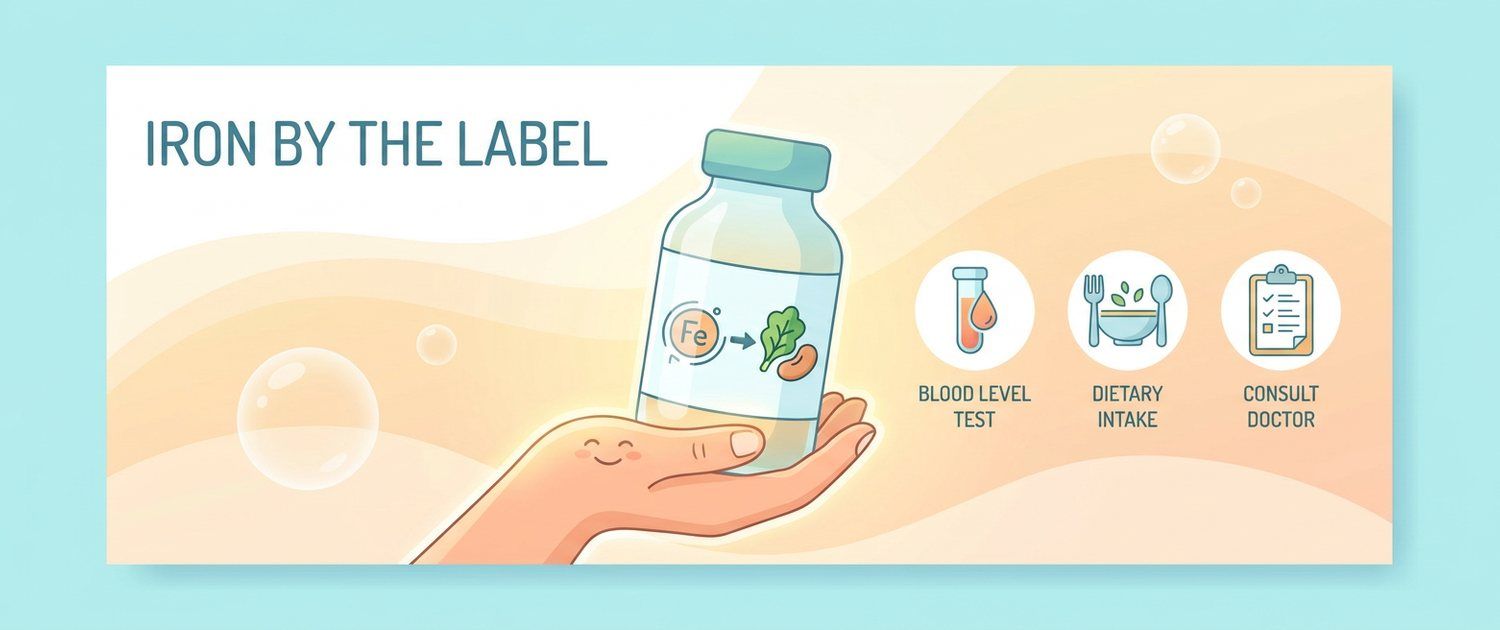
Iron is the supplement where a label misread costs the most: the difference between «300 mg of sulfate» and «300 mg of iron» is fivefold, and the doses used to treat anaemia differ tenfold from the ones people take «for prevention». Below is how to take an iron supplement label apart: how bisglycinate (chelate), sulfate, fumarate, gluconate and liposomal iron differ, how much element each form gives, what should and should not stand next to it in the ingredients and how to compare two products per milligram.
Which iron to take with low ferritin, at what dose and for how long is a clinical question covered in the article which iron to choose with low ferritin. This page is about the label only.
Iron forms on the label: a table
| Form on the label | Valence | Elemental iron | Tolerability | Notes |
|---|---|---|---|---|
| Sulfate | Fe²⁺ | ~20 % | medium/low | the research standard, the cheapest |
| Fumarate | Fe²⁺ | ~33 % | medium | compact tablets |
| Gluconate | Fe²⁺ | ~12 % | medium | a lot of compound for little iron |
| Bisglycinate (chelate) | Fe²⁺ | ~20 % | high | less nausea and constipation; works at a lower dose |
| Polymaltose (hydroxide) | Fe³⁺ | ~30 % | high | absorbed more slowly than ferrous |
| Liposomal (pyrophosphate) | Fe³⁺ | product-specific | high | expensive; fewer data than bisglycinate |
The element share is a constant of the compound. Tolerability and efficacy come from clinical comparisons: in the randomised trial by Milman and colleagues, 25 mg of iron as bisglycinate in pregnant women matched 50 mg as sulfate in haemoglobin and ferritin gains, at half the dose and with fewer gut complaints.
How much iron a serving really gives
Find the words «elemental iron» or «as Fe». If the maker only writes «iron fumarate 100 mg», the iron in it is ~33 mg. For scale: pharmacy treatment products give 50–100 mg of elemental iron per tablet, supplements usually 14–30 mg. The Russian reference intake (MR 2.3.1.0253-21) is 10 mg/day for men and 18 mg/day for women; 33 mg in pregnancy. The upper safe level for adults, per NIH, is 45 mg/day — above it nausea and constipation become more frequent, and in hereditary haemochromatosis iron is contraindicated in any supplement.
Ferrous or ferric
The form is named in words, the valence is chemistry: sulfate, fumarate, gluconate and bisglycinate are Fe²⁺; polymaltose and most «liposomal» products are Fe³⁺. Ferrous iron is absorbed directly, ferric must first be reduced, so at an equal dose Fe²⁺ raises ferritin faster. The price of speed is stomach irritation — and that is exactly what the chelate form removes: glycine shields the ion from the mucosa without hindering absorption.
What should and should not be next to it
- Vitamin C (ascorbic acid) in the same tablet helps: it reduces iron to the absorbable form and raises uptake; a typical dose is 50–100 mg.
- Folic acid and B12 are appropriate when anaemia is mixed; on their own they do not interfere.
- Calcium, magnesium, zinc in one tablet hinder iron absorption. An «iron + calcium complex» is a marketing compromise, not physiology: such minerals are taken at different times. More in the article on vitamin compatibility.
- Place in the list. Iron in supplements is dosed in milligrams, so it often comes after fillers — that is normal; the warning sign is when its dose is not stated in mg of element at all.
- Registration. The SGR number on a Russian pack lets you check the declared composition against the Rospotrebnadzor register.
How to compare two products: price per 10 mg
Divide the pack price by the number of servings, then by the mg of elemental iron per serving, and multiply by 10. Cheap sulfate almost always wins on this figure — and loses on tolerability, which is why courses get abandoned. Bisglycinate costs more per milligram, but at half the effective dose the difference in course price shrinks. Liposomal iron is the most expensive per milligram, and its advantage over bisglycinate is not clinically proven.
Checklist before buying
- Find «elemental iron» in mg — without this number products cannot be compared.
- Pick the form: bisglycinate if iron was poorly tolerated before; sulfate/fumarate if it is tolerated and price matters.
- Check the neighbours: vitamin C is a plus, calcium and magnesium in the same tablet a minus.
- Verify the serving: tablets and mg per dose, days per pack.
- Calculate the price per 10 mg of element.
- Treatment doses (50 mg and above) only on prescription and under ferritin monitoring.
Is this iron right for you
The label tells whether a product is honest. Whether you need iron at all is told by ferritin, serum iron, transferrin and a complete blood count: fatigue and hair loss occur with normal stores too, and excess iron is harmful. If you have a lab report, upload it: the service will match the form and dose to your numbers and say plainly whether a course is needed. How products are scored in this section is explained on the method page. Products with iron and their label score are in the catalogue.
Products with this nutrient in the catalogue
Full catalogue →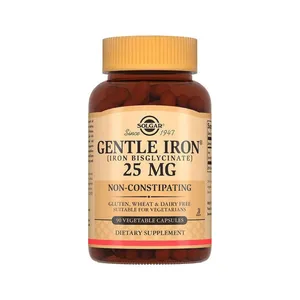
For informational purposes only
This article is for informational purposes only and does not constitute medical advice, diagnosis, or treatment. Please consult a healthcare professional for medical guidance.