Serum Iron Test: Normal Range, Low and High Levels Explained
Reviewed by the LabReadAI medical team
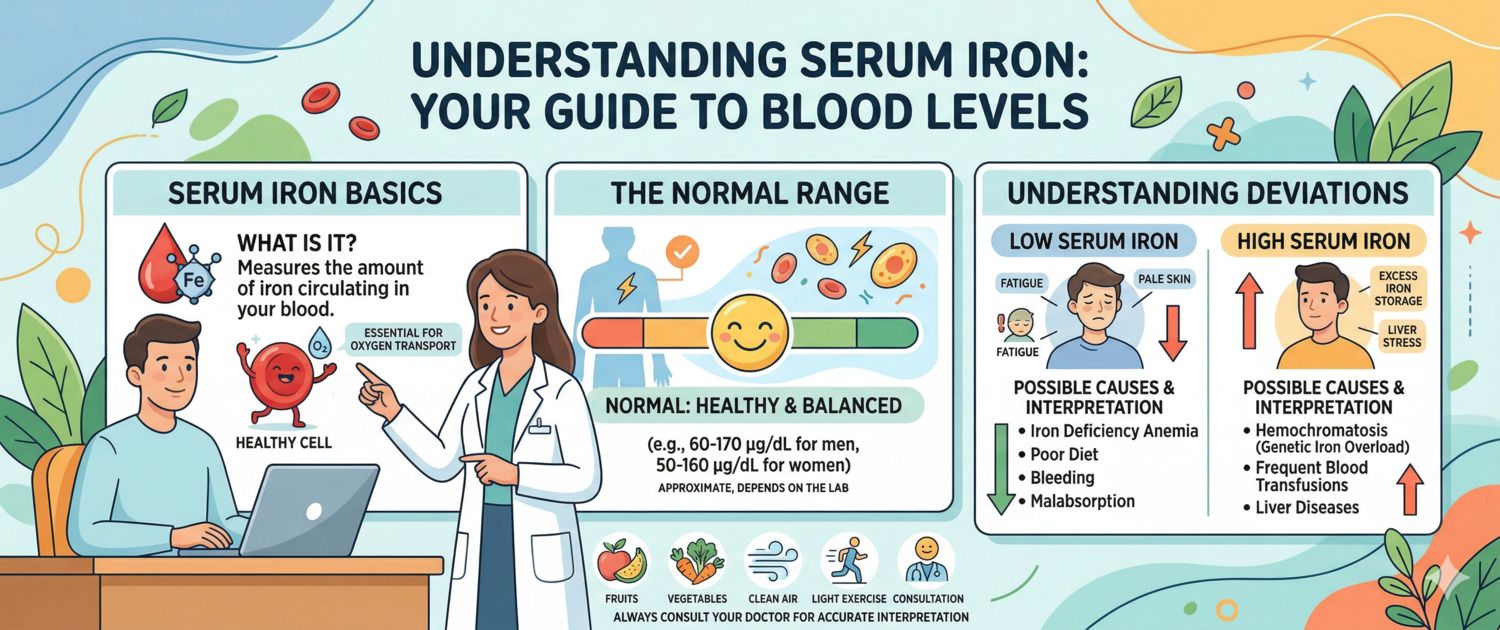
Serum iron is one of the first tests ordered when anaemia or unexplained fatigue is suspected. But serum iron levels can be misleading: they only reflect the iron currently being transported in the blood, and may appear normal even when body stores are already depleted. For a complete picture, serum iron is always evaluated alongside TIBC and ferritin.
What Serum Iron Measures and Why It Is Tested
Iron in the body exists in several pools. The largest — about 70% — is bound in haemoglobin inside red blood cells. Around 25% is stored in depots as ferritin and haemosiderin in the liver, spleen and bone marrow. A small fraction — less than 1% — continuously circulates in the blood, bound to the carrier protein transferrin. It is this transport fraction that serum iron measures.
The test is ordered for symptoms of anaemia (fatigue, pallor, shortness of breath on exertion), hair loss, brittle nails, and chronic tiredness. It is part of the iron panel together with TIBC, ferritin and transferrin.
Serum Iron Normal Range
Reference values differ by sex and age:
| Category | Normal Range (μmol/L) | Normal Range (μg/dL) |
|---|---|---|
| Men | 11.6–31.3 | 65–175 |
| Women | 9.0–30.4 | 50–170 |
| Infants (under 1 year) | 7.2–18.0 | 40–100 |
| Children (1–14 years) | 9.0–22.0 | 50–120 |
Values on your report may differ slightly depending on the laboratory's method and reagents — always use the reference range printed alongside your result.
Why Serum Iron Is Low
Low serum iron is the most common abnormality and falls into several categories.
Iron deficiency — the classic cause. In iron deficiency anaemia, serum iron falls, TIBC rises (transferrin is "hungry" and tries to capture every available iron molecule), and ferritin is low. This triad is the diagnostic standard.
Chronic inflammation and infection. In chronic conditions (rheumatoid arthritis, inflammatory bowel disease, cancer), iron is deliberately sequestered in storage depots — the body uses this mechanism to deny iron to pathogens. Ferritin is normal or elevated, TIBC is low. This is anaemia of chronic disease, and it is fundamentally different from iron deficiency.
Malabsorption — coeliac disease, post-gastrectomy states, small bowel resection.
Excess losses — heavy periods, chronic gastrointestinal or haemorrhoidal bleeding.
Pregnancy — iron requirements increase two-to-threefold, especially in the third trimester.
Why Serum Iron Is Elevated
Elevated serum iron is less common but equally important.
Haemochromatosis — a hereditary condition causing progressive iron overload in organs. Serum iron is high, TIBC is low (transferrin is saturated), ferritin is markedly elevated. Without treatment, it leads to liver, cardiac and pancreatic damage.
Haemolytic anaemia — destruction of red blood cells releases haemoglobin iron into the circulation.
Sideroblastic anaemia — impaired incorporation of iron into haem leads to iron accumulation in cells.
Iron supplement overdose — a common cause of acute elevation, particularly in children.
Acute hepatitis and cirrhosis — iron leaks from damaged liver cells.
Serum Iron, TIBC and Ferritin: Why All Three Are Needed
Think of it as a transport system: serum iron is the cargo in transit, transferrin is the delivery trucks, TIBC is the total fleet capacity, and ferritin is the warehouse. One figure without the others gives an incomplete picture.
| Condition | Iron | TIBC | Ferritin |
|---|---|---|---|
| Iron deficiency anaemia | ↓ | ↑ | ↓ |
| Anaemia of chronic disease | ↓ | ↓ or N | ↑ or N |
| Haemochromatosis | ↑ | ↓ | ↑↑ |
| Normal | N | N | N |
This is why the iron panel is always a profile, not a single test. The pattern of all three results explained together is far more informative than any value in isolation.
How to Prepare: Key Rules
Serum iron is one of the most preparation-sensitive blood markers.
- Blood must be drawn strictly fasting, after 8–12 hours without food
- Time of day matters: iron peaks in the morning and drops by 30–40% by evening — draw before 10:00 am
- Stop iron supplements 5–7 days before the test (they cause false elevation)
- Do not test on the day of a blood transfusion or within one week after
- Acute infections and inflammation cause a temporary drop — results are uninformative during an acute illness
- In women, levels are slightly higher at mid-cycle — note this when interpreting borderline values
When to See a Doctor Urgently
Seek immediate medical attention if you have severe weakness, shortness of breath at rest, palpitations, or pallor — these indicate severe anaemia requiring urgent evaluation. Also seek urgent care for signs of iron overload: right upper abdominal pain, skin darkening, cardiac arrhythmia — this picture is characteristic of haemochromatosis with organ involvement.
This information is for educational purposes only. Diagnosis and treatment are provided exclusively by a qualified physician.
For informational purposes only
This article is for informational purposes only and does not constitute medical advice, diagnosis, or treatment. Please consult a healthcare professional for medical guidance.