Vitamin B12 by the Label: Methylcobalamin vs Cyanocobalamin, mcg
Reviewed by the LabReadAI medical team
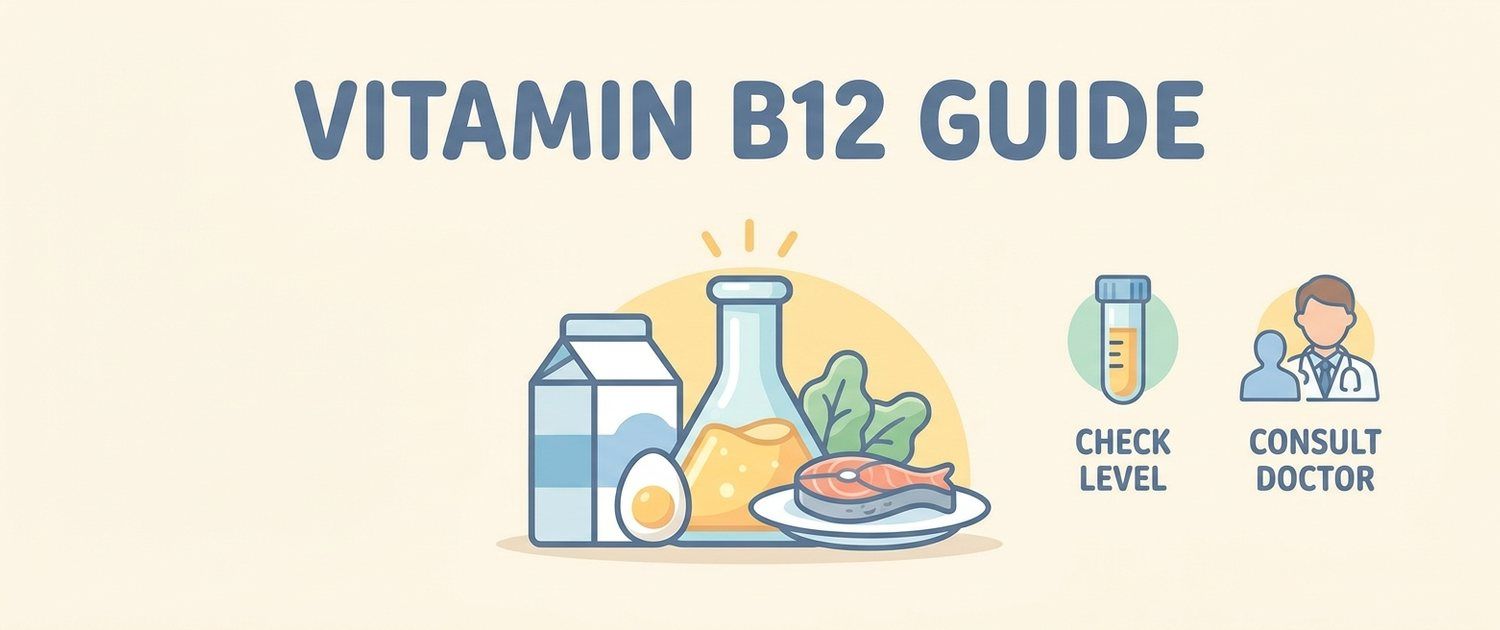
Vitamin B12 is the one supplement whose tablet dose is 300 times the daily requirement — and that is physiology of absorption, not marketing. Below is how to read a B12 label: how cyanocobalamin, methylcobalamin, hydroxocobalamin and adenosylcobalamin differ, why 1000 mcg is a normal dose, what «sublingual» and sprays really give, what should and should not sit next to it in the formula, and how to compare two products by price per 1000 mcg.
Symptoms and causes of deficiency, which tests confirm it and how it is treated are in the article on vitamin B12 deficiency. Here — the label only.
Methylcobalamin, cyanocobalamin, hydroxocobalamin: forms on the label
| Form on the label | What it is | Stability | Notes |
|---|---|---|---|
| Cyanocobalamin | synthetic form with a cyano group | high | best studied and cheapest; converted to active forms in the body |
| Methylcobalamin | coenzyme form (methyl-) | lower: light-sensitive | pricier; no advantage over cyano- shown in studies |
| Adenosylcobalamin | second coenzyme form | lower | usually paired with methyl-; little supplement data |
| Hydroxocobalamin | close to the natural form | medium | mostly injectable; retained longer in the body |
The review by Obeid and colleagues (2015) addressed exactly this question: coenzyme forms (methyl-, adenosyl-) have no advantage over cyanocobalamin and hydroxocobalamin in either prevention or correction of deficiency — after absorption any form loses its «prefix» and is reassembled in the cell into the coenzyme needed. The cyanide in cyanocobalamin amounts to micrograms per day, two orders of magnitude below what ordinary food provides. The only group where form is discussed separately is people with rare cobalamin metabolism disorders and heavy smokers — a physician's decision, not a shelf choice.
How many mcg per serving and why 1000
The reference intake for adults is 3 mcg/day (Russian MR 2.3.1.0253-21; NIH RDA 2.4 mcg). Yet single-ingredient products carry 500, 1000, 2000 or even 5000 mcg, while multivitamins have 2.4–10 mcg. The reason is two absorption routes: the active route via intrinsic factor lets through ~1.5–2 mcg per dose and saturates; beyond that only about 1 % of the dose is absorbed passively. So roughly 10–15 mcg of a 1000 mcg tablet reaches the blood, versus 2–3 mcg from 10 mcg in a multivitamin. A Cochrane review of oral versus injected B12 found that high oral doses (1000–2000 mcg/day) raise B12 levels as well as injections in most patients — which is what 1000 mcg tablets are designed for.
Neither EFSA nor NIH set a tolerable upper level for B12: excess is excreted in urine and toxicity has not been described. That does not make 5000 mcg better than 1000: beyond saturation the ~1 % passive absorption barely changes the result, but it changes the price.
Tablet, sublingual, spray or drops
Sublingual tablets and sprays are sold with the promise of «bypassing the stomach», but comparative studies of sublingual versus ordinary oral intake of equal doses showed the same rise in B12: the product is mostly swallowed anyway. The practical difference is convenience and formula, not absorption: sprays and lozenges more often contain sweeteners, flavourings and alcohol, chewables — sugar. Sublingual makes sense when swallowing tablets is difficult, not as a way around malabsorption in atrophic gastritis — those cases are managed by a doctor.
What else to check in the formula
- Folate alongside. The common «B12 + folate» pair is appropriate when both deficiencies are confirmed; folate 400–800 mcg without B12 masks anaemia in unrecognised B12 deficiency, so having both in one tablet is a safeguard rather than a flaw. What folate and homocysteine show — on the indicator pages.
- Folate form. «Methylfolate» (5-MTHF) and «folic acid» are different substances; methyl-B12 products usually carry methylfolate, cyano- products folic acid. It does not affect B12 absorption.
- Serving. Sprays and drops are dosed in «pumps» and «drops» — check mcg per pump and how many pumps make a serving.
- B-complexes. B12 is last by mass (mcg versus mg for B1, B6), typically 2.5–10 mcg: enough for maintenance, not for correcting deficiency.
- Registration. The registration number on the pack lets you cross-check the formula against the official register.
How to compare two products: price per 1000 mcg
Divide the pack price by the number of servings, then by mcg per serving, and multiply by 1000. Cyanocobalamin at 1000 mcg is usually the cheapest option; methylcobalamin at the same dose costs 1.5–3 times more with no proven difference in outcome. Compare «B12 + methylfolate + B6» complexes separately and only if you need the whole formula rather than B12 alone.
Checklist before buying
- Find the form in the ingredients: cyanocobalamin by default; methylcobalamin if you are willing to pay more for an «active» form with no proven difference.
- Check mcg per serving: 500–1000 mcg is a replenishing dose, 2.5–10 mcg is maintenance in a complex.
- For sprays or drops — mcg per pump and pumps per serving.
- Look at the neighbours: folate is appropriate, sugar and alcohol in sprays are a reason to compare with a tablet.
- Calculate the price per 1000 mcg and compare with the same maker's cyanocobalamin.
- Neurological symptoms (numbness, tingling, gait problems) are a reason to see a doctor and test, not to self-prescribe B12.
Is this vitamin B12 right for you
The label tells you whether a product is honest and what a dose costs. Whether you need B12 is told by blood B12 together with homocysteine and a complete blood count: fatigue and hair loss have many causes besides B12, while a vegan diet, metformin and acid-reducing drugs are typical causes of deficiency. Upload your report — the service will match the form and dose to your numbers. How products are scored in this section is explained on the method page. Products with vitamin B12 and their label score are in the catalogue.
Products with this nutrient in the catalogue
Full catalogue →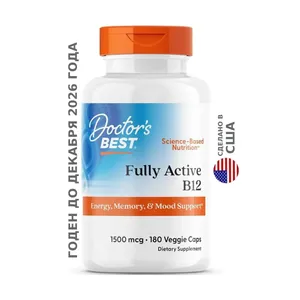
For informational purposes only
This article is for informational purposes only and does not constitute medical advice, diagnosis, or treatment. Please consult a healthcare professional for medical guidance.